We may earn a commission when you buy through links on this page, at no extra cost to you. How this works.
Feeding two cats with different dietary needs is more than an inconvenience - it's a daily logistics puzzle. When one cat requires prescription food for urinary health, while the other needs weight-control portions, a shared bowl becomes impossible. Food aggression, grazing habits, and portion control all break down the moment both cats have access to the same food.
Standard feeding routines fail in multi-cat households where dietary boundaries matter. The faster eater steals from the slower cat. The food-motivated cat hoovers both portions. The cat on a restricted diet sneaks calorie-dense kibble meant for their housemate. Without physical separation or timed access, you're left monitoring every meal or accepting dietary chaos.
Automatic feeders designed for multi-pet households address these problems through four core strategies: scheduled portion control for staggered meal times, microchip or RFID recognition that opens only for the correct cat, physical barriers such as separate feeding stations, and combination systems that pair timers with selective access. Each approach solves the separation problem differently, and the right choice depends on whether your challenge is timing, identification, space, or all three.
This comparison evaluates four automatic feeders across those categories. You'll see how scheduling flexibility, bowl capacity, recognition accuracy, and setup complexity stack up when the goal is keeping two distinct diets intact. No guessing, no generic advice - just attribute-level breakdowns that make the tradeoffs clear.
Use the matching tool first
Start with Smart Feeder Portion Calculator if you want to narrow the fit before checking current offers.
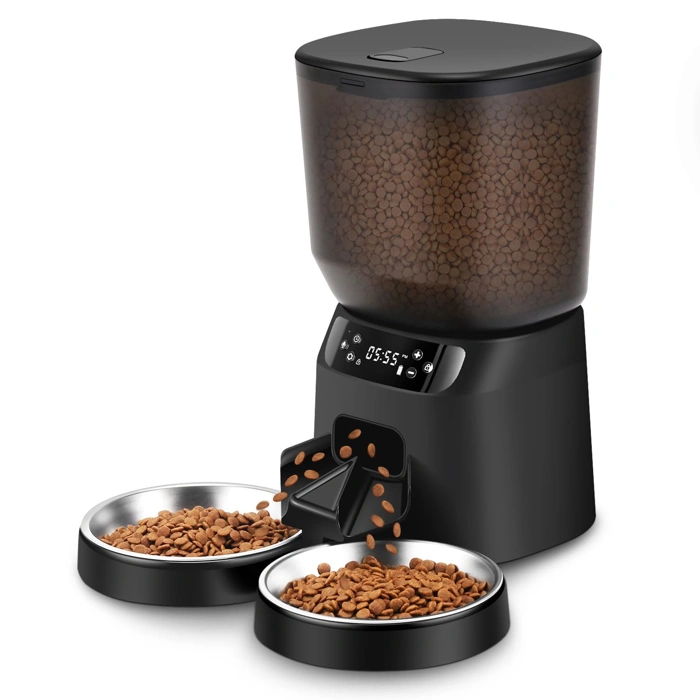
Double Automatic Pet Feeder with 2 Stainless Steel Bowls
The Double Automatic Pet Feeder with 2 Stainless Steel Bowls offers a straightforward approach to feeding two cats with separate meal schedules. Priced at $36.08, this dual-bowl system uses stainless steel feeding dishes that resist bacteria buildup and clean up easily in the dishwasher - a practical choice for households managing different dietary routines.
Each bowl operates on its own programmable timer, allowing you to set different meal times for each cat. The interface is manual rather than app-based, which means you'll program feeding schedules directly on the unit using the built-in controls. This design works well if your cats need meals spaced a few hours apart or if one eats breakfast while the other waits until mid-morning.
The stainless steel bowls are removable, making it simple to portion different foods and clean between uses. Unlike plastic dishes that can harbor odors or scratches, these bowls maintain hygiene over time. The feeder sits low to the ground with a stable base, suitable for cats of various sizes.
With a 4.2 rating, this feeder balances affordability with functional separation. The manual scheduling requires you to set times in advance rather than adjust remotely, so it's best suited for households with consistent daily routines. If your cats need strict portion control by weight or you travel frequently and want remote monitoring, you may want more advanced features. But for basic timed separation of two diets at a budget-friendly price, this dual stainless steel design delivers reliable daily feeding without complexity.
- ✅ Stainless steel bowls resist bacteria and clean easily
- ✅ Separate programmable timers for each bowl allow different meal schedules
- ✅ Affordable at $36.08 for dual-bowl automatic feeding
- ✅ Removable bowls simplify portioning and dishwasher cleaning
- ⚠️ Manual programming only - no remote app control or adjustments
- ⚠️ Basic timer features may not suit complex feeding routines or travel
- ⚠️ No built-in portion control by weight for precise diet management
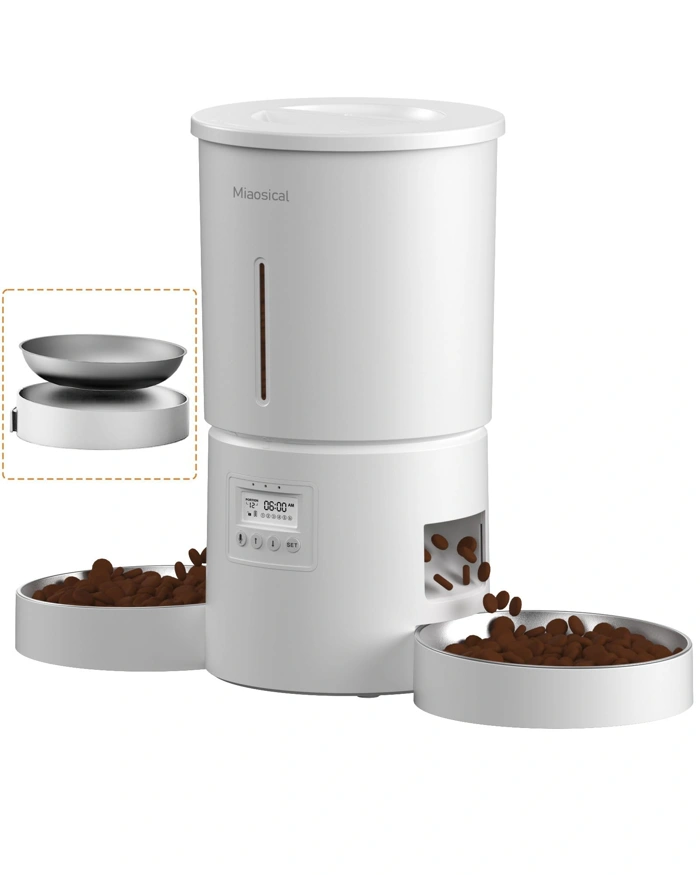
Automatic Cat Feeder for 2 Cats with Dual Power, Double Bowls, 6 Meals/Day
The Automatic Cat Feeder for 2 Cats with Dual Power offers schedule reliability through both AC adapter and battery backup, making it a practical choice for households where feeding consistency matters. With support for up to 6 meals per day across two separate bowls, this feeder provides the scheduling flexibility needed when one cat requires frequent small portions while the other eats on a standard schedule.
At $29.99, this feeder sits at a lower price point than many dual-bowl competitors while delivering core scheduling features. The dual power system means the programmed feeding times continue even during power outages, reducing the risk of missed meals that could lead one cat to explore the other's bowl out of hunger.
The 6-meal-per-day capacity allows you to divide daily portions into smaller, more frequent servings - useful when managing a cat with digestive sensitivities or weight control needs. You can stagger feeding times between the two bowls, creating natural separation that helps maintain dietary boundaries without requiring physical barriers.
The 4.2 rating reflects solid performance for basic scheduling needs, though this model focuses on timing and power reliability rather than advanced features like portion weighing or voice recording. The double bowl design keeps food physically separated, but success still depends on training your cats to respect their designated bowls and supervising initial meals to reinforce the routine.
If you're comparing capacity and interactive features, consider how this feeder's simpler design trades voice customization and larger reservoirs for affordability and straightforward meal scheduling. For households prioritizing uninterrupted feeding schedules and multiple daily meal windows over premium features, the dual power system and budget-friendly price make this a sensible option.
- ✅ Dual power system (AC and battery) maintains schedule during outages
- ✅ 6 meals per day supports frequent small-portion feeding
- ✅ Budget-friendly at $29.99
- ✅ Two separate bowls for physical food separation
- ⚠️ No voice recording or advanced interactive features
- ⚠️ Requires training cats to respect designated bowls
- ⚠️ Basic design without portion weighing
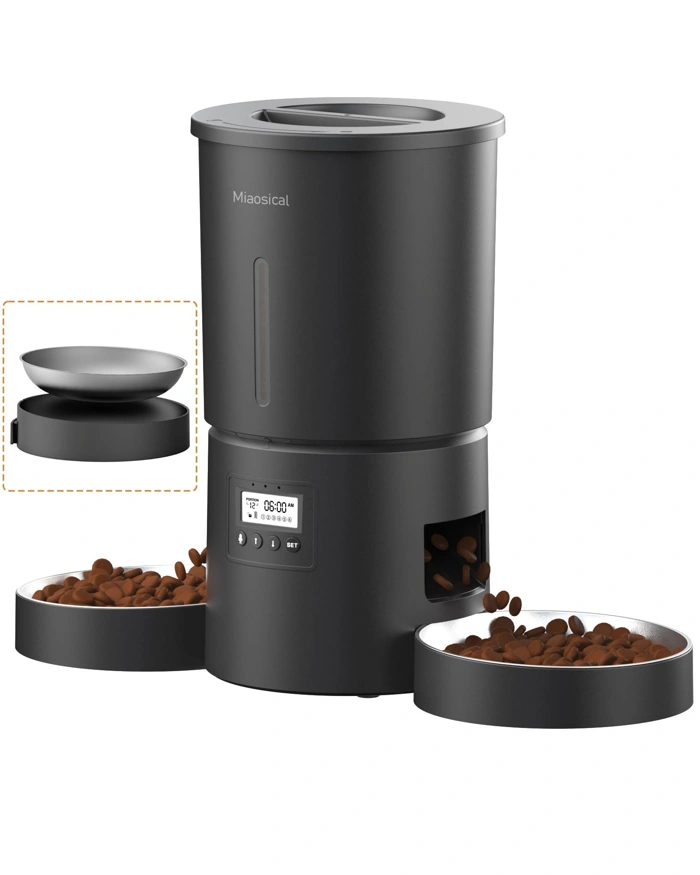
Automatic Cat Feeder, 4.2L, Double Bowl, Programmable Portion Control, Voice Recorder
The Automatic Cat Feeder with 4.2L capacity offers a larger food reservoir than many compact models, making it a practical choice for households with two cats on different feeding schedules where you may be away for extended periods. The dual-bowl design allows you to program separate portion sizes for each cat, which is useful when one cat needs calorie restriction while the other requires standard portions for weight maintenance.
Each bowl can be programmed independently for portion control, letting you customize meal sizes based on each cat's dietary requirements. The 4.2L total capacity (approximately 2.1L per bowl) means you can fill the feeder less frequently compared to smaller-capacity models, though actual refill timing will depend on your portion settings and feeding frequency.
The built-in voice recorder is a notable feature that allows you to record a short message that plays at feeding time. While this doesn't change the feeder's core functionality, some cats respond positively to familiar voices, which may help with meal transitions or reduce anxiety during your absence. At $32.99, this model sits in the mid-range price tier, and the voice recorder feature represents the primary premium over simpler dual-bowl feeders.
With a 4.4 out of 5 rating, user feedback suggests reliable operation, though you should verify that both cats can access their designated bowls comfortably and that the feeder's footprint fits your available floor space. The programmable portion control supports different calorie requirements, but effectiveness depends on training each cat to eat only from their assigned bowl - a behavioral consideration that applies to any dual-bowl system.
- ✅ 4.2L capacity reduces refill frequency for multi-day feeding
- ✅ Programmable portion control for each bowl supports different calorie needs
- ✅ Voice recorder feature may help with mealtime routine and cat comfort
- ✅ 4.4/5 rating indicates positive user experience
- ⚠️ Mid-range price at $32.99 may not suit all budgets
- ⚠️ Requires training cats to eat only from their designated bowl
- ⚠️ Larger footprint may not fit smaller feeding areas
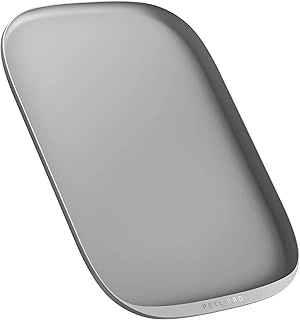
PETLIBRO Non-Slip Waterproof Pet Feeding Mat
The PETLIBRO Non-Slip Waterproof Pet Feeding Mat is a practical accessory for any dual-feeder setup, especially when managing two cats with different diets. Priced at $24.91 and rated 4.4 out of 5, this mat addresses two common challenges in multi-cat households: bowls sliding during mealtime and spills damaging flooring.
The non-slip surface keeps automatic feeders and water bowls stationary, even when one cat is an aggressive eater who pushes against the bowl. This stability is particularly useful when positioning two separate feeders side-by-side for cats on different feeding schedules - movement during one cat's mealtime can disturb the other feeder or create access issues.
The waterproof design protects hardwood, tile, or carpet from splashed water and scattered kibble. Because the mat creates a defined feeding zone, it also makes cleanup easier: spills stay contained rather than spreading across the floor. The surface wipes clean quickly, which matters when you're managing multiple daily feeding cycles.
This mat works well paired with any of the automatic feeders reviewed above. For households using two separate units - such as a SureFeed for wet food and a PETLIBRO timed feeder for dry kibble - the mat provides a unified, stable base that simplifies your feeding station layout and reduces daily maintenance.
- ✅ Non-slip surface keeps feeders and bowls stationary during meals
- ✅ Waterproof design protects flooring from spills and splashes
- ✅ Easy to wipe clean between feeding cycles
- ✅ Creates a defined feeding zone for multi-cat setups
- ⚠️ Does not prevent food theft or manage portion control
- ⚠️ Requires floor space for proper placement of multiple feeders
How Dual-Bowl and Scheduled Feeders Solve the Problem
When two cats need different diets - whether due to age, weight management, or health considerations - the core challenge is keeping one cat out of the other's bowl. Automatic feeders address this through three main approaches, each with distinct tradeoffs.
Physical bowl separation is the simplest strategy. Dual-bowl feeders with dividers or entirely separate compartments prevent direct access between meals. This works well when both cats eat at the same time but require different portion sizes or food types. The limitation: unless paired with a timer or RFID chip reader, either cat can still wander over to the other bowl once it opens.
Scheduled dispensing at different times relies on programmable timers to release food when only one cat is likely to be present. For example, you might schedule Bowl A to open at 7 a.m. and Bowl B at 7:15 a.m., giving you a window to supervise or separate the cats. This approach demands consistency in your routine and works best in households where the cats have predictable activity patterns. The tradeoff: if both cats are present when a bowl opens, supervision is still required.
Portion control per bowl lets you dial in precise serving sizes for each cat. Many dual-bowl models allow independent portion settings - one bowl might dispense ¼ cup while the other dispenses ½ cup. This is critical when one cat needs calorie restriction and the other has higher energy needs. The downside: portion accuracy varies by feeder design, and kibble size can affect dispensing consistency.
Manual dual-bowl setups - two separate automatic feeders placed in different rooms - offer maximum control and true physical separation, but they require more floor space, duplicate equipment cost, and separate programming routines. Programmable dual-bowl units consolidate scheduling into one device and one power source, but they assume both cats will respect the bowl assignments or that you'll be available to intervene when a bowl unlocks.
The right mechanism depends on whether your priority is convenience, absolute dietary separation, or portion precision. Households with cats that eat peacefully side-by-side may find a simple dual-bowl timer sufficient, while homes with food-aggressive cats often need the added layer of RFID-controlled access or fully separate feeding stations.
Our Top 4 Automatic Feeders for Multi-Cat Homes
We've selected four automatic feeders that address the core challenges of feeding two cats with different diets: bowl separation, scheduling flexibility, and reliable operation when you're away.
The first feeder uses dual stainless-steel bowls with independent timers, letting you program separate meal times and portions for each cat. This design works well when your cats respect their own bowls and you need precise control over feeding schedules.
The second option offers dual power - both plug-in and battery backup - so meals arrive on time even during outages. It's built for households where consistent feeding matters and you want redundancy in case of electrical interruptions.
The third feeder combines large-capacity storage with a built-in voice recorder, allowing you to call your cats to their meals with a familiar sound. This approach suits cats that need encouragement to eat separately or respond better to routine audio cues.
The fourth choice includes a coordinating feeding mat designed to catch spills and define feeding zones. It's a practical addition when you're managing two bowls in a shared space and want to minimize cleanup.
Each feeder solves the multi-cat puzzle differently. The detailed reviews below compare scheduling options, bowl size, power features, and setup complexity so you can match the feeder to your cats' habits and your household routine.
Conclusion: Achieving Peace of Mind at Mealtime
Feeding two cats with different dietary needs doesn't require constant supervision or mealtime stress. The four feeders reviewed here form a practical spectrum: basic dual-bowl models starting at $29.99 deliver straightforward timed separation, while the $32.99 feature-rich option adds voice recording and larger capacity for households juggling portion control and travel schedules.
Your choice depends on matching feeder capabilities to your specific household constraints. If your cats need meals at different times throughout the day, programmable frequency becomes essential. When portion sizes vary significantly between cats, accurate dispensing and bowl separation prevent overfeeding. And if you travel regularly, battery backup and higher capacity reduce the risk of missed meals.
The right automatic feeder removes the guilt of inconsistent feeding and maintains the dietary boundaries each cat requires. No single model works for every two-cat home, but understanding your cats' feeding rhythms, portion differences, and your own schedule makes the decision straightforward. Review the side-by-side specifications, compare scheduling flexibility and bowl design, then choose the feeder that aligns with both your cats' dietary requirements and your daily routine. With the right setup, you'll have peace of mind knowing each cat gets exactly what they need, when they need it.
Key Buying Criteria: What to Look for in a Dual-Cat Feeder
- Physical bowl separation - ensure each cat can access only their designated bowl
- Scheduling flexibility - number of meals per day and programmable times for staggered feeding
- Portion control per bowl - ability to set different serving sizes for each cat
- Power backup - battery or dual power to maintain schedule during outages
- Bowl material - stainless steel preferred for hygiene and durability
- Capacity - total volume must support your longest absence period
- Ease of cleaning - removable bowls and smooth surfaces reduce food buildup
- Voice recording - optional feature to call cats to their designated feeder at meal time