We may earn a commission when you buy through links on this page, at no extra cost to you. How this works.
The traditional pet door - a flapping plastic panel that lets anything with four legs wander through - doesn't belong in a home where you've carefully chosen every handle, fixture, and finish. If you've invested in clean lines, intentional materials, and a restrained color palette, the last thing you want is a clunky access point that broadcasts "pet owner" louder than your carefully curated interior.
Microchip pet doors solve a problem that manual locks and magnetic collars never quite addressed: selective access without constant intervention. Your cat or dog gets freedom; raccoons, possums, and the neighbor's pets stay out. No keys, no collars to lose, no late-night trips to unlock a door because you forgot.
The decision isn't just about security. It's about integrating function into a home that values subtlety. A microchip door reads the unique ID already embedded under your pet's skin during a standard vet visit, or it works with a lightweight RFID collar tag. The door unlocks only for registered animals, then seals again automatically. No visible hardware. No manual override. No wondering whether you left it open.
But selective access comes with trade-offs. Microchip doors cost more than manual models - often two to four times as much. Installation can be more involved, especially if you're cutting into glass, walls, or insulated panels. Battery life, read range, and the speed of the locking mechanism vary across brands, and those differences matter when your dog is wet, impatient, or both.
Aesthetic integration is harder than it looks. Most microchip doors are designed for function first, which means chunky casings, visible sensors, and proportions that don't always align with modern door styles or minimalist trim. A few models make an effort - low-profile frames, neutral finishes, cleaner tunnels - but you'll still be making compromises between invisibility and performance.
Then there's the emotional component. Giving your pet unsupervised outdoor access can feel risky, even in a secure yard. A microchip door doesn't fix that anxiety entirely, but it does remove one variable: you know exactly who's coming and going. If your guilt centers on denying your cat outdoor time or your dog's restless pacing by the slider, a well-chosen door offers a middle ground between constant supervision and complete lockdown.
This guide compares microchip doors that make sense in a modern home - models that balance security, usability, and visual restraint without requiring you to accept a bulky eyesore or an endless list of smart features you'll never use.
Quick comparison
| PetSafe Big Cat Door Multi-Pet Doorway with 4-Way Lock | Check current price and availability |
| Cat Mate Microchip Activated Cat Flap with Elite Wall Liner | View installation options and pricing |
| Baboni Small Double Flap Pet Door for Wall with Steel Frame and Telescoping Tunnel | See wall compatibility and current deals |
Use the matching tool first
Start with Smart Home for Pets Integration Planner if you want to narrow the fit before checking current offers.
The 3 Best Microchip Pet Doors for Minimalist Homes
Microchip pet doors solve the problem of unwanted visitors - stray animals, raccoons, or neighborhood cats - without the hassle of collar tags. For minimalist homes, they need to deliver security without visual clutter or complex installation. The three models reviewed here represent different approaches: premium build quality for single-cat households, budget-conscious multi-pet compatibility, and compact design for small spaces.
None of these are Wi-Fi-enabled smart home devices. Instead, they rely on RFID microchip recognition - the same ISO 11784/11785 standard your vet uses - to unlock only for registered pets. This simplicity means fewer failure points, no app dependencies, and no subscription fees. The tradeoff is that you won't receive notifications or remote lock control from your phone.
Price ranges from around $100 to over $200, largely reflecting material quality, flap sealing systems, and installation versatility. The most expensive option uses brushed aluminum and a magnetic seal designed for draft-prone climates. Mid-tier models prioritize compatibility with multiple chip formats and larger pet breeds. The budget pick sacrifices weatherproofing refinement but retains core microchip functionality.
Installation context matters. Two of these are optimized for interior doors or thin exterior doors - typically requiring a mounting adapter for walls thicker than two inches. The third offers a tunnel extension system, making it suitable for exterior walls up to ten inches deep. If your minimalist aesthetic includes glass doors or floor-to-ceiling windows, none of these models are designed for glass cutting; you'll need professional adaptation or a door-mount solution.
Read time per pet during setup averages 30 seconds to two minutes. All three store multiple microchip IDs - between 25 and 40 depending on the model - so households with several cats or small dogs can use a single door. Battery life spans six months to over a year on standard AA cells, with low-battery indicators to prevent lockouts.
The reviews below examine each model's fit for specific scenarios: compact urban apartments, multi-pet families prioritizing value, and design-focused homes where the door itself becomes part of the interior. Measurements, flap dimensions, and compatibility notes are included to help you match the door to your pet's size and your home's construction.
Installation & Compatibility: Will It Work in Your Space?
Even the best microchip pet door is only as good as its installation. Modern, minimalist homes demand both clean integration and reliable performance, which means understanding your mounting options, structural requirements, and compatibility constraints before you cut anything.
Most microchip pet doors are designed for three mounting scenarios: interior or exterior doors, exterior walls, and glass panels. Door-mount installations are the simplest - you're replacing a section of an existing door with a framed pet door - but they work best in doors at least 1.5 inches thick. Wall-mount installations, like those used with the Cat Mate Elite or Baboni models, require more planning. You'll need to cut through siding, insulation, and interior drywall, then seal every edge carefully to prevent drafts and moisture intrusion. The payoff is better insulation control and a more permanent, integrated look that suits minimalist exteriors.
Tunnel depth is a critical variable. Thin walls - around 2 inches - are rare in modern construction; most exterior walls run 4 to 6 inches, and some insulated or brick-clad walls exceed 8 inches. Models like the SureFlap Microchip Pet Door Connect and PetSafe Microchip Cat Door include tunnel extensions that telescope or stack to bridge these depths. If your wall is unusually thick or if you're mounting through a stone facade, confirm that extension kits are available and that the final assembly won't protrude awkwardly on either side.
Glass installation is the most specialized option. Retrofit kits exist for sliding glass doors and windows, but most require professional cutting and tempering. The opening is permanent, and mistakes are expensive. If you rent or anticipate moving, glass mounting is rarely the minimalist choice - consider a door-mount or wall-mount location instead.
Microchip compatibility follows the ISO 11784/11785 standard, which covers the vast majority of pet microchips implanted in North America, Europe, and Australia. If your pet's chip was implanted by a vet or shelter in the past fifteen years, it almost certainly works. Older chips and some non-ISO chips - common in certain regions or with legacy providers - may not register. Every model reviewed here also accepts RFID collar tags as a fallback, which is useful for foster pets, visiting animals, or pets without chips.
Before installation, verify three things: wall or door thickness, microchip ISO compatibility, and whether you need weatherproof sealing on both sides. Manufacturers supply cutting templates and step-by-step instructions, but if you're uncomfortable with power tools or working around insulation and vapor barriers, a handyman or carpenter can typically complete the job in under two hours. The goal is a flush, sealed fit that looks intentional - no visible gaps, no overlapping trim that breaks the clean lines of your entryway.
In minimalist homes, installation quality directly affects visual impact. A crooked cut, mismatched paint, or a protruding tunnel will stand out. Take time to measure twice, use the template, and plan your interior and exterior finishes so the door feels like part of the original design, not an afterthought.
Our Final Verdict
Choosing the best microchip pet door for a modern, minimalist home comes down to matching the right features to your specific environment and priorities. There is no single perfect solution - only the right fit for your household's architecture, pet roster, and daily workflow.
If selective access and thick-wall compatibility are your top concerns, the Cat Mate Elite stands out. Its microchip recognition ensures only your registered pets can enter, and the tunnel extensions accommodate walls up to significant depth without compromising the clean sightlines that minimalist design demands. This door works best when you need granular control over which animals use the entry and when installation into masonry, brick, or insulated wall systems is required.
For households prioritizing structural integrity and thermal performance over automation, the Baboni model delivers. Its durable frame construction and weather-tight sealing excel in climates with temperature extremes, and the manual operation keeps mechanical complexity - and potential points of failure - to a minimum. This choice makes sense when your home's envelope is a priority and you're comfortable managing access without electronic filters.
Budget-conscious owners of multiple pets who don't require selective entry should consider the PetSafe Big Cat Door. The larger opening serves a wider range of body sizes, and the straightforward locking mechanism provides basic security at a lower price point. Trade-offs include the absence of microchip automation and less robust weatherproofing, but for mild climates and households where all pets share access privileges, those compromises may be acceptable.
Luxury in this category isn't about spending the most - it's about informed choice and long-term satisfaction. A door that integrates seamlessly into your home's design, operates reliably through daily use, and requires minimal intervention will always outperform a feature-heavy model that doesn't align with your actual needs.
Before making a final decision, revisit the detailed specifications for each model, compare installation requirements against your specific wall construction, and verify current pricing and availability. The right microchip pet door should feel like a natural extension of your home, not a compromise.
Buyer's Guide: What to Consider Before Choosing a Microchip Door
- Does your pet already have a compatible microchip, or will you need an RFID collar tag?
- Are you installing in a door, wall, or glass panel - and what is the material thickness?
- Do you need selective access control to exclude neighborhood pets or wildlife?
- What is your climate zone - do you need dual flaps and insulation for energy efficiency?
- Is the door size appropriate for your pet's breed and weight range?
- Will the design and finish integrate with your home's aesthetic (white, metal, clear panel)?
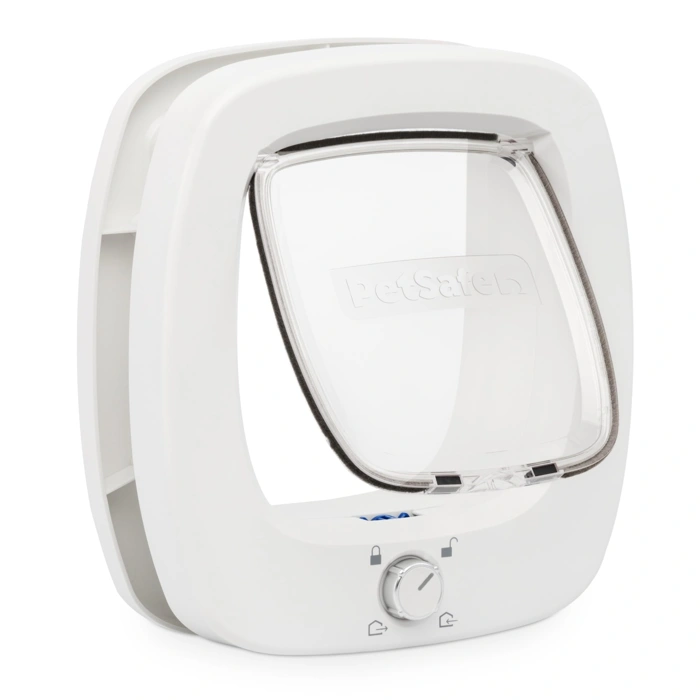
PetSafe Big Cat Door Multi-Pet Doorway with 4-Way Lock
The PetSafe Big Cat Door Multi-Pet Doorway with 4-Way Lock takes a straightforward approach: manual control, no electronics, and a price point that makes sense for households that don't need microchip automation. At $39.95, it's the budget-conscious choice in this lineup, trading selective access for simplicity and reliability.
This door is sized for larger cats and small dogs, with a 4-way lock that gives you flexibility: in only, out only, fully open, or fully locked. You set the position manually, and every pet in your home uses the same door under the same rules. That's the tradeoff - there's no way to grant access based on microchip or collar tag, so if a neighbor's cat or a curious raccoon pushes through, the door won't stop them.
For multi-pet homes where outside animal intrusions aren't a concern - apartment dwellers, enclosed patios, or controlled indoor-to-indoor transitions - this door delivers dependable function without the learning curve or battery changes that come with automated models. The 4-way lock is easy to operate, and installation follows standard pet door procedures for doors or walls.
The door's minimalist design fits modern interiors without drawing attention, though it won't integrate with smart home systems or offer the sleek, sensor-driven experience of microchip models. If your priority is giving all your pets free access without worrying about selective entry, and you value simplicity over automation, this door makes sense. If you need to keep specific animals out or manage access per pet, you'll want one of the microchip-enabled options instead.
Current availability shows in stock, with a 4.4/5 rating reflecting solid performance for its intended use case. It's a practical fit for households that know exactly what they need - and what they're willing to give up.
- ✅ Budget-friendly at $39.95
- ✅ Simple 4-way lock with no electronics or batteries
- ✅ Sized for larger cats and small dogs
- ✅ Reliable manual operation
- ⚠️ No microchip or selective access control
- ⚠️ Won't prevent entry by outdoor animals or neighbor pets
- ⚠️ No smart home integration
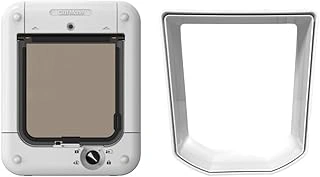
Cat Mate Microchip Activated Cat Flap with Elite Wall Liner
The Cat Mate Microchip Activated Cat Flap with Elite Wall Liner reads your pet's existing microchip or RFID collar tag to grant selective access, keeping strays and wildlife out without requiring your cat to wear a separate device. The microchip reader recognizes standard pet microchips, making it compatible with most implanted chips already in use.
The included Elite wall liner is designed for thick-wall installations, a common feature in modern insulated construction. The telescoping tunnel creates a draft-free finish that maintains the clean, uninterrupted look of your exterior wall while accommodating wall depths that standard flaps cannot handle. This makes it a practical choice for energy-efficient homes where insulation thickness matters.
With a 5.0 rating and priced at $92.98, this model occupies the mid-tier space between basic manual flaps and premium connected door systems. You gain the security and convenience of automated, selective access without stepping into app-controlled territory. The flap grants entry based on microchip recognition alone, so there's no smartphone setup or Wi-Fi dependency - just straightforward, reliable operation.
The tradeoff is simplicity: you won't find activity logs, remote locking, or integration with other smart home devices. If your priority is keeping unauthorized animals out while maintaining a tidy installation in thick walls, this flap delivers both without added complexity. The microchip reader indicator light confirms when your pet is recognized, providing visual feedback during operation.
This model works best for single- or multi-cat households where selective access is the main goal and you value a clean, professional installation over connectivity features. The Elite wall liner ensures the door integrates neatly into your home's exterior, preserving the minimalist aesthetic while solving the practical challenge of variable wall thickness.
- ✅ Reads existing pet microchip or RFID collar tag for selective access
- ✅ Included Elite wall liner accommodates thick, insulated walls
- ✅ Mid-tier price balances automation and cost at $92.98
- ✅ No Wi-Fi or app setup required for straightforward operation
- ✅ Microchip reader indicator light provides visual confirmation
- ⚠️ No activity logs or remote locking features
- ⚠️ Does not integrate with smart home systems
- ⚠️ Limited to microchip recognition without connectivity options
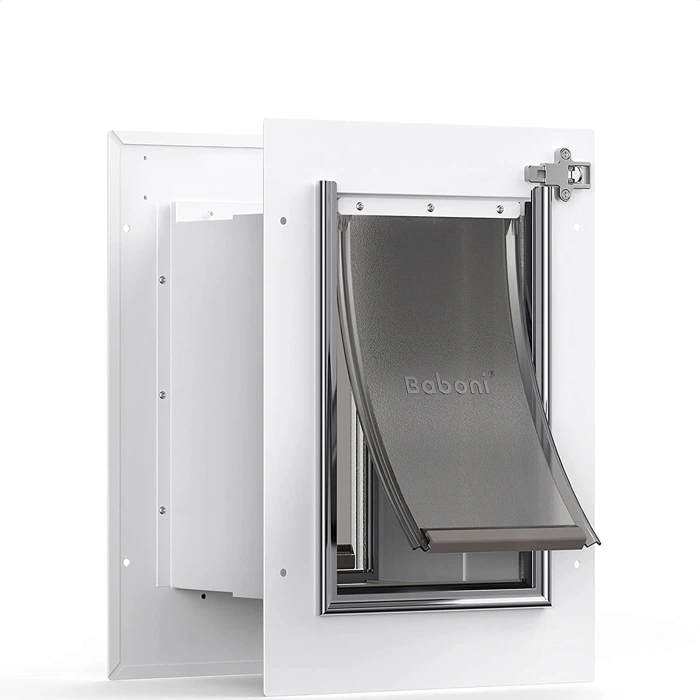
Baboni Small Double Flap Pet Door for Wall with Steel Frame and Telescoping Tunnel
The Baboni Small Double Flap Pet Door for Wall delivers structural quality and energy efficiency through a steel frame, dual magnetic flaps, and a telescoping tunnel that adapts to variable wall thickness. This model prioritizes insulation and installation flexibility over automated access - it does not feature microchip activation, so selective entry requires manual locking.
The double-flap design uses magnets to create a tighter seal than single-flap models, reducing drafts and outdoor noise. The steel frame offers durability and a clean, brushed-metal aesthetic that fits modern and minimalist exteriors. The telescoping tunnel adjusts to accommodate different wall constructions, making it a practical choice for brick, concrete, or wood installations where wall depth varies.
Because this door lacks microchip recognition, it cannot grant selective access based on your pet's chip. You'll need to use the manual lock to control when the door is open or closed, which works well in homes where all pets are allowed outdoors or where you prefer scheduled access rather than automated entry.
The combination of steel construction, dual magnetic seals, and adjustable tunnel makes this model well-suited to homeowners in cold or windy climates who need reliable insulation and a sturdy frame. The white-and-metal finish integrates easily into contemporary architectural styles without adding visual clutter.
With a 4.7 rating, the Baboni door has demonstrated reliable performance in real-world conditions, including harsh weather. If your priority is structural integrity, energy efficiency, and a minimalist look - and you don't require automated pet recognition - this wall-mount option offers solid value at $79.99.
- ✅ Steel frame provides durability and modern aesthetic
- ✅ Double magnetic flaps create tight seal against drafts and noise
- ✅ Telescoping tunnel adjusts to variable wall thickness
- ✅ Clean white-and-metal finish suits minimalist design
- ✅ Strong 4.7 rating supports reliability in harsh climates
- ⚠️ No microchip activation - selective access requires manual locking
- ⚠️ Wall installation requires cutting and structural modification
- ⚠️ Manual lock only, no automated pet recognition