We may earn a commission when you buy through links on this page, at no extra cost to you. How this works.
Rear Cover for Automatic Microchip Cat Pet Feeder
Stop food theft and waste with microchip feeders that lock access to wet meals.
Use the matching tool first
Start with Smart Feeder Portion Calculator if you want to narrow the fit before checking current offers.
Wet food loses moisture and appeal within two hours at room temperature, yet selective eaters often graze across the day rather than finish meals on schedule. In multi-pet homes, food theft compounds the problem: dominant animals raid bowls meant for others, and timid eaters skip meals entirely. Microchip-activated feeders address both issues by granting access only to the registered pet and sealing the bowl between visits, but the technology introduces new tradeoffs.
Three attributes separate practical solutions from expensive frustration. Access control reliability determines whether the feeder consistently reads your pet's chip at the correct distance without false triggers or lockouts. Freshness preservation depends on lid-seal design, portion sizing that matches real meal patterns, and whether the unit can maintain a cool environment or simply block air exposure. Integration flexibility covers compatibility with existing microchips, the ability to register multiple pets on overlapping schedules, and whether smart-home connectivity adds useful control or just another app to manage.
The core decision splits along two lines. Precision systems use motorized lids, app-based scheduling, and real-time notifications, but carry higher price tags and depend on stable power and wireless connections. Standalone models offer mechanical simplicity and lower cost, yet sacrifice remote monitoring and advanced portion logic. Selective eaters benefit most when the feeder's open window aligns with their natural grazing rhythm, while multi-pet households need clear differentiation so each animal receives the correct diet without competition or theft.
Choosing the right feeder means matching your household's specific friction points - spoilage waste, mealtime conflict, or dietary separation - to the features that directly solve them, rather than paying for capabilities you will not use.
Why Microchip Activation Matters for Wet Food (and When It Doesn't)
Microchip-activated feeders solve a problem that basic timers cannot: they grant each pet individual access to specific food. A built-in RFID or microchip reader scans the unique ID embedded in a pet's collar tag or subcutaneous microchip, then unlocks the bowl lid only for that animal. This targeted control becomes essential when one cat requires a prescription diet while another eats standard food, or when a faster eater routinely steals meals from a slower companion.
Wet food feeders face stricter demands than dry-kibble dispensers. Canned or fresh food spoils quickly, attracts insects, and dries out when exposed to air. A microchip feeder that opens the lid only when the correct pet approaches - and re-seals immediately after - keeps each portion fresh and limits contamination. Standard timer feeders open at a fixed hour for any animal in the household, making them ineffective in multi-pet homes with different dietary needs.
Tag compatibility varies by model. Some units read ISO 11784/11785 FDX-B microchips, the international standard used by most veterinary clinics, while others require proprietary RFID collar tags. Check whether your pet's existing microchip format is supported or whether you will need to purchase and attach an additional tag. Maximum pet capacity typically ranges from one to thirty-two registered profiles, and lid-seal speed - the time between the authorized pet stepping away and the lid closing - can range from a few seconds to thirty. Faster re-seal times reduce the window for opportunistic pets to sneak a bite.
A microchip feeder may be unnecessary if you have a single pet, feed on a strict manual schedule, or your cats eat identical diets without resource guarding. In those cases, a simpler timed dispenser or gravity bowl will cost less and require fewer batteries. The value of microchip activation lies in selective access and portion security, not automation alone.
Microchip Feeders vs. Timer Feeders: When to Choose Which
Choosing between a microchip feeder and a timer feeder depends on whether you need to controlwhoeats orwhenthey eat. Microchip-activated feeders solve access problems: they keep one pet out of another's bowl, enforce strict dietary separation, and prevent food theft in multi-pet households. Timer feeders, by contrast, dispense meals on a schedule but cannot distinguish between animals. If your selective eater shares space with a food-aggressive cat or a pet on a restricted diet, the microchip model provides the enforcement a timer cannot.
The tradeoff is cost and setup complexity. Microchip feeders typically run $100 - $150 more than basic timer models and require each pet to wear a compatible collar tag or have an existing ISO microchip. Timer feeders are simpler: plug in, set the clock, and walk away. They work well when all pets eat the same food on the same schedule and no one steals from another's bowl.
In some multi-pet homes, a hybrid approach makes sense. Use a microchip feeder for the pet with the special diet or the one being bullied at mealtime, and pair it with a timer feeder for the rest of the group. This combination gives you targeted access control where you need it without paying for multiple high-tech units. The decision comes down to your specific household dynamic: if portion theft or diet mixing is the problem, microchip activation is worth the investment. If you simply want scheduled feeding without access issues, a quality timer feeder will do the job at half the price.
How to Maintain Freshness in Wet Food Feeders Beyond the Lid Seal
A tight lid seal keeps pests and paws away, but wet food will still spoil if it sits too long in a warm room. Most microchip feeders lack active refrigeration, so ambient temperature and time become the real limits on freshness.
Manufacturers typically suggest a 4 - 8 hour window for wet food at room temperature, though warmer kitchens or summer heat can shorten that window considerably. Food left beyond that range may develop an off smell, change texture, or lose palatability - even if the lid stayed closed the entire time.
Some feeder designs include shallow compartments beneath the bowl where you can slide a slim ice pack. These compartments add a degree or two of cooling and can stretch freshness by an hour or two, but they are not a substitute for refrigeration. The ice melts, and once it does, the bowl returns to ambient temperature.
Pre-chilling the stainless steel bowl in the refrigerator for 15 minutes before you load it can buy a small buffer, especially on hot days. Smaller portions also help: a tablespoon of food warms more slowly than a full cup, and selective eaters often prefer smaller, more frequent servings anyway.
If you work a standard eight-hour day, a single morning fill usually stays within the safe window. Longer shifts or unpredictable schedules call for a mid-day top-up or a second feeder programmed to unlock later in the day. Splitting the daily ration across two feeding windows keeps each portion fresher and reduces waste from uneaten, dried-out food.
Check the bowl every evening. If you notice a crust forming around the edges or a sour smell, the food sat too long. Adjust portion size, refill timing, or relocate the feeder to a cooler spot away from sunny windows or heat vents. Freshness is a function of time and temperature, and small changes to either variable make a noticeable difference.
Smart Home Integration: What Actually Works with Microchip Feeders
Most microchip-activated wet food feeders connect to proprietary smartphone apps that log feeding activity and send low-battery or lid-open alerts, but full integration with HomeKit, Alexa, or Google Home remains rare in this product category. The SureFeed Sealed Pet Bowl and similar models offer app-based monitoring that shows which pet accessed the bowl and when, useful for multi-pet households where one cat refuses food while another overeats. These apps function as activity dashboards rather than automation hubs - you can review patterns but cannot trigger feeding remotely or build routines with other smart devices.
Connected models justify their price when you need feeding confirmation during work travel or want to spot appetite changes across multiple selective eaters without checking physical bowls. A timestamped log showing your senior cat skipped breakfast two days in a row provides actionable information. Push notifications for a stuck lid or depleted battery prevent spoiled food and missed meals. These practical benefits matter more than voice-command novelty in a product designed to solve access control, not scheduling.
Avoid models that promise smart-home compatibility without specifying which platforms or API access they support. Marketing language like "works with your connected lifestyle" often means a standalone app with no third-party integration. If true platform compatibility matters for your household routines, verify the exact services supported and read recent user reports on connectivity stability. For most selective-eater scenarios, a reliable app that tracks individual pet access and sends critical alerts delivers enough value without requiring your feeder to participate in whole-home automation.
Common Pitfalls: Why Some Pets Refuse Microchip Feeders (and How to Fix It)
Motor noise, unfamiliar lid movement, and the enclosed bowl design cause some cats to avoid microchip feeders during the first few days. A cat accustomed to open bowls may hesitate when a lid clicks shut or swooshes open, interpreting the sound as a threat rather than an invitation to eat.
Start by propping the feeder lid fully open and placing a favorite treat or a small portion of wet food inside. Let your cat explore the bowl without any automatic activation for 24 to 48 hours. Once your pet eats comfortably from the stationary bowl, lower the lid halfway and repeat the process. This gradual exposure reduces startle responses and builds positive associations with the feeder's shape and scent.
When you activate the microchip sensor, set the lid to open slowly if your model offers speed adjustment. Stand a few feet away during the first automatic cycle so your cat does not link your presence to the mechanical sound. If your pet backs away, wait an hour and try again rather than forcing interaction. Most cats adapt within three to five days when you pair each successful approach with a high-value reward.
Microchip feeders are not ideal for every household. Cats with severe noise sensitivity - those who flee at the sound of a can opener or vacuum - may never relax around a motorized lid. Large or senior pets with arthritis or limited mobility sometimes struggle to lean into a raised, enclosed bowl, especially if the feeder's interior is deep or narrow. In multi-pet homes where one cat is highly food-motivated and another is timid, the dominant pet may guard the feeder and prevent the quieter cat from approaching, even if the lid remains closed.
If your cat refuses the feeder after two weeks of gradual acclimation, evaluate whether the bowl height, lid noise, or feeding schedule aligns with your pet's behavior. Switching to a shallower dish insert or relocating the feeder to a quieter corner can resolve hesitation. When environmental tweaks fail, a traditional timed feeder with a transparent lid or no lid at all may suit a noise-averse or mobility-limited cat better than microchip access control.
Cost Breakdown: Base Unit, Accessories, and Lifetime Ownership
A microchip-activated wet food feeder typically costs between $100 and $180 for the base unit, but understanding the full ownership picture helps you budget accurately. Bowl sets run $19.99 for a pack of compatible dishes, while replacement lids and freshness covers range from $17.95 for basic snap-on versions to $42.74 for premium sealed models. If your feeder relies on batteries, expect to replace four C-cells every three to six months at roughly $8 - $12 per change; opt for a power adapter (usually $15 - $25) to eliminate that recurring expense.
Over a three-to-five-year lifespan, add $60 - $150 for replacement bowls and covers as seals wear or dishes crack, plus battery costs if you skip the adapter. Compare that cumulative spend against the hidden costs these feeders help avoid: wasted wet food when one pet raids another's portion, emergency vet visits triggered by dietary cross-contamination, and pet-sitter fees for twice-daily feeding routines you can now automate. For professionals who value predictable scheduling and fewer middle-of-the-day interruptions, the time savings alone often justify the upfront investment within the first year.
Budgeting tip: buy a spare bowl set and at least one extra cover at purchase to keep rotation smooth during cleaning cycles, and choose the AC adapter from day one if outlets are accessible near your feeding station. This approach minimizes surprise costs and keeps the feeder reliably available even when one component needs a wash or replacement.
Making Mealtime Stress-Free: Final Recommendations
Choosing a microchip-activated feeder comes down to matching your household's specific pain points with the right combination of base unit and accessories. The SureFeed Microchip Pet Feeder and its sealed variant share the same footprint and accessory ecosystem, which means you can start with the model that fits your budget and add components like stainless steel bowls, rear covers, or replacement front panels as your needs evolve.
If hygiene is your primary concern, prioritize stainless steel bowls and the sealed bowl system from the start. Multi-pet homes benefit most from the rear cover accessory, which blocks determined food thieves approaching from behind. For wear-prone households with active cats or dogs, keeping a replacement front cover on hand extends the life of your investment without replacing the entire unit.
Before purchasing, verify that your pet's microchip appears on the manufacturer's compatibility list - most ISO 11784/11785 chips work, but proprietary formats may not register. Measure your pet's typical wet food portion to confirm the bowl capacity matches their daily intake, especially if you're feeding larger cats or small dogs. Cross-reference the base unit's model number with accessory compatibility charts to avoid ordering parts that don't fit.
The best feeder is the one your pet will use consistently without stress. Start with a verified base unit that meets your core requirements, then bookmark accessory links for future maintenance. As your household's routine changes or wear appears, you'll already know which components integrate seamlessly with your existing setup.
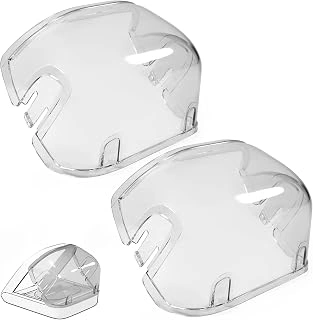
Rear Cover for Automatic Microchip Cat Pet Feeder
If you already own a SureFeed microchip feeder and need to adjust your setup, the Rear Cover for Automatic Microchip Cat Pet Feeder offers a way to expand bowl configuration or add spill protection without replacing the entire unit. Priced at $42.74, this accessory is designed for the SureFeed ecosystem and serves homes that have invested in the base system but need incremental flexibility - whether that means accommodating a second pet bowl, improving splash containment, or modifying access points.
The cover connects to compatible SureFeed feeders and allows you to customize the layout for multi-pet households where one feeder might serve more than one selective eater. Because it's an add-on rather than a standalone feeder, the value proposition depends entirely on whether you already use a SureFeed base unit. For new buyers building a system from scratch, the rear cover becomes part of a larger investment; for existing owners, it can solve specific layout or capacity challenges without starting over.
Compatibility is limited to SureFeed models, so confirm your feeder version before purchasing. The 4.7/5 rating suggests most users find it fits as expected and delivers on the modest goal of extending their current setup. The price reflects its niche role - this is not a budget-friendly accessory, but it may be the most direct way to add functionality if replacing or adding a full second feeder isn't practical.
Consider this rear cover if you're happy with your SureFeed feeder's microchip recognition and food freshness performance but need to tweak the physical arrangement. It won't add microchip capability on its own, and it won't work with feeders outside the SureFeed line. For households managing selective eaters across multiple feeding stations, the rear cover can help you scale your existing investment without introducing a new system or brand.
- ✅ Extends SureFeed feeder configuration without replacing the base unit
- ✅ Adds bowl capacity or spill protection for multi-pet setups
- ✅ 4.7/5 rating indicates reliable fit and function
- ⚠️ $42.74 price is steep for an accessory
- ⚠️ Only compatible with SureFeed feeder systems
- ⚠️ No standalone value - requires existing base unit
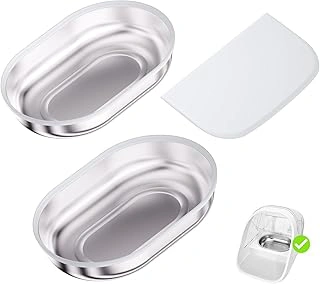
Stainless Steel Bowl Set for Automatic Microchip Cat Feeder
Plastic feeder bowls absorb odors, scratch easily, and harbor bacteria in the crevices - especially when you're serving wet food multiple times a day. This stainless steel bowl set replaces the standard plastic inserts in SureFeed microchip feeders, offering a more sanitary and longer-lasting alternative for selective eaters who need consistent freshness.
Stainless steel resists odor absorption and wipes clean without retaining the fish or poultry smell that can make fussy cats reject their next meal. The material is dishwasher-safe and won't develop the micro-scratches that trap food residue over time. If you've noticed your cat hesitating at the feeder or your plastic bowls looking cloudy after a few months, swapping to stainless can restore appeal without replacing the entire unit.
At $19.99 with a 5.0 rating, the set provides a low-cost upgrade that extends the functional life of your existing SureFeed feeder. The bowls drop into the same tray slots, so installation takes seconds and doesn't affect microchip recognition or lid operation. This is an accessory pack, not a standalone feeder - you'll need a compatible SureFeed base unit already in place.
Consider this upgrade if you're running multiple daily wet-food cycles, managing a household with several selective eaters, or if your current plastic inserts show discoloration or persistent smell. The durability and ease of cleaning make stainless steel especially practical in multi-pet homes where hygiene directly impacts feeding behavior.
- ✅ Odor-resistant stainless steel preserves freshness for selective eaters
- ✅ Dishwasher-safe and scratch-resistant for long-term hygiene
- ✅ Direct fit for SureFeed microchip feeders with no installation complexity
- ✅ $19.99 price point for a durable, low-friction upgrade
- ⚠️ Requires an existing SureFeed feeder base - not a complete feeding solution
- ⚠️ Stainless steel may feel colder to the touch, which some cats notice initially
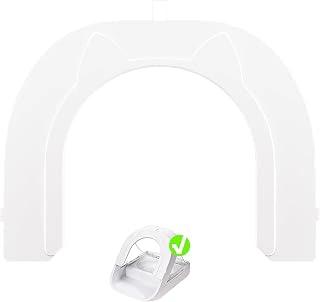
Front Cover for Automatic Microchip Cat Feeder
Long-term SureFeed owners eventually face a common issue: the front cover that seals the feeding bowl begins to crack, loses its tight seal, or shows wear from daily use. When that happens, replacing just the front cover can extend the life of a microchip feeder that costs over multiple, making this $17.95 replacement part a practical maintenance option rather than buying an entirely new unit.
The front cover plays a critical role in preserving wet food freshness between feedings and preventing pets from accessing the bowl before the sensor activates. A worn or damaged lid compromises that seal, allowing odors to escape and potentially letting a determined cat pry the feeder open. This replacement part restores the original tight fit and smooth operation.
With a 5.0 rating, users report that the cover matches the fit and finish of the original component. Installation is straightforward: the cover snaps onto the feeder base in the same position as the factory part. The compatibility is specific to SureFeed automatic microchip feeders, so verifying your model number before purchase ensures a proper match and avoids return delays.
This is not a standalone feeder - it's a cost-effective repair solution for owners who already have a working SureFeed base unit. If your feeder's electronics and microchip reader still function reliably but the lid has deteriorated, replacing only the front cover restores full functionality at a fraction of the cost of a new feeder. For multi-pet households or selective eaters relying on microchip access control, keeping the seal intact maintains the feeder's core value: portion control and freshness protection between meals.
- ✅ Extends life of expensive base unit at low cost
- ✅ Restores tight seal for freshness and access control
- ✅ Strong fit and finish matching original component
- ✅ Simple snap-on installation
- ⚠️ Requires existing SureFeed feeder base unit
- ⚠️ Model-specific compatibility must be verified before purchase
What to Check Before You Buy a Microchip Wet Food Feeder
- Confirm your pet's microchip or RFID collar tag is compatible with the feeder's reader
- Measure the bowl capacity against your pet's portion size and feeding frequency
- Check the lid seal mechanism and closure speed to prevent early access
- Verify power source: battery-only, plug-in, or hybrid backup options
- Confirm the maximum number of pets the unit can register and differentiate
- Check if the feeder integrates with your existing smart home platform or app