We may earn a commission when you buy through links on this page, at no extra cost to you. How this works.
Feeding multiple pets in the same household becomes a real problem when dietary needs clash. A cat recovering from surgery needs precise meal timing and prescription food, while the healthy housemate steals from any bowl left unguarded. Bowl-based feeding offers no enforcement: you can separate bowls by distance or height, but a determined thief will find a way, and you cannot monitor compliance when you're at work or asleep.
RFID collar-sensor feeders solve this by reading a unique tag worn by each pet and opening the lid only for the registered animal. The technology creates a physical barrier that manual routines cannot match. One pet gets timed portions of weight-management kibble; another receives free access to maintenance food. Prescription diets stay protected, feeding schedules stay independent, and food theft stops.
This guide compares three configurations from PETLIBRO, a brand that has built its RFID platform around modular One RFID feeder units. You can deploy a single feeder with individual collar control, pair two feeders for side-by-side targeted feeding, or add the Polar wet-food companion when one pet needs refrigerated meals. Each setup uses the same collar sensor system but serves different household feeding patterns. The decision comes down to dry versus wet food requirements, portion automation preferences, and whether your pets need separate feeding stations or can share a location with sequential access.
Quick comparison
| PETLIBRO RFID Automatic Cat Feeder with Collar Sensor, Wi-Fi Programmable | Check current price and availability |
| PETLIBRO RFID Automatic Cat Feeder, Collar Tag-Activated, 5G/2.4G Wi-Fi Programmable | Check current price and availability |
| PETLIBRO Automatic Cat Feeders, RFID Collar Tag, 2-Pack | Check current price and availability |
Use the matching tool first
Start with Smart Feeder Portion Calculator if you want to narrow the fit before checking current offers.
How RFID Collar Sensors Solve Food Theft and Prescription Compliance
Food theft between pets disrupts portion control, undermines prescription diets, and creates mealtime stress. RFID collar-based feeders address these problems with a straightforward system: each pet wears a lightweight tag that this product a unique identifier, the feeder's sensor reads the signal as the animal approaches, and a motorized lid unlocks only for the authorized pet. After a set feeding window - typically adjustable from seconds to minutes - the lid closes, preventing other animals from accessing the bowl.
This approach sits between two alternatives. Microchip readers scan implanted identification chips already present in many pets, but they require the animal to position its head within millimeters of the scanner and may fail if the chip migrates under the skin. Camera-based systems use facial recognition or body-shape analysis, yet performance depends on consistent lighting, camera angle, and coat color contrast. RFID tags worn on a collar eliminate the surgical requirement of microchips and the environmental sensitivity of cameras, operating reliably in dim rooms, with pets of any size or fur pattern.
The RFID tag itself is passive - it contains no battery and activates only when the feeder's reader field energizes it at close range, usually within six to twelve inches. This short read distance prevents accidental activation from pets walking past the feeder and keeps the system focused on the animal actively eating. Once the designated meal window expires or the pet steps away, the lid returns to the closed position, locking out food-motivated housemates. For homes managing diabetes, weight loss, or gastrointestinal prescriptions across multiple animals, this targeted access turns shared feeding stations into individualized meal zones without manual intervention.
RFID vs. Microchip Feeders: Which Technology Fits Your Home?
RFID collar tags and microchip readers solve the same problem - controlling who eats what - but they do it in fundamentally different ways, and the right choice depends on whether your pets already have identification technology in place and how they tolerate wearing accessories.
RFID systems attach a small plastic tag to your pet's existing collar. The feeder reads the tag when your pet approaches and unlocks the bowl if that pet is authorized. These tags require small watch batteries that last six to twelve months, and you can swap them between collars or replace lost tags without a vet visit. Any pet can use RFID immediately, whether it's a cat, small dog, or a newly adopted animal. The trade-off is the wearable itself: some cats pull collars off, tags can fall into water bowls, and batteries do eventually need replacement.
Microchip feeders read the permanent ISO identification chip implanted under your pet's skin, typically between the shoulder blades. No collar, no battery, and no risk of losing the tag. The ID is already there if your pet came from a shelter or if you've microchipped for recovery purposes. But microchip feeders cost more, the implant requires a vet appointment if your pet isn't already chipped, and you're locked into feeders that support that specific chip standard. Not all feeders read every microchip format, so compatibility becomes a real consideration.
If your pets already wear collars comfortably and you want flexibility across multiple feeder brands, RFID gives you a faster, lower-cost start. If your pets are microchipped, hate collars, or you want a permanent solution with zero maintenance, a microchip feeder removes the wearable hassle entirely. Both technologies work reliably when the hardware matches your household, so the decision hinges on what your pets already tolerate and whether you value replaceability or invisibility more.
Common Setup Pitfalls and How to Avoid Them
Wi-Fi pairing failures are the most common frustration during initial setup. Most RFID smart feeders require a 2.4 GHz network - 5 GHz bands won't work - and routers with certain security protocols or hidden SSIDs can prevent pairing. Restart both the feeder and your router, confirm the network band, and temporarily disable MAC filtering or guest isolation during setup. Position the feeder within strong signal range; thick walls or metal appliances between the feeder and router often cause dropped connections even after successful pairing.
Collar tag detection issues usually stem from incorrect tag registration or insufficient read range. Scan each tag within one inch of the feeder's antenna during setup, and verify the app confirms the correct pet profile. If a tag isn't detected reliably, check the battery orientation in disc-style tags or replace batteries in active RFID tags after six to twelve months. Fur length and collar fit also matter - tags worn too loosely or buried under thick fur may read inconsistently. Test detection by having each pet approach the feeder slowly; the sensor needs a stable read, not a quick pass.
Pets learning to hover near the feeder when it opens for another animal is a this product challenge, not a hardware defect. The lid mechanism takes two to four seconds to close after the registered pet steps away, and food-motivated animals quickly learn to dart in during that window. Combat this by feeding in separate rooms during the first week, using timed feedings when you can supervise, or enabling the feeder's optional close-delay settings if available. Some households place a physical barrier or baby gate to create feeding zones until pets accept the new routine.
App notification failures often trace to this product data restrictions or battery optimization settings on your phone. Both iOS and Android aggressively limit this product activity for third-party apps; manually exempt the feeder app from battery-saver modes and confirm notification permissions are fully enabled. Push alerts for low food, feeding events, or offline status can take several minutes to arrive, so don't rely on real-time alerts for urgent situations. Test notifications by triggering a manual feed or removing the food hopper to confirm the system is communicating.
Expect the first week to involve adjustment for both technology and pets. Most animals need three to seven days to associate the collar tag with access, and skittish pets may refuse to approach the feeder until they trust the lid movement. Keep the feeder open manually or disable the RFID lock temporarily to let cautious pets build confidence, then re-enable restricted access once they're comfortable. Budget time for firmware updates, tag swaps, and small positioning tweaks - friction is normal, but most issues resolve with patient troubleshooting rather than product returns.
Ensuring Every Pet Gets Their Fair Share Without the Guilt
Mealtime stress becomes a thing of the past when technology handles portion control and access for you. RFID collar feeders shift the enforcement burden away from the owner, letting each pet eat the right food at the right time without constant supervision. You no longer need to separate animals into different rooms, hover over bowls, or second-guess whether the pushy eater grabbed the prescription kibble meant for the senior cat.
Audit logs add another layer of confidence. Each feeder records which pet accessed the bowl and when, so you can verify compliance without standing guard. If a prescription diet requires strict adherence, the data trail confirms your pet is getting every meal as planned. That visibility turns guesswork into certainty and removes the guilt that comes with wondering whether you missed a feeding or let the wrong animal sneak a bite.
All three models featured above deliver the core promise: targeted feeding controlled by collar tags, customizable access schedules, and real-time tracking. The choice comes down to your household's specific needs. If you have a stable local network and want the lowest upfront cost, the SureFeed Microchip works well for one or two pets. Households with spotty Wi-Fi or more than three animals gain flexibility from the PetSafe Smart Feed's offline scheduling and larger hopper. For multi-room setups or owners who travel frequently, the Whisker Feeder Connect offers remote oversight and multi-unit synchronization that justify the higher price.
Before committing to a purchase, compare router compatibility, the number of collar tags included in each package, and whether your pet count will grow in the near future. Revisit the three models above, check current pricing, and confirm the unit count matches your household scale. The right feeder will take mealtime management off your plate and give every pet their fair share without the daily worry.
Key Features to Evaluate Before Buying an RFID Pet Feeder
- Collar tag battery life and replacement cost
- Wi-Fi band compatibility with your home router (2.4G vs. 5G)
- App reliability and cloud service uptime history
- Food capacity and portion granularity for your pet's diet
- Lid lock speed and noise level during meal access
- Number of pets and whether each needs a dedicated unit
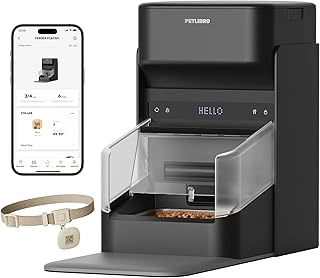
PETLIBRO RFID Automatic Cat Feeder with Collar Sensor, Wi-Fi Programmable
Managing food for multiple cats becomes straightforward when only one animal needs restricted access. The PETLIBRO RFID Automatic Cat Feeder uses a lightweight collar tag to recognize your designated pet, opening the feeder lid only when that specific animal approaches. This single-unit design reduces the need for multiple bowls or physical barriers, and the included multiple GHz Wi-Fi connection lets you adjust portion sizes and feeding schedules remotely through the companion app.
Setup involves pairing the RFID collar tag - about the size of a quarter - with the feeder's sensor, then programming meal times and quantities via smartphone. The app logs every feeding event, showing when the authorized pet accessed the bowl and how much food was dispensed. This history tracking proves useful when monitoring prescription diets or weight-management plans, since you can confirm actual intake rather than guessing how much disappeared from a shared bowl.
The feeder holds enough dry kibble for several days and dispenses in customizable portions, though you'll need to verify your specific kibble size flows smoothly through the auger mechanism. The collar tag itself is lightweight enough for most adult cats, but kittens or very small breeds may find even a minimal collar uncomfortable for extended wear. Battery backup keeps schedules running during brief power interruptions, and the unit's footprint fits comfortably in most feeding areas without dominating the space.
At $139.99 with a 4.2 rating, this model balances cost and capability for households where one pet needs controlled access but you don't want to isolate animals in separate rooms. The Wi-Fi feature adds convenience for adjusting meals when you're away, and the feeding log offers transparency that gravity feeders or basic timers can't match. If your situation involves multiple pets all requiring individualized portions, you'll need to compare this single-access approach against systems that accommodate several unique RFID tags simultaneously.
- ✅ RFID collar tag included for single-pet access control
- ✅ Wi-Fi app enables remote portion adjustments and schedule changes
- ✅ Feeding history logs confirm actual intake for diet tracking
- ✅ Battery backup maintains schedules during power outages
- ⚠️ Recognizes only one RFID tag; additional pets share unrestricted access
- ⚠️ Collar tag may feel bulky on very small cats or kittens
- ⚠️ Requires stable 2.4 GHz Wi-Fi; 5 GHz networks not supported
- ⚠️ Kibble size and shape affect dispensing reliability
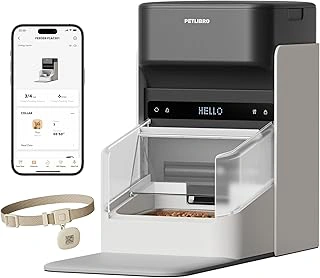
PETLIBRO RFID Automatic Cat Feeder, Collar Tag-Activated, 5G/2.4G Wi-Fi Programmable
Households running dual-band or mesh Wi-Fi networks often struggle with smart pet feeders that only support 2.4 GHz, forcing manual band switching during setup. The PETLIBRO RFID Automatic Cat Feeder solves this compatibility gap by supporting both 5G and 2.4G Wi-Fi bands, so it connects reliably whether your router PETLIBRO RFID Automatic Cat Feeder, Collar Tag-Activated, 5G/2.4G Wi-Fi Programmable on one band or automatically steers devices across both.
At $139.99 with a 4.2 rating, this feeder offers the same core RFID-controlled feeding, scheduling, and portion tracking as PETLIBRO's other collar-tag models. The dual-band radio is the primary difference: if your home network uses a newer mesh system or a router that prefers 5 GHz for compatible devices, this version reduces the need to disable bands, rename SSIDs, or troubleshoot dropped connections during pairing.
The RFID collar tag still triggers the lid to open only for the registered pet, meal schedules load through the app, and you can review feeding history remotely. Food capacity, bowl design, and battery backup remain consistent with PETLIBRO's standard architecture. Network flexibility is the trade you're paying for - feature parity otherwise is identical to the 2.4 GHz-only variant.
Choose this feeder if your router setup makes 2.4 GHz-only devices frustrating to onboard, or if you want one fewer compatibility variable when adding a new smart device. If your network is straightforward single-band 2.4 GHz, the extra radio capability won't add practical value, and you may prefer to compare the standard model's availability and any bundle offers before deciding.
- ✅ Supports both 5G and 2.4G Wi-Fi bands for easier pairing with dual-band and mesh routers
- ✅ RFID collar tag prevents food theft between pets
- ✅ Same $139.99 price as comparable single-band models
- ⚠️ Dual-band capability adds no value on simple 2.4 GHz-only networks
- ⚠️ Feature set otherwise identical to standard PETLIBRO RFID feeders
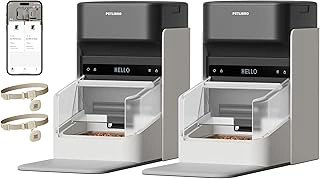
PETLIBRO Automatic Cat Feeders, RFID Collar Tag, 2-Pack
Homes with more than two pets, or households that need separate feeding zones for wet and dry food, will find the most value in this two-feeder bundle. The PETLIBRO RFID Automatic Cat Feeders come as a matched pair for $233.61, each equipped with collar-tag recognition to ensure only the designated pet accesses that bowl. Each unit runs independently through its own app connection, so you configure schedules, portion sizes, and RFID permissions separately for each station.
Spatial separation is the primary advantage here. Placing one feeder in the kitchen and another in a bedroom or den reduces crowding at meal times, particularly useful when one pet eats slowly or becomes anxious around competing animals. The RFID collar tags lock and unlock the bowl lid based on proximity, so even when feeders sit in different rooms, the correct pet still triggers access at the correct location.
Setup requires pairing each feeder individually in the app, which adds a few extra minutes during initial configuration but keeps feeding stations truly independent. If one unit loses Wi-Fi, the other continues operating on its stored schedule. This redundancy matters in larger homes where network coverage varies by room.
The trade-off is upfront cost. At $233.61 for the pair, you pay roughly multiple per unit, which sits below the single-feeder retail price when PETLIBRO sells them separately. The savings make sense if you already know you need two stations, but represent a larger initial investment than single-feeder solutions. Households managing prescription diets for multiple animals, or splitting feeding duties across floors, will recover that cost through reduced food theft and fewer missed medication doses mixed into meals.
Each feeder includes one RFID collar tag, so the bundle provides tags for two pets out of the box. Additional collar tags are sold separately if you need to authorize more animals per station or run overlapping access permissions. Battery backup on each unit preserves schedules during brief power interruptions, and the 4.2/5 rating reflects stable long-term operation in multi-pet environments.
This two-pack works best when you need distinct feeding zones rather than a single high-capacity station. The per-unit cost advantage and independent operation make it a practical choice for scaling RFID feeding across multiple rooms or managing complex diet protocols without bottlenecking pets at one location.
Check current price and availability