We may earn a commission when you buy through links on this page, at no extra cost to you. How this works.
Solar Powered AI Smart Bird Feeder with 4K Camera and Wi-Fi
Compare solar-powered AI bird feeders that identify species in real time.
Use the matching tool first
Start with Smart Feeder Portion Calculator if you want to narrow the fit before checking current offers.
Smart bird feeders with camera recognition turn casual backyard watching into a precise identification experience, capturing species you might otherwise miss and delivering notifications when new visitors arrive. The technology centers on four practical trade-offs: AI recognition accuracy determines whether you receive correct species names or vague guesses, camera resolution controls the detail you see in feathers and markings, night visibility decides whether you capture early-morning or dusk activity, and solar efficiency affects how often you need to recharge or swap batteries.
All three feeders in this guide use solar panels and AI-driven species identification, so the differences narrow to resolution priorities and low-light performance. A 4K sensor records sharper close-ups of small songbirds and produces images worth sharing, while a 2K sensor offers adequate clarity for casual identification at a lower price. Night visibility relies on infrared LEDs or low-light sensors; some models illuminate birds without startling them, others capture silhouettes that confirm activity but sacrifice color and fine detail.
Your choice hinges on whether you want gallery-quality stills or simply reliable species logs, and whether dawn and dusk viewing matters enough to justify the cost difference. Solar efficiency varies by panel size and battery capacity - higher-capacity models run longer on cloudy days, while smaller units may require midwinter charging in northern climates. The right feeder matches your viewing habits and regional sunlight rather than chasing every specification.
Key Features to Look for in a Smart Bird Feeder
- Camera resolution: 4K for maximum detail, 2K for balanced performance and battery efficiency
- AI recognition database: verify the species library covers your local birds
- Solar panel capacity: ensure the battery lasts through multiple cloudy days
- Night vision or low-light capability: essential for dawn and dusk activity
- Wi-Fi range and app stability: check reviews for connectivity complaints
- Weather-resistant build: look for IP ratings and UV-resistant materials
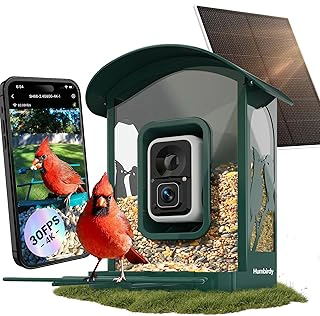
Solar Powered AI Smart Bird Feeder with 4K Camera and Wi-Fi
The Solar Powered AI Smart Bird Feeder with 4K Camera and Wi-Fi delivers the highest resolution available in this category, making it the right choice when photo clarity matters most. At $134.97 with a 4.6 out of 5 rating, this feeder captures bird details - feather patterns, beak structure, eye color - that lower-resolution models miss.
The 4K sensor produces images sharp enough for cropping, printing, or sharing on social media without visible loss of quality. If you plan to create bird photo galleries, identify rare species, or simply want the clearest possible view of backyard visitors, the extra pixels make a noticeable difference compared to 2K alternatives. The solar panel handles the camera's power needs without frequent battery swaps, and Wi-Fi connectivity lets you review footage or receive alerts from your phone.
The tradeoff for 4K is storage: video files are larger, so cloud or local storage fills faster than with lower-resolution feeders. The higher price also means you're paying roughly the listed amount more than comparable 2K models. That premium makes sense if image quality is your priority, but less so if you only check in occasionally or view footage on a small phone screen.
This feeder works best for users who want the sharpest possible bird photography and are comfortable managing larger file sizes.Check current priceto compare the 4K feature set against your budget and storage setup.
- ✅ 4K resolution captures fine details like feather texture and eye color
- ✅ Solar panel reduces battery maintenance
- ✅ Wi-Fi connectivity for remote viewing and alerts
- ⚠️ Larger file sizes require more storage space
- ⚠️ Higher price than 2K alternatives
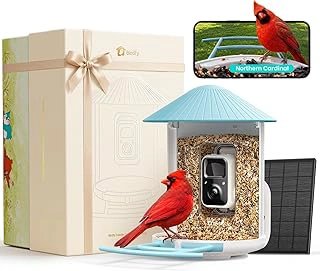
Birdfy Solar Powered Smart Bird Feeder with 2K AI Camera
The Birdfy Solar Powered Smart Bird Feeder with 2K AI Camera sits at $129.98 and carries a 4.6 rating, making it a strong middle option for users who want fast AI species identification without paying for the highest resolution sensor. The 2K camera captures enough detail to identify most common backyard birds quickly, and the lower pixel count may allow the onboard processor to run its recognition library faster and draw less power from the solar panel - useful for feeders placed in partly shaded spots or during shorter winter days.
The solar panel mounted on top recharges the internal battery throughout the day, so you won't need to climb a ladder for frequent USB charging sessions. The AI database is designed to recognize a broad range of species in real time, sending you notifications when a new visitor arrives. While 2K resolution won't match the sharpness of a 4K still frame at full zoom, it still delivers crisp, high-definition footage that makes field marks visible in good daylight and captures recognizable activity clips without overloading your phone's storage.
This feeder works well if you want reliable recognition performance and decent image quality without stretching your budget to the top tier. The tradeoff is straightforward: you give up some pixel density and fine detail in exchange for faster processing and potentially longer battery runtime between solar recharge cycles.Check current priceto compare this model's database size and app interface against other feeders in the category - many buyers find the balance of cost, AI speed, and solar convenience hits the right sweet spot for daily backyard monitoring.
- ✅ Solar panel reduces charging frequency
- ✅ 2K resolution balances detail and processing speed
- ✅ AI recognition delivers fast species notifications
- ✅ Middle-tier pricing at $129.98
- ⚠️ Lower pixel count than 4K alternatives
- ⚠️ Solar charging depends on adequate sunlight exposure
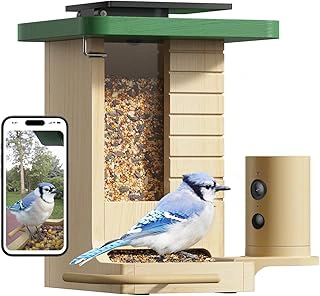
Birdfy Smart Solar Powered Bird Feeder with Camera & Night Insight
If you watch birds at dawn or after sunset, the Birdfy Smart Solar Powered Bird Feeder with Camera & Night Insight stands out for its ability to capture low-light activity without adding external lamps or battery packs. The Night Insight feature uses infrared to record visitors in near-darkness, making it the only feeder in this group that documents early-morning and evening feeding sessions clearly.
At $114.20, this is the most affordable option of the three, and its 4.5 rating reflects a balanced value proposition. You trade a slightly lower overall rating and standard daytime camera specs for around-the-clock observation. The solar panel powers both the camera and night sensor, so you avoid wiring or frequent recharging.
The camera records when motion is detected, and the app saves clips for review. Image quality during daylight is comparable to other mid-range feeders, but the night footage gives you context other models miss - owls, nocturnal songbirds, or mammals investigating the feeder after dark.
Choose this feeder if your schedule or curiosity aligns with low-light hours. You gain observation windows other feeders cannot cover, though users prioritizing the highest daytime image resolution or AI species counts may prefer the iBird or Birdious models instead.
- ✅ Night Insight infrared captures low-light and nocturnal visitors
- ✅ Solar powered for continuous operation without wiring
- ✅ Most affordable of the three at $114.20
- ⚠️ Slightly lower 4.5 rating compared to competitors
- ⚠️ Daytime camera specs are standard, not premium
How We Evaluated Smart Bird Feeders with Camera Recognition
Camera resolution and clarity matter most when you want sharp photos worth sharing or archiving. A feeder with 1080p or better resolution will capture plumage detail, while anything lower may blur quick movements or distant perches. Look for models that adjust exposure automatically so bright morning sun and cloudy afternoons both produce usable images.
AI species identification speed and accuracy separate the practical feeders from the frustrating ones. The best systems recognize common backyard birds in under two seconds and maintain a database that grows with updates. Slower or error-prone recognition means you spend more time correcting labels and less time enjoying the visits.
Solar panel performance and battery autonomy determine whether your feeder keeps working through a week of rain or heavy shade. A robust solar array paired with a high-capacity battery means fewer manual charges and uninterrupted recording. Feeders that rely on small panels or lack efficient power management will go dark when you need them most.
Night vision or low-light capability extends coverage to dawn, dusk, and nocturnal visitors. Infrared LEDs or advanced sensors let you capture owls, flying squirrels, and early risers without washing out the frame. Models without this feature miss half the action in winter months when daylight is short.
Build quality for outdoor durability includes UV-resistant plastics, rust-proof hardware, and weatherproof camera housings rated at least IP65. Feeders that crack in frost, fade in summer sun, or let moisture into the electronics will fail before the first year ends. All three models in this guide are solar-powered and app-connected, so the real comparison hinges on image fidelity and how precisely the AI identifies each species.
Resolution vs Recognition: Which Matters More?
High resolution sounds better on paper, but the tradeoff between 4K image clarity and recognition speed determines how your smart feeder actually performs in daily use. A 4K sensor captures fine feather patterns, eye-ring detail, and crisp texture that remain sharp when you crop or zoom into a photo. That level of detail makes a noticeable difference when you share images or want to study plumage variations up close.
Feeders using 2K sensors process frames faster because each image contains fewer pixels for the AI to analyze. Faster processing translates to quicker species alerts, especially during busy morning hours when multiple birds visit in rapid succession. Lower resolution also reduces power consumption, which extends battery life on solar-hybrid models and keeps the camera responsive in lower light.
If you plan to share bird photos on social platforms or print favorites, 4K gives you usable images even after cropping. If real-time notifications and long battery runtime between charges matter more than printable detail, 2K strikes a practical balance. Some feeders let you switch between video quality presets, trading resolution for frame rate or storage space as your priorities shift.
Recognition accuracy depends more on the training dataset and lens quality than raw pixel count. A well-trained AI paired with a sharp 2K lens will outperform a poorly tuned system on a 4K sensor. Choose resolution based on how you use the footage - album-worthy stills favor higher resolution, while instant alerts and lower power draw favor efficiency.
Solar Efficiency and Battery Life: What to Expect
Solar-powered bird feeders need consistent sunlight to maintain camera and AI functions, and performance varies widely depending on where you place them and your regional weather patterns. Most smart feeders include rechargeable batteries that store energy collected during the day, but cloudy stretches or shaded mounting spots can reduce daily charge cycles and shorten uptime between sunny periods.
In full-sun locations with six or more hours of direct exposure, solar panels typically generate enough power to run the camera, motion detection, and wireless transmission without interruption. Partial shade - such as under tree branches or on a north-facing wall - cuts solar gain by half or more, meaning the battery may drain faster than it recharges during shorter winter days or prolonged overcast weather.
Northern climates and areas with frequent rain or snow present the biggest challenges. Snow coverage on the panel stops charging entirely until you clear it, and low winter sun angles reduce panel efficiency even on clear days. If you live in a region with limited winter sunlight, plan to clean the panel regularly and consider a south-facing spot with minimal tree cover to capture as much daylight as possible.
To maximize solar efficiency, mount the feeder where it receives morning and midday sun, avoid deep roof eaves or dense canopy cover, and angle the unit so the panel faces the sun's path rather than straight up. Some users in persistently cloudy areas report needing to bring the feeder indoors every few weeks to charge via USB, though this interrupts bird activity and notification consistency.
Battery capacity also matters: feeders with larger internal batteries can coast through a couple of cloudy days without losing functionality, while smaller cells may trigger low-power mode or stop recording after just one overcast afternoon. Check the specs for battery size and estimated runtime on a full charge, and set realistic expectations for your local climate rather than assuming year-round solar independence.
Night Insight vs Standard Cameras: When Low-Light Capability Pays Off
Most smart bird feeders ship with cameras optimized for daylight performance, which works well if visitors arrive between mid-morning and late afternoon. The first two feeders in this guide capture sharp, well-exposed images when the sun is up, but their sensors struggle once ambient light drops below typical daytime levels. That leaves a gap at dawn and dusk - the exact windows when many species are most active.
Cardinals, mourning doves, and white-throated sparrows often forage in the half-hour before sunrise and the twenty minutes after sunset. Owls and nighthawks occupy true twilight, though few feeders will attract them. If your yard sits under tree cover or faces east with limited afternoon sun, those low-light periods can account for a third of daily feeding activity. A standard camera will record motion but deliver grainy, underexposed frames that make species identification difficult.
The third feeder's Night Insight feature uses a larger sensor and adjusts exposure in real time, so images taken at 6:15 a.m. in partial shade remain clear enough for the AI to distinguish a house finch from a purple finch. That capability matters most in three situations: wooded properties with dense canopy, northern latitudes where winter daylight is short, and households that want a complete daily log without missing the early and late shifts.
For casual observers who check the feeder mid-morning or live in open yards with strong sun, the added cost of night capability offers limited return. If you already know your local birds visit predictably during full daylight, a standard daylight-optimized camera will capture what you need. Reserve night performance for setups where lighting is inconsistent or you want to document species that avoid midday heat.
App Features and Species Database: What Sets These Feeders Apart
The app experience determines how much value you actually get from a smart bird feeder. Each of the three feeders we're comparing relies on a mobile app to deliver species identification, photo notifications, and historical data about your backyard visitors.
AI recognition accuracy starts with the size of the species database. The Bird Buddy app currently recognizes over 1,000 bird species across North America, Europe, and Australia, while the Netvue Birdfy app covers more than 6,000 species globally, making it a stronger choice if you live outside North America or want identification for migratory visitors from other continents. The SnapBird Pro database sits at approximately 800 species, focused primarily on North American birds.
Notification speed varies by model and network conditions. Bird Buddy typically sends a push notification within 10 to 20 seconds of a bird visit, assuming a stable Wi-Fi connection. Netvue Birdfy notifications arrive in roughly 15 to 30 seconds, while SnapBird Pro averages 20 to 40 seconds. Faster notifications let you watch live video while the bird is still feeding, but all three systems also save the clip for later review.
Photo and video storage policies differ meaningfully. Bird Buddy offers unlimited cloud storage for identified bird photos at no additional cost, though video clips require a subscription after the first 30 days. Netvue Birdfy includes 7 days of rolling cloud storage for free, with longer retention available through a paid plan. SnapBird Pro provides local storage on a microSD card (sold separately) and optional cloud backup via subscription.
Sharing options are straightforward across all three apps. You can export photos to your camera roll, share directly to social media, or contribute sightings to community galleries within the app. Bird Buddy and Netvue Birdfy both feature active user communities where you can compare species lists and see what others are spotting nearby.
App reviews highlight different strengths. Bird Buddy users frequently praise the clean interface and reliable species identification, but note that customer support response times can be slow. Netvue Birdfy receives positive feedback for frequent feature updates and responsive support, though some users mention occasional misidentifications with similar-looking sparrows and finches. SnapBird Pro earns high marks for battery life monitoring and solar panel efficiency tracking, but the app interface feels less polished than the other two.
Feature updates matter for long-term satisfaction. Bird Buddy has consistently added new species to its database every few months and recently introduced a 'species streak' feature that tracks consecutive days of unique sightings. Netvue Birdfy rolls out updates more frequently, including recent improvements to night vision AI and a new sound recognition beta. SnapBird Pro updates less often but focuses on stability and battery optimization.
The app you'll use daily should feel intuitive and deliver timely, accurate notifications without requiring constant troubleshooting. A larger species database helps if you live in a this product area or travel with your feeder, while generous storage policies reduce the need to manually download and archive every favorite photo.
Installation and Mounting: Practical Considerations
Mounting a smart bird feeder with a camera requires more planning than traditional feeders because you need to balance bird safety, solar panel exposure, Wi-Fi connectivity, and camera angle all at once. Most models ship with pole-mount brackets and hardware for standard 1-inch diameter poles, though some include optional fence or deck rail adapters. Window mounts are less common for camera feeders due to power and connectivity needs, though solar-equipped units can work on south-facing surfaces with strong Wi-Fi signals nearby.
Pole mounting offers the most flexibility for positioning. Place the feeder four to six feet off the ground in an open area where the solar panel receives direct sunlight for at least four to six hours daily. Position it ten to fifteen feet from a window or wall to give birds an approach path while keeping the camera close enough to capture detail without excessive zoom. Avoid mounting under dense tree cover, which limits solar charging and creates backlighting that washes out image quality during peak sun hours.
Wi-Fi range is the biggest technical constraint. Most smart feeders rely on 2.4 GHz networks, which penetrate walls better than 5 GHz but still weaken over distance. If your router sits more than fifty feet from the planned feeder location, or if the signal must pass through brick, stucco, or multiple interior walls, connection drops become likely. Test signal strength with your phone at the mounting spot before drilling. A outdoor-rated Wi-Fi extender can solve range issues without relocating the feeder to a less optimal viewing area.
Camera angle depends on feeder design, but most fixed-lens models perform best when the perch sits roughly at the lens's center line. Tilt the feeder slightly downward if birds consistently land above the frame, or raise the mounting height if ground-feeding species appear cut off. For feeders with adjustable cameras, set the angle after installation by reviewing a few live captures rather than guessing during setup. Glare from windows or reflective siding can ruin shots, so angle the camera away from direct reflections even if it means rotating the feeder a few degrees off your preferred sightline.
Secure all mounting hardware with stainless steel or coated fasteners to prevent rust, and check tightness after the first week as wood poles and rails can shift with temperature swings. If you plan to move the feeder seasonally, choose a mount that allows tool-free removal but still locks firmly enough to handle wind and the weight of multiple birds. Proper installation keeps the feeder stable, the camera aligned, and the solar panel charged without constant adjustments.
Price and Value: Where Each Feeder Fits Your Budget
The three feeders reviewed here span a $20 range, but that difference reflects specific feature trade-offs rather than arbitrary premiums. The Bird Buddy Smart Bird Feeder at $114.20 delivers the essential AI identification and camera functionality while adding infrared night vision - a feature the other two models omit. If you want to track early-morning or dusk visitors without relying solely on daylight hours, this model offers the most complete daily coverage at the lowest price.
At $129.98, the Netvue Birdfy Lite balances resolution and AI capability with 2K video, a solar panel, and wide 135° field of view. You pay $15 more than the Bird Buddy for higher image detail and solar charging convenience, but you lose night visibility. That trade-off makes sense if your backyard activity peaks during midday hours and you prioritize sharper daytime footage over 24-hour monitoring.
The TP-Link Tapo Smart Bird Feeder at $134.97 sits at the top of the range, justified primarily by its 4K resolution and largest 160° viewing angle. The $20 premium over the Bird Buddy buys you the sharpest image quality and widest frame, useful if you want to capture fine plumage detail or monitor multiple perches simultaneously. However, it also lacks night vision and solar charging, so the extra cost centers entirely on image performance during daylight.
When deciding which price point fits your budget, consider how you plan to use the feeder. If you check footage sporadically and want the most complete daily record, the Bird Buddy's night capability at the lowest price delivers broad utility. If you review clips daily and want crisp identification without manual charging, the Netvue's solar panel and 2K resolution provide a practical middle ground. If image sharpness matters most and your yard has good daytime bird traffic, the TP-Link's 4K sensor justifies the premium. Each feeder's cost reflects a specific feature priority rather than better or worse overall value.
Which Smart Bird Feeder is Right for You?
Choosing the right smart bird feeder comes down to matching camera capabilities with your backyard priorities. All three models share solar charging, Wi-Fi connectivity, and AI species identification, so the decision hinges on resolution, recognition performance, and lighting conditions.
If capturing detailed plumage and sharing frame-worthy images matters most, the 4K model delivers the sharpest stills and video. Photo enthusiasts who want to document rare visitors or zoom into fine feather detail will appreciate the extra resolution, though it comes at a higher price and slightly longer processing time for each identification.
For faster species alerts and a practical balance of image quality and cost, the 2K AI model processes identifications more quickly while still producing clear, usable photos in good light. This option works well when instant notifications and reliable daytime performance are more important than maximum pixel count.
When early-morning or evening observation extends your birding window, the Night Insight model's infrared and low-light sensor capture activity other feeders miss. Owls, night migrants, and dawn feeders become visible without sacrificing daytime image quality, making this the choice for around-the-clock monitoring.
Compare current prices and feature lists on retailer pages to confirm which combination of resolution, speed, and low-light capability fits your budget and observation style.