We may earn a commission when you buy through links on this page, at no extra cost to you. How this works.
High Tech Pet Power Pet Automatic Roll Up Door with Remote App Control
App control, curfew timers, and security—compared side by side.
Use the matching tool first
Start with Smart Feeder Portion Calculator if you want to narrow the fit before checking current offers.
Smart pet doors give you control over when your pet can come and go, without requiring you to be home to open or lock a traditional flap. If you've worried about raccoons entering at night, your cat wandering during a storm, or simply forgotten whether you locked the door before leaving for work, app-based scheduling and real-time alerts solve those problems directly.
The core decision comes down to how much automation and security you need. A basic smart door offers remote locking through your phone, letting you secure the entrance from anywhere. Mid-range models add curfew scheduling, so the door locks and unlocks automatically at set times each day - useful if your routine is predictable. Premium options layer in selective entry by reading your pet's microchip or collar tag, keeping neighborhood animals out while your own pets move freely.
App control becomes especially valuable when your schedule changes unexpectedly. Instead of rushing home to let your dog out or worrying that your pet is stuck outside, you check the app, see their last entry or exit, and adjust access in seconds. Curfew features handle the daily routine automatically, while manual overrides give you flexibility when plans shift.
Security is the other half of the equation. Always-open flaps invite unwanted visitors; manual locks require you to be present. Smart doors close that gap by combining automated schedules with physical barriers that engage on command. The result is a home entry point that adapts to your life, rather than forcing you to adapt to a fixed open-or-closed state.
This guide compares four smart pet doors across control features, installation requirements, and security design, so you can match the door's capabilities to your household's actual patterns and concerns.
How We Chose the Best Smart Pet Doors
Choosing the best smart pet doors requires evaluating both hardware reliability and software usability, since these products depend on seamless integration between physical locks, sensors, and mobile apps. We focused on six core criteria to identify doors that offer genuine convenience without compromising home security or pet safety.
App functionality and remote control ranked first. A smart pet door should let you lock or unlock from anywhere, receive real-time notifications when your pet uses the door, and view activity logs without lag or frequent connection drops. We prioritized models with stable cloud connectivity and intuitive interfaces that don't require constant troubleshooting.
Curfew and schedule programming capability separates true smart doors from basic electronic models. The ability to set automatic lock times - keeping pets in at night or out during specific hours - adds structure and peace of mind. We looked for flexible scheduling options that accommodate multiple pets and changing routines.
Security mechanisms matter as much as convenience. Effective smart doors combine RFID or microchip recognition with physical locking systems that resist forced entry. Sensor accuracy determines whether the door opens only for your pet or becomes a vulnerability, so we assessed how reliably each model reads tags and responds to attempted access by unfamiliar animals.
Installation complexity varies widely across smart pet doors. Some require cutting through walls and running power lines, while others fit standard sliding glass door tracks with minimal tools. We considered both DIY-friendliness and the availability of professional installation support, since setup directly affects long-term satisfaction.
Build quality and weather resistance ensure the door functions year-round. Drafty seals, fragile flaps, and housings that warp in heat or crack in cold undermine the investment. We evaluated frame materials, insulation design, and weatherstripping durability to identify doors that maintain climate control and stand up to daily use.
Aesthetic fit with modern interiors also played a role. A bulky, industrial-looking pet door can detract from home design, so we gave credit to models with clean lines, finish options, and low-profile mounting that blend into contemporary spaces. The goal is a smart door that enhances both function and appearance without requiring you to choose one over the other.
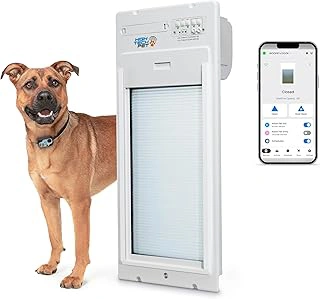
High Tech Pet Power Pet Automatic Roll Up Door with Remote App Control
The High Tech Pet Power Pet Automatic Roll Up Door with Remote App Control offers a comprehensive feature set for pet owners who want full automation and remote access. Priced at $649.99, this door combines a roll-up design with app-based control, allowing you to open, close, and schedule access from anywhere. The 5.0/5 rating reflects strong user confidence in its reliability and build quality.
The roll-up mechanism provides a secure barrier when closed, with the door tucking neatly into the housing above the opening. Remote app control means you can grant or deny access in real time, making it useful for households with varying schedules or security concerns. Automated scheduling lets you set curfew times without manual intervention, and the app interface gives you visibility into door activity throughout the day.
This door works well for tech-savvy households that prioritize convenience and security. Larger pets benefit from the generous opening, and the automated roll-up design reduces the swinging flap that some animals resist. Installation requires mounting the housing unit and ensuring power access, so plan for a more involved setup than basic flap doors. The price reflects the advanced electronics, durable construction, and remote connectivity that simpler models lack.
If you want comprehensive control over pet access and are comfortable with a higher upfront investment, this door delivers the features and reliability to justify the cost. The combination of app management, scheduling flexibility, and secure roll-up design makes it a strong choice for households that value both convenience and peace of mind.
- ✅ Remote app control for real-time access management
- ✅ Automated scheduling for hands-free curfew enforcement
- ✅ Roll-up design provides secure barrier when closed
- ✅ 5.0/5 rating indicates strong reliability
- ✅ Suitable for larger pets and security-conscious households
- ⚠️ Higher price point at $649.99
- ⚠️ Installation requires mounting and power access
- ⚠️ More complex setup than traditional flap doors
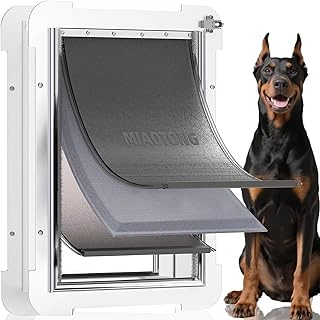
3-Flap Never Rust Extra Large Dog Door with Steel Frame and Sliding Lock Panel
If you need strong physical security control without relying on app connectivity, the 3-Flap Never Rust Extra Large Dog Door with Steel Frame and Sliding Lock Panel delivers manual locking durability at $159.99. This door uses a steel frame construction and a sliding lock panel that gives you direct, tactile control over when the door is accessible - no batteries, no Wi-Fi, and no subscription required.
The three-flap design helps block wind and drafts, while the rust-resistant steel frame holds up to weather exposure and determined pets. The sliding lock panel lets you secure the door completely when you're away or at night, offering a physical barrier that's independent of any electronic system. With a 4.4/5 rating, users report reliable performance and straightforward installation for large breed dogs.
The tradeoff is clear: you won't get app-based curfew scheduling, entry logs, or remote unlocking. If you value the simplicity and reliability of a manual lock you can see and feel, and you don't need tracking or automation, this door offers robust security at a lower price point than smart alternatives. It's ideal for pet owners who want weather resistance and lock control without the complexity or ongoing costs of connected devices.
- ✅ Manual sliding lock panel provides direct physical security control
- ✅ Steel frame construction resists rust and weather damage
- ✅ Three-flap design helps block drafts and improve insulation
- ✅ No batteries, Wi-Fi, or subscriptions required
- ✅ Accessible $159.99 price point compared to smart door options
- ⚠️ No app control, curfew scheduling, or entry tracking features
- ⚠️ Requires manual locking and unlocking - no remote access
- ⚠️ Extra large size may not fit smaller door frames or walls
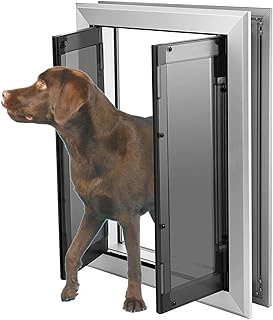
Heavy-Duty Large Dog Door with Aluminum Frame and Weatherproof Double Panels
If you prioritize weatherproofing and a polished look over app control, this aluminum-framed dog door balances durability with clean interior design. The double-panel construction helps reduce drafts and noise, while the metal frame offers a more refined appearance than plastic alternatives in homes with modern finishes.
The aluminum frame resists warping and corrosion, making it suitable for exterior installations where long-term exposure matters. The double panels create an air gap that improves insulation compared to single-flap designs, though they won't match the thermal performance of fully insulated smart doors with electronic seals. At $154.90 with a 4.4/5 rating, it sits in the mid-range for quality manual pet doors without smart features.
This door lacks app connectivity, curfew scheduling, or entry logging - it's a straightforward manual option for owners who value material quality and visual integration over automation. The tradeoff is clear: you gain a sturdier frame and better weather resistance than budget plastic doors, but you lose the tracking and access control that smart models provide. Check the available frame finishes and measure your opening carefully to ensure the design complements your interior before committing.
- ✅ Aluminum frame resists warping and corrosion
- ✅ Double-panel design improves insulation and reduces drafts
- ✅ Polished appearance suits modern home aesthetics
- ✅ Mid-range price at $154.90 for durable materials
- ⚠️ No app control or curfew scheduling
- ⚠️ No entry tracking or access logs
- ⚠️ Manual operation only
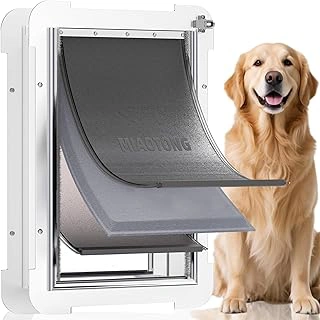
3-Flap Steel Large Dog Door, Extreme Weather Insulated, Sliding Lock Panel
If you need reliable weather protection and manual security without paying for app features you won't use, this 3-flap insulated steel door offers strong value at $109.99. The triple-flap design creates overlapping air barriers that help block drafts, moisture, and temperature swings in climates with harsh winters or hot summers, while the sliding lock panel gives you full manual control over when the door stays closed.
The steel frame adds durability compared to plastic alternatives at similar price points, and the 4.4 out of 5 rating reflects consistent performance in real-world installations. Because there's no app, curfew timer, or selective entry system, you'll set access manually by engaging or disengaging the lock - practical if your routine is predictable or you prefer not to rely on batteries, Wi-Fi, or smartphone pairing.
This door works best for households with one or two pets who follow a steady schedule, where you can lock the panel at night or when leaving home. It won't track entries, send alerts, or restrict specific animals, so multi-pet homes with different access needs may find manual management limiting. The insulation shines in extreme weather, but you trade automation for hands-on control and the lowest upfront cost in this comparison.
- ✅ Triple-flap insulation blocks drafts and temperature swings in extreme weather
- ✅ Sliding lock panel provides manual security control
- ✅ Steel frame construction for durability
- ✅ Lowest price point at $109.99
- ✅ No reliance on batteries, Wi-Fi, or app connectivity
- ⚠️ No app control, curfew scheduling, or entry tracking
- ⚠️ Manual lock operation only - no automation
- ⚠️ Not suitable for selective access in multi-pet households
Key Features to Consider When Choosing a Smart Pet Door
- App control and remote access capabilities
- Curfew and scheduling features for automated access control
- Security mechanisms: electronic locks, sliding panels, or sensor-based entry
- Pet size compatibility and flap dimensions
- Installation complexity: wall, door, or glass mounting requirements
- Weather resistance and insulation performance
Understanding App Control and Curfew Features
App control in smart pet doors lets you lock or unlock the flap remotely from your phone, set time-based schedules, and review activity logs showing when your pet went in or out. Curfew features create access windows - for example, allowing exit only during daylight hours or blocking nighttime departures - so you maintain control even when you're not home. Activity logs track each passage through the door, building a timeline that can help you spot changes in behavior or confirm your pet stayed inside overnight.
Not every door in this comparison includes app connectivity. Some models rely on RFID collar tags and manual timers programmed at the unit itself, offering reliable automation without a phone dependency or Wi-Fi requirement. These simpler systems cost less, install faster, and avoid connectivity troubleshooting, but they don't provide remote overrides or real-time notifications. Doors with app features add convenience and visibility, especially if you travel frequently or share pet-care duties with housemates, but they introduce subscription costs in some cases and require stable Wi-Fi coverage near the installation spot.
When weighing app-enabled doors against manual-timer models, consider how often you adjust schedules and whether you need off-site control. If your routine is consistent and you're comfortable setting weekly patterns once, a non-connected door with built-in curfew timers may be all you need. If your schedule shifts or you want instant alerts when your pet uses the door, app control becomes a practical upgrade rather than a novelty.
Security Considerations: Locks, Sensors, and Access Control
Security features in smart pet doors range from app-controlled electronic locks to manual sliding panels, each offering different levels of protection and convenience. Understanding how these systems work helps you choose the right balance between pet access and home security.
The Sure Petcare Microchip Pet Door Connect uses an app-based locking system that lets you control access remotely, lock the door at specific times through curfew schedules, and monitor entry logs to know when your pet comes and goes. This electronic approach provides flexibility without requiring you to be home to secure the door. The PetSafe Smart Door offers similar app control with programmable schedules, allowing you to restrict access during certain hours or lock the door completely when needed. Both doors use battery-powered locks that engage when triggered, creating a barrier even if the flap is pushed from outside.
Manual security options include sliding panels that physically block the opening. The Ideal Pet Power Pet Door includes a magnetic weather seal that helps keep the flap closed against wind and light pressure, though it does not offer a locking mechanism beyond the seal's resistance. For homes where wildlife intrusion is a concern, doors with selective entry based on microchip or RFID tags prevent unauthorized animals from entering, since only registered pets can unlock the flap.
Frame construction affects both security and durability. Aluminum frames provide lightweight strength and resist corrosion, while reinforced plastic housings with weatherproof seals help prevent drafts and keep the door assembly stable. Steel-reinforced edges, found in some models, add rigidity and make it harder to force the door open from outside. Weatherproof seals serve a dual purpose: they block air and moisture, but also add friction that discourages casual pushing by curious wildlife.
For households concerned about intruders, consider that most smart pet doors are sized for pets and installed in walls or existing door panels, making them too small for human entry but large enough to require thoughtful placement away from door handles or locks. Combining electronic access control with physical barriers like sliding panels gives you layered security, especially when you're away overnight or on vacation. The key is matching the door's security features to your environment - urban homes may prioritize draft prevention and controlled access, while rural settings often need wildlife deterrence and sturdy construction.
Installation: What to Expect for Each Type
Installation complexity varies significantly across smart pet door designs, and understanding the differences helps you budget time and effort before you buy. Flap-style smart doors typically mount into an existing door panel or exterior wall and require cutting a precise opening, running power to the unit, and connecting to your home Wi-Fi network. Most manufacturers provide paper templates and step-by-step guides, but cutting through metal doors or brick walls often calls for specialized tools like jigsaws, hole saws, or masonry bits. Expect a half-day DIY project for door panel installs and a full day or more for wall-mounted units, particularly if you need to route electrical wiring through studs or add weatherproof conduit.
Automatic roll-up mechanism doors, found in some garage-style pet entry systems, usually require framing a dedicated opening and securing the motor housing above the doorway. These designs demand more carpentry skill because you're building a permanent portal rather than retrofitting an existing surface. Power requirements are universal across app-enabled models: you'll need a nearby outlet or low-voltage wiring, and some units include battery backup to maintain curfew schedules during outages. Wall thickness matters, too - most smart doors accommodate walls between 4 and 10 inches, but double-check your home's construction before ordering.
Professional installation typically costs between $150 and $400 depending on material and location, and it's worth considering if you're working with exterior brick, stucco, or insulated metal doors where mistakes are costly. DIY-friendly models aimed at interior door panels or wood-frame walls can save that expense, but plan for at least two hours of careful measuring, cutting, and sealing to maintain weatherproofing and structural integrity. If your smart door includes selective entry features tied to RFID collars or app-based unlocking, factor in an extra 30 minutes for pairing devices and testing the locking mechanism before your pet uses it unsupervised.
Design and Aesthetic Integration with Modern Homes
Smart pet doors no longer need to compromise the look of your home. Modern designs now pair sleek frame materials and refined finishes with advanced entry controls, making it easier to maintain a cohesive aesthetic while upgrading function. For homeowners prioritizing style alongside performance, understanding the visual and structural differences between models helps narrow the field.
Aluminum frames are the most common in mid- to premium-tier smart pet doors, offering a lightweight profile that resists rust and integrates cleanly into contemporary or minimalist interiors. Brushed or anodized finishes provide a matte appearance that blends with modern trim, glass doors, and neutral color palettes. Steel frames, less common but present in some security-focused models, deliver a heavier, more industrial look and added rigidity, though they may require powder coating or similar treatment to prevent corrosion in humid climates.
Frame thickness and bezel width also affect visual integration. Slimmer bezels create a more discreet opening and work well in open-concept layouts or rooms with large windows, where bulky hardware can disrupt sightlines. Wider frames may suit traditional or transitional homes but can feel out of place against clean, linear architecture.
Finish options vary by brand. White, black, and silver are standard across most models, while bronze or custom-painted finishes appear in select premium lines. If your interior leans toward warm woods or matte black fixtures, confirm finish availability before committing to a model; mismatched hardware stands out more than size alone.
Flap design plays a supporting role in overall appearance. Clear or lightly tinted flaps maintain visibility and suit glass-heavy spaces, while opaque options in gray or brown offer privacy and blend with darker trim. Some models feature frameless flap edges that sit nearly flush when closed, reducing the mechanical look often associated with pet doors.
Installation method influences final aesthetics as well. Wall-mount units often require visible trim or surrounding panels, which can be painted or clad to match your interior but add labor and material cost. Door-insert models, especially those designed for sliding glass, tend to present a cleaner profile since the frame integrates directly into the existing door track without additional trim work.
When style and function must coexist, prioritize models that offer finish flexibility, slim bezels, and flap options suited to your home's palette and lighting. A well-chosen smart pet door becomes a seamless part of the room rather than a utilitarian add-on.
Final Verdict: Which Smart Pet Door is Right for Your Home?
Choosing the right smart pet door depends on balancing automation, security, and budget against your household priorities. The High Tech Pet Power Pet Door delivers full automation with app control, selective entry programming, and integrated ultrasonic collar sensors at $649.99, making it the best overall choice for hands-off convenience and multi-pet management. If you prefer manual control with strong security, the 3-Flap Never Rust Pet Door offers aluminum frame durability, triple-flap insulation, and a sliding lock panel at $159.99 - ideal for owners who want predictable access without app dependency. For modern aesthetics and straightforward installation, the Aluminum Frame Pet Door at $154.90 integrates cleanly into contemporary interiors with a weather-sealed single flap and manual slide lock. Budget-conscious buyers seeking insulation will appreciate the 3-Flap Steel Pet Door at $109.99, which layers three vinyl flaps inside a powder-coated steel frame for draft protection and affordability.
No single door fits every home. Automated models trade upfront cost and installation complexity for scheduling precision and remote monitoring, while manual designs sacrifice app convenience for simplicity and lower price points. Security-focused households should prioritize multi-flap barriers and lock mechanisms; design-conscious owners may weigh frame finish and flap visibility more heavily. Review your pet's size and behavior, your door opening dimensions, and whether you value curfew automation or prefer direct control over entry timing. Compare verified specs, warranty terms, and real pricing across all four options before committing to ensure the door aligns with your routine, climate, and long-term convenience expectations.