We may earn a commission when you buy through links on this page, at no extra cost to you. How this works.
Leaving your pet at home while you work a full day can bring a quiet worry that the house is too hot, too cold, or that the HVAC stopped working. A reliable smart thermometer removes the guesswork by sending temperature readings and alerts straight to your phone, so you can monitor the room where your pet spends the day and respond before a mild problem becomes a dangerous one.
The right thermometer depends on three core tradeoffs. Connectivity type determines whether you need WiFi at home, can rely on Bluetooth when nearby, or want cellular backup that works during an internet outage. Zone coverage matters if your pet moves between rooms or you want to track a basement, garage, or outdoor kennel separately. Alert reliability separates devices that send a single push notification from those that escalate with email, SMS, or repeated warnings until you acknowledge the problem.
This guide compares four smart thermometers that address different combinations of those needs. Each review covers connectivity method, zone and sensor support, alert options, smart home compatibility, and display type. The goal is to match your home layout, routine, and risk tolerance to a device that keeps your pet comfortable without requiring constant manual checks or generating false alarms that train you to ignore real warnings.
Quick comparison
| SensorPush HTP.xw Smart Temperature & Humidity Sensor with App | Check Current Price |
| eMylo Smart WiFi Indoor Thermometer Hygrometer with Display | Check Current Price |
| Necto Cellular Temperature & Humidity Monitor with Power Failure Alarm | Check Current Price |
Use the matching tool first
Start with Smart Home for Pets Integration Planner if you want to narrow the fit before checking current offers.
Why Room Temperature Matters for Pet Safety and Comfort
Room temperature directly affects how comfortable your pet feels throughout the day. Dogs and cats regulate body heat differently than humans, and even a few degrees outside their preferred range can cause panting, lethargy, or restless behavior. Reptiles and amphibians rely entirely on external heat sources to maintain metabolic function, while birds can experience respiratory stress when the air becomes too cold or humid.
Most cats and dogs stay comfortable between 68°F and 78°F, though individual tolerance varies by breed, age, and coat type. Brachycephalic breeds - those with shortened muzzles - struggle more in warm conditions, while thin-coated or senior pets may seek extra warmth. Reptiles need precise basking zones and cooler retreat areas, often spanning a 20-degree gradient. Birds generally prefer stable temperatures between 65°F and 80°F, with sudden drops posing more risk than gradual changes.
Heat waves create the most immediate danger. A room that climbs above 85°F can overwhelm a pet's ability to cool down, particularly if humidity is high and airflow is limited. HVAC failures during summer or winter expose pets to temperature swings that may go unnoticed for hours if you're away. Travel carriers, garage spaces, and sunrooms can reach unsafe levels faster than main living areas.
Monitoring room temperature gives you early warning when conditions drift outside safe ranges. A smart thermometer tracks trends over time, alerts you to sudden changes, and helps you verify that heating or cooling adjustments are working as intended. Knowing the actual temperature in your pet's space removes guesswork and supports consistent comfort year-round.
Our Selection Criteria: Connectivity, Accuracy, and Design
Choosing a smart thermometer for your pet's space requires balancing three key factors: connectivity, accuracy, and design. Each plays a distinct role in how well the device fits into your routine and whether it delivers reliable information when you need it most.
Connectivity determines how the thermometer communicates with your phone and other devices. WiFi models connect directly to your home network, offering remote monitoring from anywhere with internet access. Bluetooth options work within a shorter range - typically 100 to 300 feet - but often consume less power and require no router setup. Cellular-connected thermometers use a built-in SIM or LTE module, making them ideal for detached structures like sheds or outdoor kennels where WiFi is unavailable. Some units support multiple zones, letting you track temperature in more than one room or enclosure from a single app.
Accuracy and alert speed matter because pets cannot adjust their own environment. Look for sensors that report readings within ±0.5 °F and refresh data every minute or faster. Quick alerts - delivered via push notification, SMS, or in-app banner - give you time to adjust heating, cooling, or ventilation before conditions become uncomfortable. Units with audible alarms provide an additional layer of warning if your phone is out of reach.
Design considerations go beyond appearance. Compact, wall-mountable housings keep sensors out of reach of curious paws and tails. Models with e-ink or low-glare displays remain easy to read without disturbing pets during rest hours. For homes with visible pet areas, a neutral finish and minimal branding help the device blend into existing décor rather than stand out as utilitarian hardware.
These three criteria - connectivity that matches your layout, sensors that respond quickly and accurately, and a form factor that works in shared living spaces - form the foundation of the reviews that follow.
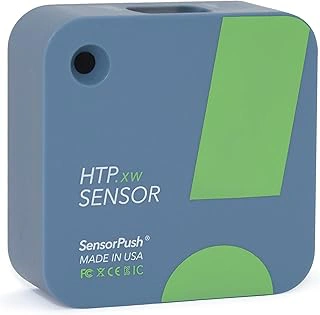
SensorPush HTP.xw Smart Temperature & Humidity Sensor with App
The SensorPush HTP.xw delivers accurate temperature and humidity tracking through a well-designed smartphone app, making it a practical choice for pet owners who want dependable climate monitoring across multiple rooms. Priced at $89.99 with a 4.5 rating, this sensor balances precision with expandability.
The device connects via Bluetooth for local monitoring within the listed size, and adding the optional WiFi Gateway unlocks remote access from anywhere with cellular or internet connectivity. This flexibility matters when you travel or need alerts while away from home. You can pair unlimited sensors to a single gateway, turning the system into a whole-home monitoring network that tracks temperature and humidity in each pet space separately.
Professional-grade humidity sensing sets this model apart. The sensor records data every minute and stores up to multiple of readings on the device itself, so you won't lose history during brief connectivity gaps. The app displays graphs, sends custom alerts, and exports data for record-keeping.
The tradeoff: remote monitoring requires purchasing the WiFi Gateway separately, which adds to the upfront cost. If you only need local Bluetooth access within your home, the sensor works independently. But for notifications when you're out, the gateway becomes essential hardware rather than an optional add-on.
Setup takes minutes. Place the compact sensor in your pet's room, download the SensorPush app, and pair via Bluetooth. The battery lasts over a year under typical use, and the housing withstands the humidity levels common in reptile or bird enclosures without degradation.
This sensor suits pet owners who value accurate dual readings, want to scale monitoring across multiple zones, and prefer a proven app experience. The gateway requirement adds expense, but the system's reliability and expansion potential make it a strong investment for serious climate management.
- ✅ Accurate temperature and humidity tracking with professional-grade sensors
- ✅ WiFi Gateway support enables remote access and unlimited range
- ✅ Add multiple sensors to monitor different pet rooms from one app
- ✅ Stores 20 days of readings on the device with one-minute intervals
- ✅ Battery lasts over a year under typical use
- ⚠️ Remote monitoring requires separate WiFi Gateway purchase
- ⚠️ Higher upfront cost at $89.99 compared to Bluetooth-only models
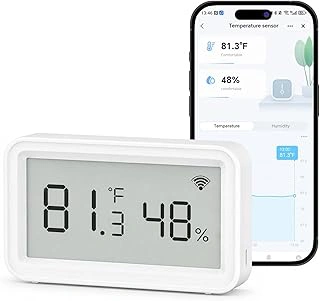
eMylo Smart WiFi Indoor Thermometer Hygrometer with Display
The eMylo Smart WiFi Indoor Thermometer Hygrometer with Display offers a straightforward, budget-friendly way to monitor temperature and humidity in your pet's space without the need for a separate hub. Priced at $19.99 and rated 4.4 out of 5, this unit connects directly to your home WiFi network and provides readings on both its built-in backlit display and through a companion app.
The integrated display makes it easy to check conditions at a glance when you walk into the room, while app access lets you review historical trends and check in remotely. For pet owners managing multiple zones - such as a reptile enclosure in one room and a dog crate in another - the ability to add additional eMylo units at under twenty dollars each keeps costs manageable as you scale your monitoring setup.
Setup is simpler than Bluetooth-based devices that require a phone nearby and more accessible than cellular models that demand an ongoing subscription. You connect the thermometer to your multiple GHz WiFi network once, and it stays online as long as your router is active. This makes the eMylo a practical choice if you want app notifications without the complexity of pairing protocols or monthly fees.
The tradeoff is a less polished app experience and slightly lower sensor precision compared to dedicated environmental monitors like the SensorPush. The eMylo app offers basic alerting and data logging, but lacks the depth of analytics, third-party integrations, and fine-tuned calibration options found in higher-end ecosystems. Sensor accuracy is sufficient for general room monitoring - catching sudden temperature swings or humidity drops - but may not meet the tight tolerances required for sensitive reptile habitats or medical-grade tracking.
If your priority is affordable, easy-to-deploy monitoring across several pet areas and you don't need advanced smart home automation or laboratory-level precision, the eMylo delivers solid value. Its built-in screen and direct WiFi connection remove common friction points, making it a sensible entry point for pet owners who want reliable alerts without a steep learning curve or recurring costs.
- ✅ Direct WiFi connection with no hub required
- ✅ Built-in backlit display for at-a-glance checks
- ✅ Affordable at $19.99, easy to scale across multiple rooms
- ✅ Simple setup and basic app notifications
- ⚠️ Less robust app ecosystem than SensorPush
- ⚠️ Lower sensor precision for specialized habitats
- ⚠️ Limited smart home integration and analytics
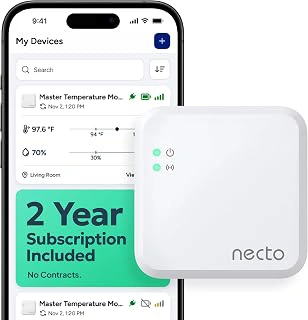
Necto Cellular Temperature & Humidity Monitor with Power Failure Alarm
Pet owners who travel frequently or live in areas with unreliable internet will appreciate the Necto Cellular Temperature & Humidity Monitor, which operates independently of WiFi or Bluetooth. This monitor uses cellular connectivity to send instant SMS alerts directly to your phone when temperature, humidity, or power conditions fall outside your set parameters.
The cellular connection means you can monitor your pet's room from anywhere without worrying about router outages, password changes, or network configuration. The device includes power-failure detection that triggers an immediate alert if the unit loses electricity - a feature that can prevent catastrophic heating or cooling system failures when you're away. Humidity tracking adds another layer of environmental oversight, particularly useful for reptiles, birds, and pets sensitive to dry air.
Setup requires no app downloads or smart home hubs. You configure alert thresholds through a simple web portal, and the monitor handles the rest through its built-in cellular radio. The 4.7 rating reflects user confidence in the reliability of SMS delivery and the value of connectivity that doesn't depend on home network infrastructure.
The tradeoff is cost. At $199, this monitor sits at the premium end of the category, and cellular service requires an ongoing subscription (pricing varies by plan). For owners who need absolute certainty that alerts will reach them regardless of home network status, the investment makes sense. If your WiFi is stable and you're typically within Bluetooth range of your pet's space, a less expensive option may meet your needs without the recurring fee.
- ✅ Cellular connectivity works without WiFi or Bluetooth
- ✅ Power-failure detection alerts you to electrical issues
- ✅ Humidity tracking adds environmental oversight
- ✅ SMS alerts reach you anywhere with cell service
- ⚠️ Higher upfront cost at $199
- ⚠️ Requires ongoing cellular subscription
- ⚠️ No value for users with stable home internet
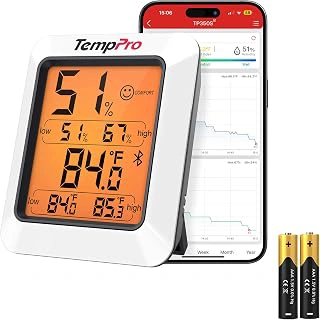
TempPro Bluetooth Indoor Hygrometer Thermometer with Backlit Display
The TempPro Bluetooth Indoor Hygrometer Thermometer sits at $14.99, making it the most affordable choice for monitoring a single pet room. The backlit display shows temperature and humidity at a glance, even in dim lighting, and no gateway or subscription adds to the cost. Bluetooth connectivity pairs with your phone when you're in range - typically up to the listed size through open doorways - so you can log readings in the companion app or check conditions from another room during the day.
This model fits owners who stay home most of the time or want a low-commitment way to track their pet's sleeping area, recovery crate, or nursery zone. The screen remains readable without opening an app, which helps during nighttime checks or quick visual sweeps. Battery life stretches across months, and setup requires only a phone with Bluetooth enabled.
The tradeoff centers on connectivity: when you leave home, the thermometer stops sending data to your phone, and you won't receive alerts if the room temperature spikes or drops. Bluetooth range also struggles through thick walls or across floors, so placement near doorways or within line-of-sight works best. Remote monitoring requires a WiFi or cellular model instead, but those start near triple the price. For budget-conscious owners who need local visibility and don't expect real-time alerts while at work or traveling, the TempPro delivers straightforward temperature and humidity tracking without recurring fees.
- ✅ $14.99 entry price with no subscription or gateway required
- ✅ Backlit display readable in low light without opening an app
- ✅ Bluetooth pairing logs readings when you're within range
- ⚠️ No remote alerts or data sync when away from home
- ⚠️ Bluetooth range limits placement and penetration through walls
Key Features to Compare Before You Buy
- Connectivity type: WiFi, Bluetooth, or cellular - and whether you need remote access while traveling
- Multi-zone support: can you add sensors for multiple rooms or pet areas without buying separate systems
- Alert customization: adjustable thresholds, push notifications, SMS, and email options
- Power backup: battery life during outages and power-failure detection
- Humidity tracking: dual sensors help monitor respiratory comfort and mold risk
- Smart home integration: compatibility with Alexa, Google Home, or IFTTT for automation
Smart Home Integration: Which Thermometers Work with Your Existing Setup
Smart home integration determines how well a thermometer fits into your existing ecosystem and what automation opportunities you gain. The four models in this guide offer different integration approaches, each suited to distinct setups and needs.
SensorPush provides the widest integration options through IFTTT support, letting you connect temperature readings to hundreds of third-party services and devices. You can create applets that trigger smart plugs to activate fans when the room exceeds a set temperature, send alerts to pet sitters via custom channels, or log data to spreadsheets for long-term tracking. This flexibility appeals to households already invested in smart home platforms or those wanting granular control over automated responses.
The eMylo thermometer works directly with Alexa and Google Assistant, enabling voice queries and basic routines without additional bridge services. You can ask your assistant for the current pet room temperature or include temperature conditions in existing voice-activated scenes. The integration is straightforward but less customizable than IFTTT - useful if you want simple voice access and prefer native platform compatibility over complex automation chains.
Necto operates as a standalone cellular system with no smart home integration. Alerts route exclusively through its dedicated app and SMS notifications. This independence makes sense for rental properties, remote monitoring locations without reliable WiFi, or users who prefer a dedicated monitoring tool separate from their connected home network. You gain reliability and simplicity but lose automation opportunities.
TempPro's Bluetooth-only design prevents any meaningful smart home integration. The device functions as a local monitor with app-based alerts when your phone is within range. There's no pathway to connect it to voice assistants, IFTTT, or other platforms. This limitation matters less if you only need basic temperature checks during routine care rather than remote monitoring or automated environmental adjustments.
Integration depth becomes valuable when you want environmental responses beyond notifications - automatically adjusting heating mats, activating ventilation, or coordinating pet care across multiple caregivers through shared platforms. If your priority is simply knowing the room temperature and receiving alerts, standalone options work fine without adding complexity to your smart home setup.
Multi-Zone Monitoring: Scaling from One Room to Your Whole Home
Adding sensors room by room changes both your monthly cost and the complexity of keeping data organized. A single room setup is straightforward - one sensor, one app - but tracking temperature across a nursery, garage, and reptile room requires either multiple devices under one dashboard or separate systems that fragment your history and alerts.
SensorPush runs about $50 per sensor with no subscription; you can place units in as many rooms as you want and view all readings in a single app over Bluetooth. Add the $100 WiFi Gateway and every sensor gains remote access and cloud logging. The per-room cost drops quickly if you already own the gateway, making SensorPush economical for three or more zones.
eMylo's standalone WiFi sensors cost roughly $30 each and connect directly to your router, so there's no hub to buy. Each unit logs independently to the cloud, and the app groups them by location. This works well for two to four rooms, though you will manage separate device settings rather than a unified sensor network.
Necto's Bluetooth model is priced similarly to SensorPush but lacks a first-party gateway; you would need a dedicated always-on device running the app nearby to maintain remote access. That limits practical multi-zone use unless you already have a spare tablet positioned centrally.
TempPro's cellular sensor carries a monthly or annual data fee on top of the hardware price, but it delivers independent connectivity in each room without relying on your home WiFi or a shared gateway. If you monitor a detached shed, RV, or any space beyond router range, the subscription becomes worthwhile. For purely indoor zones on the same network, the recurring charge usually outweighs the convenience.
Centralized logging matters when you want to compare overnight lows across rooms or export a week of data for your veterinarian. SensorPush and eMylo both offer CSV export; Necto's free tier logs seven days, and TempPro archives data as long as your subscription remains active. Choose a platform that keeps history accessible without requiring manual screenshots.
Design and Placement: Aesthetic Fit for Upscale Interiors
Smart thermometers often sit in plain sight - on a nursery dresser, kitchen counter, or pet room shelf - so appearance matters when you've invested in designer furniture and curated decor. Beyond function, you want a device that blends quietly into upscale interiors rather than shouting gadget from across the room.
The SensorPush HT.w is the most discreet of the four, measuring roughly 1.5 inches square and less than half an inch thick. Its white matte finish and minimal branding suit modern minimalist spaces, and the lack of a backlit display means no glow at night. You can tuck it on a bookshelf edge, mount it with adhesive or a small nail hole, or rest it inside a pet enclosure without drawing the eye. Because readings sync over WiFi through a gateway, the sensor itself stays silent and unobtrusive.
The Govee WiFi Thermometer Hygrometer H5179 is slightly larger, with a 3-inch LCD that cycles temperature, humidity, and timestamp. The black-and-white screen is easy to read from several feet away, but the display remains lit, which may not suit bedrooms where pets sleep overnight. The flat white housing works well on light-colored walls or shelves; if your pet room has dark wood or bold accent colors, the device can feel more prominent. Govee includes a fold-out stand and mounting slots, so you can angle it on a credenza or hang it flush.
The Temp Stick Remote WiFi Temperature & Humidity Sensor is the bulkiest option, roughly the size of a TV remote. Its gray-and-white body is functional but less refined, and the LED indicator blinks during sync events. This model suits utility spaces - laundry rooms, basements, or climate-controlled kennels - where performance outweighs visual polish. If your pet area doubles as a guest suite or connects to an open-plan living space, the Temp Stick may feel out of place unless you position it behind furniture or inside a cabinet.
The YoLink Smart Wireless Temperature/Humidity Sensor falls between the SensorPush and Temp Stick in size, with a rounded white case and subtle YoLink logo. The small monochrome display shows current readings without excessive this product, and the device runs on batteries that last up to two years, so you avoid visible power cables. YoLink's LoRa radio lets you place the sensor farther from your hub - up to a quarter mile in open space - which opens placement options in detached pet suites, garden rooms, or converted garages where WiFi is weak.
When choosing placement, prioritize accuracy first: keep sensors away from direct sunlight, heating vents, and exterior walls that conduct outdoor temperature. Once you've identified the right zone - typically at pet height, a few feet from the enclosure or bed - look for surfaces that let the device disappear. A white sensor on a white shelf, a sensor inside a decorative box with ventilation holes, or a unit mounted behind a picture frame all preserve clean sight lines. If you prefer the device visible as a subtle tech accent, pair it with other smart-home hardware in matching finishes so the aesthetic feels intentional rather than scattered.
Frequently Asked Questions
Smart thermometers can raise new questions about setup, reliability, and how they fit into your home's existing systems. These answers focus on the four products reviewed in this guide and help you decide which features matter most for your pet's environment.
What temperature range is safe for dogs and cats?
Most dogs and cats are comfortable between 68°F and 78°F, with some variation depending on coat type, age, and health. Senior pets and those with thin coats often prefer the warmer end of that range, while heavy-coated breeds tolerate cooler spaces. Monitor your pet's behavior - panting, seeking shade, or curling into tight balls can signal discomfort - and adjust heating or cooling to keep the room within their comfort zone.
Do I need WiFi or cellular for reliable alerts?
WiFi models deliver instant notifications and work well if your router stays powered and your internet connection is stable. Cellular options like the YoLink Hub system remain online during WiFi outages because they use a separate radio network, though they require a gateway device and sometimes a small subscription fee. For critical monitoring during storms or power disruptions, cellular connectivity offers better redundancy.
Can I use one app to manage multiple sensors?
The SwitchBot Hub 2 and YoLink systems both support multiple temperature sensors under a single app dashboard, so you can track a reptile room, a puppy nursery, and a main living area without switching screens. The Govee H5179 and Temp Stick each offer multi-device views in their respective apps, making it straightforward to compare readings across zones and set independent alert thresholds for each location.
How accurate are budget smart thermometers compared to premium models?
The Govee H5179 offers ±0.54°F accuracy and costs under thirty dollars, which is tight enough for general pet comfort monitoring. The Temp Stick and YoLink sensors claim similar precision, typically within ±0.5°F to ±1°F. SwitchBot Hub 2's built-in sensor also falls in that range. For everyday use - keeping a room from getting too hot or too cold - budget and premium models perform nearly identically; you pay more for extended range, cellular backup, or additional smart-home integrations rather than dramatically tighter temperature readings.
Will these monitors work during a power outage?
Battery-powered sensors like the Govee H5179, Temp Stick, and YoLink modules continue to record temperature during an outage, but WiFi-dependent models lose the ability to send alerts until your router comes back online. The Temp Stick's cellular connection keeps notifications flowing as long as cell towers have power. The YoLink system's LoRa network also operates independently of your home WiFi, so pairing it with a backup battery for the hub maintains alert delivery when the grid goes down.
Can I integrate these with my smart thermostat?
The SwitchBot Hub 2 connects to Alexa, Google Home, and IFTTT, so you can trigger routines that adjust a compatible smart thermostat when the pet room crosses a temperature threshold. Govee supports similar voice-assistant links and IFTTT applets. The Temp Stick and YoLink systems offer webhook and API access for advanced users, letting you feed temperature data into home-automation platforms like Home Assistant or Hubitat. Direct two-way integration with Nest or Ecobee thermostats usually requires scripting or a third-party bridge rather than a single-tap setup.
For side-by-side feature this product and verified specs on all four monitors, revisit the individual product reviews earlier in this guide.
Final Recommendations: Matching the Right Monitor to Your Household
Choosing the right monitor depends on how many zones you need to track, whether you require alerts during power or internet outages, and how you plan to access the data. The SensorPush HT.w works well for households that value accuracy and plan to expand coverage over time, since each sensor connects to the same gateway and logs independently. The eMylo 8-Channel fits budgets where multiple rooms matter more than alert sophistication - you get broad visibility without spending on individual premium sensors. The Necto WxS excels when travel or internet reliability is a concern, because cellular backup keeps notifications flowing even if your router goes down. The TempPro Mini suits single-room setups where Bluetooth range is adequate and you prefer not to manage a separate hub.
If you live in a climate with wide seasonal swings or keep reptiles, amphibians, or birds that depend on stable temperature, prioritize logging interval and calibration features. For dogs and cats in typical home environments, simpler models often provide enough visibility to catch HVAC failures before conditions become uncomfortable. Multi-pet households with animals in separate rooms benefit most from systems that display all zones in one app view and let you set independent thresholds per space.
Compare current pricing and check whether the model you're considering includes the number of sensors or modules you need in the box, since add-on costs vary. Review each product's alert delivery method - push notification, SMS, email, or a combination - to confirm it matches how you monitor your phone during the day and overnight.