We may earn a commission when you buy through links on this page, at no extra cost to you. How this works.
Introducing an automatic litter box to a timid cat is less about the technology itself and more about respecting your cat's stress threshold. Rush the transition, and you risk litter-box avoidance, accidents outside the box, and weeks of backtracking. Take a structured approach, and you unlock the convenience of automated cleaning without sacrificing your cat's confidence.
Timid cats face three core barriers when they encounter an automatic litter box: novelty (an unfamiliar object in their territory), noise (motors, rakes, or rotation sounds), and motion (unexpected movement after they exit). Each barrier can trigger avoidance on its own; combined, they create a compounding challenge. This checklist addresses all three sequentially, giving your cat time to process one change before layering in the next.
Expect the full transition to take one to four weeks, depending on your cat's baseline anxiety and prior litter-box history. Cats with a single negative experience - such as being startled mid-use - may need the longer end of that range. The timeline is not wasted effort; it is insurance against regression.
The dual-box method is the foundation of this approach. You will run both the old litter box and the new automatic unit side by side, allowing your cat to choose freely while the automatic box remains unplugged and silent. Only after consistent use of the unplugged unit will you activate its cleaning cycle. This method eliminates the all-or-nothing pressure that leads many timid cats to reject automation outright.
This guide walks through placement strategy, scent transfer, noise desensitization, motion acclimation, and troubleshooting for setbacks. Each step builds on the last, and skipping ahead increases the likelihood of avoidance behavior that is harder to reverse than it is to prevent.
Step 2: The Dual-Box Method: Let Your Cat Choose
- Keep both the old and new litter boxes accessible in the same general area
- Maintain the old box's cleanliness to avoid forcing the switch prematurely
- Observe which box your cat investigates or uses first - do not intervene
- Allow 3 - 7 days of parallel availability before any changes
- Track usage frequency: if the cat uses the automatic box even once, consider it progress
Step 5: Transitioning to Full-Time Use
- Wait until your cat uses the automatic box voluntarily at least 3 - 5 times
- Gradually reduce scooping frequency in the old box to make it less appealing
- Do not remove the old box yet - reduction in appeal is different from removal
- Monitor for any regression: accidents, avoidance, or vocalization near the new box
- If regression occurs, reintroduce the old box immediately and slow the timeline
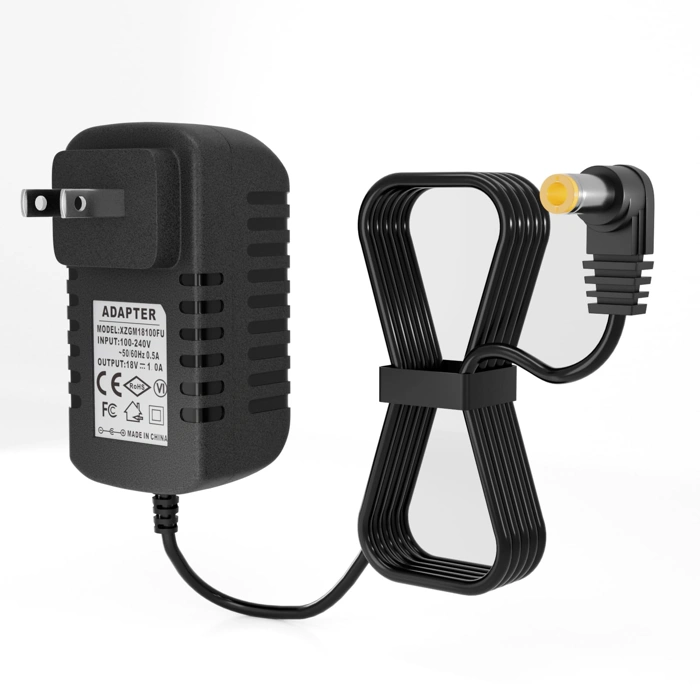
Petsafe 18V Charger for ScoopFree Automatic Self-Cleaning Litter Box
If you're using a ScoopFree automatic litter box and your timid cat is just starting to accept it, keeping a backup charger on hand helps avoid interruptions that might set back progress. The Petsafe 18V Charger is the OEM replacement for ScoopFree units, priced at $13.99 and designed specifically for compatibility with the self-cleaning mechanism.
For households running multiple ScoopFree boxes - useful during the dual-box transition phase - a spare charger means you can keep both units operational without swapping cords. Since timid cats rely on routine and predictability, an unexpected dead battery can disrupt the careful acclimation you've built. Having the correct voltage and connector ensures the motor and rake cycle work as intended, without the risk of off-brand adapters causing hesitation or noise changes that might spook a cautious cat.
This is a straightforward operational accessory: it plugs in, powers the unit, and maintains the quiet, consistent cycle timing your cat has learned to trust. If you're investing time in a gradual introduction, a $13.99 backup charger is a low-cost way to protect that effort.
- ✅ OEM part ensures proper voltage and connector fit for ScoopFree units
- ✅ Affordable backup at $13.99 to avoid downtime during cat acclimation
- ✅ Useful for multi-box households during transition phases
- ⚠️ Only compatible with ScoopFree models, not universal
- ⚠️ No extended cord length or travel-friendly design
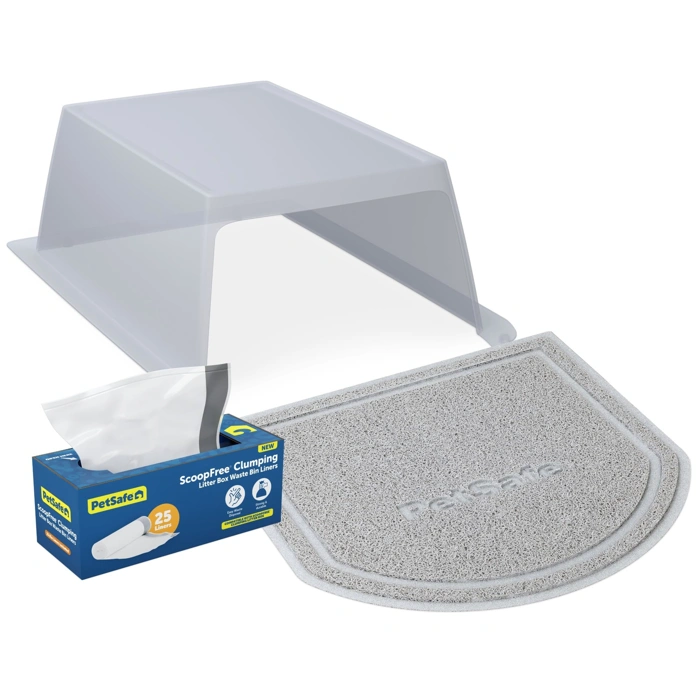
PetSafe ScoopFree Clumping Litter Box Hood & Accessory Bundle
The PetSafe ScoopFree Clumping Litter Box Hood & Accessory Bundle is designed to add privacy to an automatic litter box, which may help timid cats feel more secure during the transition period. Priced at $49.95, this hood accessory can reduce visual exposure while your cat adjusts to the new automated system.
For nervous cats, the enclosed design may lower stress by creating a more den-like environment. However, this setup presents a tradeoff: while some cats prefer the added privacy, others may feel more anxious in a fully enclosed space, especially when unfamiliar mechanical sounds occur inside. The hood also reduces airflow, which could make scent more concentrated inside the box.
A gradual approach works best. Start by introducing the automatic litter box without the hood installed, allowing your cat to see the full interior and observe the cleaning cycle from a safe distance. Once your cat uses the open box comfortably for several days, you can add the hood if your cat seems to seek more privacy. This staged method lets you gauge your cat's comfort level and avoid overwhelming a timid pet with too many changes at once.
The bundle includes the hood and additional accessories that work with PetSafe ScoopFree clumping litter box models. If your cat continues to avoid the box after adding the hood, remove it and return to the open configuration - some cats simply prefer an unobstructed view of their surroundings.
- ✅ Adds privacy that may help timid cats feel more secure
- ✅ Priced at $49.95
- ✅ Allows gradual introduction by testing with and without hood
- ⚠️ Enclosed design may increase anxiety for some cats
- ⚠️ Reduces airflow and can concentrate odor inside
- ⚠️ Not all timid cats prefer covered litter boxes
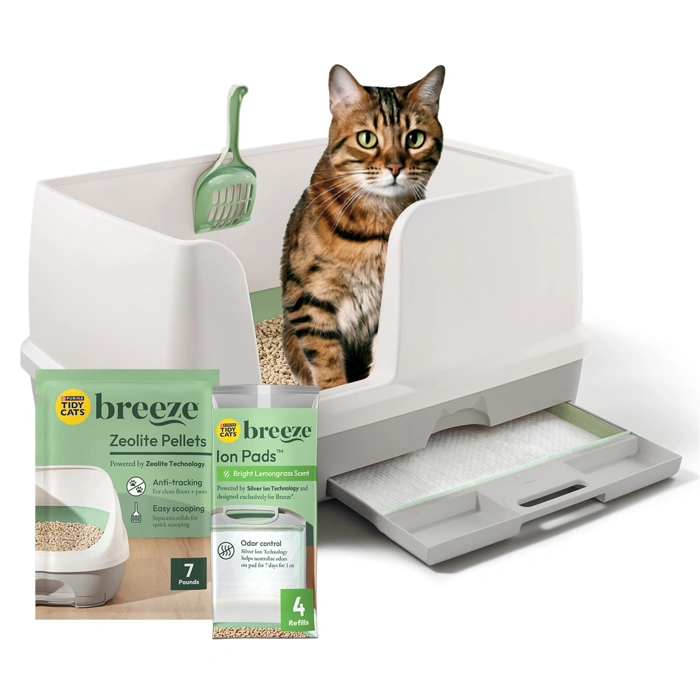
Purina Tidy Cats Breeze XL Non-Clumping Multi-Cat Litter System with Odor Control
The Purina Tidy Cats Breeze XL offers a middle ground for cats who remain too anxious around fully automatic litter boxes. This system uses absorbent pellets on top and disposable pads below - nothing moves, nothing hums, and nothing cycles. For timid cats who cannot tolerate motor sounds or sudden mechanical motion even after weeks of gradual exposure, the Breeze XL provides odor control and reduced daily scooping without the sensory triggers that can derail automation.
At $76.48, the Breeze XL costs less than most automatic boxes and requires no power source. Solid waste sits on the pellet surface for quick removal with a scoop; urine passes through to the pad beneath, which you replace weekly for one cat or twice weekly for multiple cats. The XL size gives larger or multi-cat households more room and longer pad life. Because the pellets do not clump, you avoid the dust clouds and texture changes that some cats find unsettling, and the lack of moving parts means no startle risks during use.
This system works well as a permanent solution for cats who remain fearful of automation, or as a transitional step: you can introduce the Breeze XL first to shift your cat away from traditional clumping litter, then attempt a quieter automatic model months later once the cat is comfortable with a new box format. The tradeoff is ongoing supply cost - pellets and pads must be replenished - and you still scoop solids daily, so the labor savings are modest compared to full automation. If your cat has shown no progress with automatic boxes after extended dual-box trials and noise desensitization, the Breeze XL offers a practical compromise that reduces odor and simplifies urine management without demanding your cat adapt to machinery.
- ✅ No motors, no noise, no moving parts - eliminates the main anxiety triggers for timid cats
- ✅ Pellets and pads control odor without clumping dust or texture changes
- ✅ XL size accommodates larger cats and multi-cat households
- ✅ Lower upfront cost than automatic boxes and no power required
- ⚠️ Requires ongoing purchase of proprietary pellets and pads
- ⚠️ Still need to scoop solid waste daily - less labor savings than full automation
- ⚠️ Urine pad changes every 3 - 7 days depending on number of cats
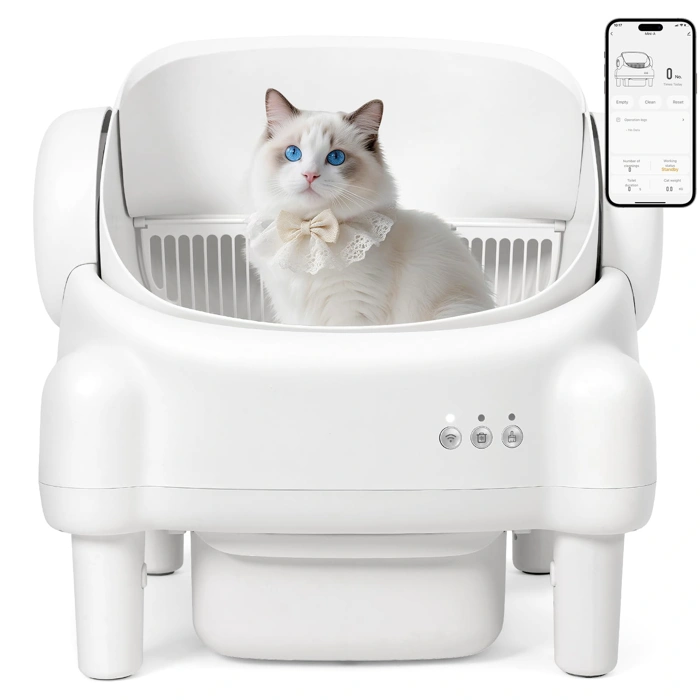
Automatic Self-Cleaning Litter Box with App Control & Safety Sensors for Multiple Cats
For owners helping a timid cat adjust, an automatic litter box with app control and safety sensors offers a practical advantage: you can manage the timing and noise from another room. This model, priced at $129.99, puts cleaning control in your hands through a smartphone app, letting you delay cycles during initial introductions or manually trigger a clean when your cat is elsewhere. That flexibility helps you coordinate cleaning noise with periods when your timid cat is calm or out of the room, reducing the chance of an unexpected scare.
Safety sensors are a meaningful feature for nervous cats. These sensors detect when a cat is in or near the box and pause the cleaning cycle, reducing the startle risk that comes with sudden movement or sound. While no sensor system removes every startle, this layer of detection gives timid cats more time to exit and makes the introduction process less stressful.
The box is designed for multiple cats, which matters if you're planning to scale or already have more than one pet. App-based usage monitoring shows which cat is using the box and how often, useful data when you're tracking whether your timid cat is actually adopting the new system. You can see patterns, catch avoidance early, and adjust your introduction pace accordingly.
At this price point, the trade-off is straightforward: you gain remote control and usage insight, but the box itself is not silent. The motor and rake produce noise during the cleaning cycle, so gradual desensitization remains essential. The app does not eliminate noise - it helps you control when it happens. If your cat is extremely sound-sensitive, plan to use the manual delay feature liberally during the first two weeks, spacing cycles around feeding and play when your cat is relaxed.
This model fits well into the dual-box method outlined earlier: keep the traditional box active while the automatic box sits unplugged nearby, then plug it in and use the app to schedule infrequent, well-timed cleaning cycles as your cat's comfort grows. The app's manual trigger is especially useful when you want to demonstrate the cleaning process with your cat at a safe distance, building familiarity without forcing proximity.
- ✅ App control lets you delay cycles and manually trigger cleaning from another room, aiding gradual desensitization
- ✅ Safety sensors detect cat presence and pause cleaning to reduce startle risk
- ✅ Usage monitoring tracks which cat is using the box and how often, useful for adoption tracking
- ✅ Designed for multiple cats, supports scaling as household needs grow
- ✅ Mid-tier price at $129.99 balances automation features with accessibility
- ⚠️ Motor and rake produce noise during cleaning cycles; app does not eliminate sound, only controls timing
- ⚠️ Requires smartphone for full feature access and remote control
- ⚠️ Gradual introduction still necessary for extremely sound-sensitive cats despite sensor protection
Step 1: Placement and Initial Setup (Keep it Unplugged!)
The first step in helping a timid cat accept an automatic litter box is to introduce it as a stationary, familiar object - not a moving, noisy machine. By keeping the box unplugged during the initial phase, you remove the variables that most often trigger fear: unexpected motor sounds, sudden scooping cycles, and unfamiliar movement. Your cat can explore the new box on their own terms, building confidence through scent and touch before any mechanical behavior enters the picture.
Placement matters as much as timing. Position the automatic litter box in a quiet, low-traffic area where your cat already feels safe - avoid hallways, laundry rooms with appliances, or spaces near loud vents. If possible, place it adjacent to the existing litter box rather than removing the old box entirely. This dual-box setup reduces territorial stress and gives your cat a fallback option while they investigate the new enclosure.
Fill the automatic box with the same litter your cat currently uses. Scent continuity is one of the most reliable ways to signal safety and familiarity. If your cat uses clumping clay litter, use clumping clay litter. If they prefer unscented, avoid introducing fragrance at this stage. You can also transfer a small scoop of used (but not soiled) litter from the old box into the new one to carry over familiar scent markers.
Spatial logic plays a quieter but equally important role. Cats prefer litter boxes that offer a clear sightline to entry points and enough room to turn around comfortably. Make sure the automatic box is positioned so your cat can enter and exit without feeling cornered, and that the interior dimensions accommodate their full body length when digging or covering. Even the most advanced automatic box will fail if the cat perceives it as a trap rather than a refuge.
During this unplugged phase - which may last anywhere from two days to a full week depending on your cat's temperament - observe from a distance. Look for signs of curiosity: sniffing the entrance, stepping inside briefly, or pawing at the litter. Avoid forcing interaction or placing your cat inside the box. The goal is voluntary exploration, which builds trust far more effectively than coercion.
Step 3: Using Familiar Scents and Positive Reinforcement
Familiar scents help your timid cat recognize the automatic litter box as a safe toileting space. Start by transferring a small amount of used litter from the old box into the new automatic unit. This scent cue signals that the new box serves the same purpose and reduces the perception of it as a foreign object.
Place the used litter on top of the fresh substrate in the automatic box so your cat encounters the familiar smell immediately upon investigation. Avoid mixing large quantities - a few scoops are enough to create recognition without compromising the cleanliness that automatic boxes are designed to maintain.
Positive reinforcement builds a mental link between the new box and rewarding experiences. When your cat approaches, sniffs, or investigates the automatic litter box, offer a small, high-value treat immediately. Place treats near the box - within one to two feet - but never inside the litter chamber itself. Food inside the box conflicts with your cat's instinct to keep toileting areas separate from eating spaces and can create aversion rather than acceptance.
Reward any positive interaction: walking toward the box, sniffing the entrance, or stepping on the mat. Timing matters; deliver the treat within seconds of the behavior so your cat connects curiosity with the reward. Repeat this loop consistently: proximity or investigation earns a treat, which encourages your cat to repeat the behavior.
Keep reinforcement sessions brief and pressure-free. If your cat shows interest for even a few seconds, reward and step back. Forcing prolonged interaction or attempting to place your cat inside the box will break trust and slow progress. The goal is to let curiosity grow naturally, supported by positive associations, until your cat chooses to enter and use the box on their own terms.
Step 4: The First Cycle: Managing Your Cat's Reaction to Noise and Motion
Once your timid cat has explored the unplugged automatic litter box for several days, it's time to introduce the noise and motion. The goal is to help your cat understand that the cleaning cycle is a normal event - not a threat - and that it happens independently of their presence in the box.
Start by plugging in the litter box and triggering a single manual cycle while your cat is in another room. Let them hear the sound from a distance without associating it with their own bathroom routine. Wait a few hours, then trigger another cycle when your cat is in the same room but not near the box - perhaps during a meal or play session. This creates a neutral context for the noise.
Over the next day or two, gradually move closer to real-world timing. Trigger a cycle when your cat is nearby but has not just used the box. Watch their body language closely: some cats will pause and observe with curiosity, while others may flatten their ears, crouch low, or leave the room quickly.
If your cat freezes in place, backs away, or refuses to return to the area for more than an hour, that's a sign to slow down. Unplug the box again and return to silent coexistence for another 24 to 48 hours. Rushing this step often leads to litter box avoidance, which is far harder to reverse than a patient introduction.
When your cat can remain calm in the room during a cycle - eating, grooming, or simply resting without signs of stress - you're ready to let the automatic timer take over. For the first few days, keep the traditional litter box available as a backup while your cat adjusts to the idea that the machine will clean itself shortly after use.
Some cats adapt within a week; others need two or three. Let your cat set the pace, and remember that desensitization works because it decouples the startle reflex from the act of elimination. The box cleans itself whether or not your cat is involved, and that predictability becomes reassuring over time.
Step 6: When to Remove the Old Litter Box
Timing the removal of the old litter box is one of the most common mistakes when transitioning a timid cat to an automatic system. Remove it too early, and your cat may experience stress or have accidents. Wait too long, and you're simply maintaining two boxes indefinitely without completing the transition.
The safest criterion is 7 to 10 consecutive days of exclusive use of the automatic litter box. During this window, watch for three key indicators: your cat uses only the automatic box for all eliminations, no accidents or inappropriate elimination occurs anywhere in your home, and your cat shows no anxiety signals such as hesitating before entering, vocalizing near the box, or elimination postures without actually going.
If all three conditions are met for the full 7 to 10 days, you can begin staged removal. Do not simply take the old box away in one step. Instead, move the old litter box a few feet away from its original location and leave it there for two to three days. If your cat continues using only the automatic box, move the old box to another room - ideally one your cat visits less frequently - and wait another two to three days. Finally, remove the old box from the home entirely.
This gradual process gives your cat multiple opportunities to confirm that the automatic box is reliable and accessible. Abrupt removal can trigger regression, especially in timid or anxious cats, because it eliminates the fallback option before the new routine feels fully secure. Staged removal also lets you catch any hesitation early: if your cat returns to the old box during any stage, you know the transition needs more time before proceeding.
If accidents occur or your cat shows renewed anxiety after you begin removing the old box, move it back to the previous location and extend the dual-box period by another week. The goal is a smooth, low-stress completion of the transition, not speed.
Troubleshooting: What to Do If Your Cat is Still Resisting
Even with a gradual introduction, some timid cats may continue to resist the automatic litter box. Persistent avoidance, elimination outside the box, or visible fear reactions during cleaning cycles signal that your current approach needs adjustment.
Start by diagnosing the root cause. Ask yourself: Is the box too enclosed, making your cat feel trapped? Many cats prefer open-top designs or models with larger entryways that allow quick exits. Is the litter type in the automatic box different from what your cat used before? Even small changes in texture or scent can trigger avoidance. Is the cycle delay too short, causing the box to clean while your cat is still nearby or before they feel the area is safe?
If your cat shows fear reactions - flattened ears, dilated pupils, or bolting when the cycle starts - the noise or movement may be overwhelming. Try increasing the cycle delay to give your cat more time between use and activation. You can also place the unit in a quieter, more private location away from high-traffic areas.
When avoidance persists, implement a reset protocol. Unplug the automatic function entirely and use the box as a manual litter box for several days. This removes the source of stress while keeping the box itself in play. Once your cat uses it reliably in manual mode, return to Step 1 of the introduction checklist and extend each phase by several days or even a week.
Consider whether the box's physical design suits your cat. Boxes with high sides, narrow openings, or dark interiors may intimidate cautious cats. If your cat consistently chooses a traditional box over the automatic option, the design itself may be the barrier.
Pay attention to elimination patterns. If your cat uses the automatic box for urination but defecates elsewhere, they may feel vulnerable during the longer time required for bowel movements. If accidents occur near the box, your cat may be trying to use it but feels unable to enter comfortably.
In some cases, resistance points to stress beyond the litter box itself - changes in household routine, new pets, or underlying anxiety. If you've extended the timeline, addressed design and placement issues, and your cat still refuses the automatic box after four to six weeks, a professional behavioral consultation may be warranted. A veterinarian or certified cat behaviorist can rule out medical issues and provide tailored guidance for your cat's specific needs.
Remember that not every cat will accept every automatic litter box. Success depends on matching the box's design and operation to your individual cat's temperament, and some timid cats may simply prefer the predictability of a traditional box.
Final Considerations: Patience, Observation, and Flexibility
Introducing a timid cat to an automatic litter box is not a race. The most successful transitions prioritize the cat's sense of control over any fixed schedule. Timid cats thrive when they can explore, investigate, and choose to engage at their own pace rather than being pushed into unfamiliar experiences.
Observation is your most valuable tool throughout this process. Watch for subtle signals: does your cat approach the new box during quiet hours? Do they hesitate when the motor runs but return later? Are they using the manual box more frequently after a cleaning cycle? These behaviors reveal comfort levels and help you calibrate the pace of each step.
Flexibility matters more than adherence to a rigid timeline. Some cats may accept an automatic box within days, while others require weeks of gradual exposure. Neither path indicates failure. A cat who takes three weeks to fully transition but uses the box confidently afterward represents a far better outcome than one forced to adapt in three days and later avoids the box entirely.
Document your cat's progress with simple notes: date of first sniff investigation, first entry, first use, first post-cycle return. These milestones help you recognize forward momentum even when daily progress feels incremental. If progress stalls, revisit earlier steps rather than pushing ahead. Returning to a dual-box setup or pausing motion temporarily does not reset your work - it demonstrates responsiveness to your cat's needs.
Agency and patience form the foundation of successful acclimation. Timid cats can and do adopt automatic litter boxes when the introduction process honors their temperament. Trust the gradual approach, adjust based on what you observe, and give your cat the time they need to build genuine confidence.