We may earn a commission when you buy through links on this page, at no extra cost to you. How this works.
For cat owners who travel frequently, work long hours, or simply want to reclaim time spent scooping, automatic litter boxes have evolved from novelty to necessity. But not all self-cleaning systems are created equal. The Litter-Robot 4 and PetSafe ScoopFree Smart represent two fundamentally different approaches to the same problem: how to maintain a clean, odor-free litter box with minimal human intervention.
The Litter-Robot 4 uses a rotating globe mechanism that sifts waste into a sealed drawer below, preserving your existing litter preference and requiring periodic drawer emptying. The PetSafe ScoopFree Smart takes a disposable-tray approach, raking waste into a covered compartment filled with crystal litter that absorbs moisture and locks in odor for weeks at a time.
This comparison evaluates both units across five key dimensions that matter most to discerning pet owners: design and footprint, cleaning technology and reliability, odor control performance, smart features and app integration, and long-term cost of ownership. Both systems command premium prices and promise convenience, but they deliver that convenience in dramatically different ways - and those differences have real implications for your daily routine, your home environment, and your budget over time.
The Litter-Robot 4 appeals to owners who want maximum flexibility in litter choice and prefer a one-time investment with lower ongoing costs. The PetSafe ScoopFree Smart targets those willing to pay for disposable convenience and hands-off maintenance, especially in multi-cat households where waste volume is high. Understanding which philosophy aligns with your priorities, space constraints, and tolerance for recurring expenses will determine which unit earns a permanent place in your home.
Quick comparison
| PetSafe ScoopFree Litter Box Privacy Cover | Check Privacy Cover Availability |
| PetSafe ScoopFree SmartSpin Litter Box Deodorizers | View Deodorizer Options |
| FRCFRC Automatic Self-Cleaning Cat Litter Box with App Control | Explore Budget-Friendly Option |
Use the matching tool first
Start with Smart Feeder Portion Calculator if you want to narrow the fit before checking current offers.
At a Glance: Quick Comparison of Litter-Robot 4 and ScoopFree Smart
If you're deciding between the Litter-Robot 4 and the PetSafe ScoopFree Smart, this quick comparison highlights the core differences that matter most in daily use.
| Feature | Litter-Robot 4 | PetSafe ScoopFree Smart |
|---|---|---|
| Footprint | 27" H × 22" W × 24.25" D - larger overall | 17" H × 27.5" W × 19" D - lower profile |
| Capacity | Supports cats up to 27 lbs | Suitable for most cats; tray holds waste for weeks |
| Cleaning Method | Rotating globe sifts clumping litter into waste drawer | Motorized rake sweeps crystal litter into covered compartment |
| Litter Type | Clumping (clay, wheat, corn) | Crystal litter only |
| Smart Features | Wi-Fi app with cycle history, weight tracking, multi-cat detection | Wi-Fi app with cleaning reports and health insights |
| Noise Level | Moderate hum during 2 - 3 minute rotation | Quiet rake operation, typically under 1 minute |
| Maintenance | Empty drawer every 7 - 10 days (1 cat); refill clumping litter | Replace tray + crystal litter every 2 - 4 weeks |
| Price Tier | Premium upfront; lower recurring cost | Lower entry cost; ongoing tray subscription |
The Litter-Robot 4 uses a sifting globe that works with any clumping litter you already buy, making it flexible if you have brand preferences or budget constraints. The ScoopFree Smart relies on disposable trays pre-filled with crystal litter, which simplifies cleanups but locks you into a subscription model.
Both systems connect to smartphone apps, but the Litter-Robot 4 offers more granular data - individual cat weights and per-use timestamps - while the ScoopFree Smart focuses on cycle counts and basic health trends. If you manage multiple cats or want detailed behavior tracking, the Litter-Robot's analytics are more robust.
Noise and footprint are practical deal-breakers for some households. The Litter-Robot 4 is taller and runs longer cycles, which may disturb light sleepers in studio apartments. The ScoopFree Smart sits lower, runs quietly, and finishes faster, but its rectangular tray demands more horizontal floor space.
Long-term cost depends on your household size and litter habits. The Litter-Robot 4 has a higher purchase price but lets you use affordable clumping litter. The ScoopFree Smart costs less upfront, yet monthly tray packs add up - especially in multi-cat homes where trays fill faster.
Check current pricing on both models to see which fits your budget and lifestyle. The right choice hinges on whether you prioritize litter flexibility and data depth or prefer hands-off tray swaps and quieter operation.
Design and Aesthetics: Which Fits a Modern Home?
The Litter-Robot 4 and PetSafe ScoopFree Smart take different approaches to living-room integration. The Litter-Robot 4 measures approximately 27 inches tall and 22 inches wide, with a rounded gray-and-black globe design that occupies a circular footprint. Its vertical profile saves floor space but draws attention - this is a statement appliance, not a discreet piece of furniture. The ScoopFree Smart sits lower and wider, with a rectangular hood measuring roughly 27.5 inches long by 19 inches wide and 10 inches tall. Its low-slung silhouette and taupe or lavender color options allow it to blend into corners or utility rooms more easily.
Material finish matters in high-traffic areas. The Litter-Robot 4 uses smooth, molded plastic with a semi-gloss finish that resists scratches but shows dust and paw prints. The unit ships in gray with black trim; no alternate colors are available. The ScoopFree Smart offers a matte-textured hood in taupe or lavender, which camouflages light dirt and feels less clinical. Both units feature visible seams and vents, so neither disappears entirely in a minimalist space.
Placement constraints differ by layout. In apartments or condos with open floor plans, the Litter-Robot 4's height can obstruct sight lines or feel intrusive near dining areas. Its globe shape requires clearance on all sides for the rotation cycle, so tight alcoves or narrow bathroom corners may not work. The ScoopFree Smart's rectangular footprint fits neatly against walls or under console tables, and its lower profile keeps it below most furniture heights. However, the rake mechanism requires front-facing access for tray changes, so recessed closets with narrow doors become awkward.
Odor visibility creates a secondary aesthetic consideration. The Litter-Robot 4's waste drawer sits at the base, visible from most angles unless tucked behind furniture. The ScoopFree Smart's covered tray hides waste beneath the hood, but blue crystal litter - the manufacturer's recommended substrate - looks distinctly artificial and may clash with natural decor palettes. Both units emit audible cycles (rotation hum for the Litter-Robot, rake motor for the ScoopFree), so placement near bedrooms or home offices requires tolerance for mechanical noise.
For households prioritizing design integration, consider whether you're optimizing for floor space or visual discretion. The Litter-Robot 4 wins on square footage in tight quarters, while the ScoopFree Smart blends into traditional furniture arrangements more naturally. Neither unit was designed to vanish - both signal "technology present" - but the ScoopFree's color options and lower stance give it an edge in homes where the litter box shares space with guests or high-end furnishings.
Cleaning Mechanism: How Do They Actually Work?
The Litter-Robot 4 and PetSafe ScoopFree Smart use fundamentally different cleaning mechanisms, and understanding how each works will help you predict daily reliability, maintenance needs, and compatibility with your cat's habits.
The Litter-Robot 4 uses a rotating globe design. After your cat exits, a weight sensor waits for a programmable delay (default is 3 minutes, adjustable from 0 to 15 minutes via the app). The entire upper chamber then slowly rotates, sifting clumps through a screen and depositing waste into a drawer liner below. The globe returns to the home position, and the litter bed is leveled and ready. This globe rotation works exclusively with clumping litter - clay, corn, wheat, walnut, or other clumping varieties. The mechanism is enclosed, so odor stays contained during and after the cycle. Because the globe itself moves, larger clumps or very fresh, sticky waste can occasionally adhere to the rubber liner if the litter is too shallow or the cycle runs too soon. Keeping litter at the fill line and allowing adequate delay time reduces these jams. The drawer holds waste in a sealed liner, and a carbon filter in the drawer base helps manage smell between empties.
The PetSafe ScoopFree Smart uses a motorized rake that sweeps across a flat tray. After your cat leaves, the unit waits 20 minutes (not adjustable), then the rake moves from the front of the tray to the back, pushing clumps into a covered waste compartment. The rake then returns to its starting position. This system is designed around crystal litter, which absorbs liquid and dries solid waste rather than forming traditional clumps. The crystals are lightweight and do not stick to the rake tines, so jams are uncommon as long as you use the recommended litter. If you attempt to use clumping litter, the rake will struggle: clumps can break apart, stick to the tines, or create tracking issues. The waste compartment has a lid and includes a liner, but because the tray is open during the rake cycle, some odor may be noticeable immediately after cleaning, especially with multiple cats or if the crystals are nearing the end of their absorption capacity. The entire tray and litter are typically replaced every few weeks, rather than topping off daily.
In practice, the Litter-Robot 4's globe rotation is thorough and self-leveling, which works well for households that prefer traditional clumping litter and want to top off as needed. The downside is that rotation takes longer (about 2.5 minutes per cycle), and you'll hear the motor and globe movement. If a clump is unusually large or wet, the cycle may pause and require a manual reset, though this is infrequent with proper litter depth.
The ScoopFree's rake is fast and quiet, completing a cycle in under a minute. Because it relies on crystal litter's absorption rather than clumping, there's less risk of sticky buildup on moving parts. However, the fixed 20-minute delay means your cat may encounter waste if another cat uses the box soon after, and the rake's simple back-and-forth motion can leave scattered crystals or miss waste at the tray edges if the load is heavy. The open tray design also means you can't customize litter type or depth - you're locked into the crystal tray system.
Both units use sensors to detect your cat and pause cleaning if the box is re-entered. The Litter-Robot 4 uses weight and position sensors; the ScoopFree Smart uses weight and motion sensors. Neither system is prone to frequent false triggers, but very lightweight kittens (under 5 pounds) may occasionally not register on the ScoopFree's weight threshold.
If you value litter flexibility, thorough sifting, and sealed odor control, the Litter-Robot 4's globe mechanism is the stronger choice. If you prefer minimal daily interaction, faster cycles, and don't mind crystal litter lock-in, the ScoopFree's rake system is simpler and quieter. Your choice should align with your litter preference and how often you're willing to intervene if a cycle needs a manual assist.
Odor Control Performance: A Head-to-Head Sniff Test
Odor control can make or break the automatic litter box experience, especially in apartments or smaller living spaces. Both systems take different approaches to managing smell, with meaningful tradeoffs in sealing, filtration, and maintenance frequency.
The Litter-Robot 4 uses a fully enclosed waste drawer with a carbon-filtered lid that creates a tight seal after each cycle. Clumps drop into the drawer immediately after sifting, and the sealed environment limits airborne odor between emptying sessions. The carbon filter is replaceable and designed to absorb ammonia and organic smells. In practice, this setup works well for multi-cat homes or when the drawer isn't emptied daily, though the filter's effectiveness diminishes over time and requires regular replacement to maintain peak performance.
The PetSafe ScoopFree Smart takes a different route by using crystal litter that absorbs urine and dehydrates solid waste. The crystals themselves provide odor control by locking in moisture, and the covered design keeps smells contained. The disposable tray includes a thin layer of blue crystals pre-loaded with odor-neutralizing properties. Because waste is raked into a covered compartment rather than a sealed drawer, some users notice faint odors near the unit between tray changes, particularly in the final days before replacing the tray.
In head-to-head comparison, the Litter-Robot 4 generally offers stronger odor suppression in small spaces, thanks to the sealed waste drawer and active carbon filtration. The ScoopFree Smart relies more heavily on the crystal litter's absorption and the frequency of tray replacement. If you replace trays every two to three weeks as recommended for one cat, odor remains manageable. Stretching tray life longer, or using the unit with multiple cats, can allow smells to build up more noticeably.
Litter type plays a significant role. The Litter-Robot 4 works with clumping clay litter, which many owners find familiar and effective at trapping odors when fresh. However, clay litter doesn't dehydrate waste the way crystals do, so the waste drawer must be emptied regularly - typically every few days for a single cat. The ScoopFree Smart's crystal litter actively dehydrates waste, reducing smell at the source, but the crystals can track more and some cats may not prefer the texture.
For apartment dwellers or those with litter boxes in high-traffic areas, the Litter-Robot 4's sealed drawer and carbon filter provide a noticeable advantage. The unit contains odors effectively even when placed in a bedroom or bathroom. The ScoopFree Smart performs well in larger, more ventilated spaces, but may benefit from placement in a laundry room or utility area rather than a small bedroom.
Neither system eliminates the need for basic maintenance. The Litter-Robot 4 requires regular carbon filter replacement and waste drawer emptying. The ScoopFree Smart requires timely tray replacement to prevent odor buildup. Some owners using the ScoopFree Smart add the brand's deodorizer accessory to the waste compartment for enhanced odor control, particularly in warmer climates or multi-cat situations.
Bottom line: if odor control in small or shared spaces is your top priority, the Litter-Robot 4's sealed drawer and carbon filtration offer stronger, more consistent performance. The PetSafe ScoopFree Smart delivers solid odor management when trays are replaced on schedule, but works best in spaces with better airflow or when paired with additional deodorizing accessories.
Smart Features and App Integration for the Tech-Savvy Owner
Both the Litter-Robot 4 and PetSafe ScoopFree Smart offer app integration, but their feature sets and daily utility differ significantly.
The Litter-Robot 4 connects to the Whisker app (iOS and Android) via Wi-Fi, providing real-time status updates, cleaning cycle notifications, and waste drawer level monitoring. The app tracks litter box usage by individual cat using weight-based identification, logging entry frequency and duration for each pet. You can manually trigger a cleaning cycle remotely, adjust cycle timing, and receive alerts when the drawer is full or when the unit requires attention. The multi-cat identification feature is particularly useful for households monitoring health changes, as shifts in litter box habits often signal early issues. Connectivity is generally stable, though like any Wi-Fi device, occasional reconnections may be needed after router resets or updates.
The PetSafe ScoopFree Smart uses the My PetSafe app (iOS and Android) with more limited functionality. The app provides notifications when the rake cycle completes and tracks the number of uses, but it does not offer individual cat identification or weight monitoring. You cannot remotely trigger a cleaning cycle or adjust rake timing through the app - those settings are controlled via buttons on the unit itself. The app essentially serves as a usage counter and notification tool rather than a full control hub. Connectivity relies on Wi-Fi and is straightforward to set up, though the reduced feature set means fewer opportunities for connection issues.
For households with multiple cats or owners who want detailed health tracking, the Litter-Robot 4's app offers meaningfully more insight. The ability to see which cat is using the box and how often can help identify behavioral changes or potential health concerns before they become serious. Remote control is convenient when you're away and want to trigger a cycle before guests arrive or after a particularly messy use.
The ScoopFree Smart's app is functional but minimal. If you primarily want a reminder to change the tray and a rough count of daily uses, it does the job. The lack of remote control and individual tracking makes it feel more like a connected appliance than a smart device. For single-cat households or owners who don't prioritize data tracking, this simplicity may be preferable - fewer features mean fewer things to monitor or troubleshoot.
Whether the Litter-Robot 4's advanced app features justify its higher upfront cost depends on how you'll use the data. If you're managing multiple cats, traveling frequently, or enjoy monitoring pet health metrics, the Whisker app adds genuine daily value. If you simply want automated cleaning with occasional app check-ins, the ScoopFree Smart's basic notifications may be sufficient, and the cost savings can go toward replacement trays or other pet care needs.
Long-Term Costs: The True Price of Convenience
The sticker price is just the beginning. To understand the real investment, you need to add up purchase cost, litter, consumables, and replacement parts over time - because ongoing expenses can quickly overtake the initial outlay.
Upfront investment: The Litter-Robot 4 typically retails between $549 and $649 depending on the bundle. The PetSafe ScoopFree Smart sells for around $199 to $249. That's a $300 - $400 difference at checkout, which can be decisive if budget is your first filter.
Litter consumption: The Litter-Robot 4 works with any clumping litter. A typical single-cat household uses 15 - 20 pounds per month, costing roughly $15 - $25 depending on brand. The ScoopFree Smart requires crystal litter, which absorbs liquid and dries solid waste. A single tray pre-filled with crystals lasts two to three weeks for one cat and costs about $20 - $25. Over a year, both systems land in a similar range - $180 to $300 - but crystal litter is a locked-in expense, while clumping litter offers price flexibility.
Consumables and replacement parts: The Litter-Robot 4 uses standard kitchen trash bags and includes washable carbon filters; replacements run $15 - $20 for a multi-pack and last several months. The ScoopFree Smart relies on disposable trays ($20 - $25 each, replaced every two to three weeks) and replaceable carbon filters (around $10 for a two-pack every few months). That disposable tray cadence adds up: expect $320 - $400 annually just for trays in a single-cat home.
12-month snapshot for one cat: Litter-Robot 4 totals approximately $800 - $950 (unit + litter + bags + filters). ScoopFree Smart totals roughly $720 - $950 (unit + trays + filters). The gap narrows considerably once you account for tray costs, and by month 18 the ScoopFree often becomes the more expensive option.
24-month outlook: By year two, the Litter-Robot 4's lower recurring costs - no proprietary trays, reusable components - typically result in $200 - $300 in cumulative savings compared to the ScoopFree Smart. Multi-cat households amplify this difference, since tray replacement frequency doubles or triples.
Hidden variables: Litter-Robot 4 units include a generous warranty and modular parts that can be replaced individually if something fails. ScoopFree disposable trays eliminate deep cleaning but generate more waste and lock you into a single supply chain. If you travel frequently or value grab-and-go convenience, disposable trays may justify the premium. If you prefer sustainability and long-term savings, the Litter-Robot 4's reusable drawer and open litter compatibility pull ahead.
Compare current retailer pricing for both units and calculate your household's litter usage and tray replacement cadence to see which model fits your budget over the timeline that matters to you.
Maintenance and Usability: Which is Easier to Live With?
Daily interaction and upkeep differ sharply between these two systems, making maintenance a deciding factor for many cat owners.
The Litter-Robot 4 uses a permanent waste drawer that you empty into your trash when the indicator signals it's full. For a single cat, this typically happens every 5 - 7 days; multi-cat homes may need to empty it every 2 - 3 days. The drawer liner is optional but simplifies the process - you lift it out, tie it closed, and toss it. Deep cleaning the globe and rubber liner is recommended monthly and involves disassembling the upper unit, wiping surfaces, and reassembling. The rubber step mat and entrance can trap litter and require weekly brushing or vacuuming.
The PetSafe ScoopFree Smart relies on disposable crystal litter trays that you replace entirely every few weeks. For one cat, a tray often lasts 20 - 30 days; two cats may push that down to 10 - 14 days. There's no scooping or drawer to empty between tray swaps - you simply slide out the sealed tray and throw it away. The rake mechanism occasionally needs cleaning if tracking litter or clumps stick to the tines, but deep cleaning is far less frequent. The hood (if used) and sensors benefit from a wipe-down monthly.
For travel or unpredictable schedules, the ScoopFree Smart offers a clear advantage: its long tray life and hands-off operation mean you can leave for a week or more without intervention, assuming the tray is fresh at departure. The Litter-Robot 4 requires either a larger waste drawer capacity (which it does offer) or a trusted person to empty the drawer mid-trip if you're away longer than the fill cycle allows.
Sensor calibration and troubleshooting tilt slightly in favor of the ScoopFree. Its weight sensor and rake timer are straightforward; most issues stem from litter tracking or a misaligned tray, both quick fixes. The Litter-Robot 4's more complex sensor array - including the cat-detection system and pinch protection - can occasionally trigger false full-drawer alerts or pause cycles if litter clumps interfere. Firmware updates via the app have improved reliability, but some owners report needing to reset or recalibrate the unit after a power outage or if the cat steps in mid-cycle.
In short, the Litter-Robot 4 demands more frequent interaction and periodic deep cleaning but offers a more sustainable, refillable approach. The PetSafe ScoopFree Smart trades recurring tray purchases for minimal daily involvement and simpler troubleshooting, making it the easier choice for hands-off households or extended absences.
Our Verdict: Who Should Buy the Litter-Robot 4?
The Litter-Robot 4 is the right choice if you want the most comprehensive automation and are willing to invest upfront for long-term convenience. Its large globe design, advanced waste sensing, and optional fence make it ideal for multi-cat homes where traffic is high and you want to minimize daily interaction with the litter box.
This model suits buyers who prioritize app-based monitoring, including detailed waste drawer levels, cycle history, and remote control. If you travel frequently or want to track litter box usage patterns for multiple cats, the Litter-Robot 4 delivers more granular data than the ScoopFree Smart.
Choose the Litter-Robot 4 if you prefer using traditional clumping litter rather than being locked into proprietary crystal trays. While the upfront cost is higher, you'll avoid recurring tray purchases and have flexibility in litter choice, which can reduce long-term operating expenses in multi-cat households.
The enclosed globe design and carbon filtration also make this the better option if odor control is a top concern, especially in smaller living spaces or shared rooms. The contained sifting process keeps odors sealed better than open rake systems.
Finally, this unit fits buyers who value build quality and longevity. The Litter-Robot 4's robust construction and comprehensive warranty reflect a product designed for years of daily use, making the higher initial investment more justifiable over time.
Compare current Litter-Robot 4 pricing and bundles to find the configuration that fits your household size and budget.
Our Verdict: Who Should Buy the PetSafe ScoopFree Smart?
The PetSafe ScoopFree Smart is the right choice if you're looking for automatic cleaning technology at a significantly lower upfront cost. With a starting price roughly half that of the Litter-Robot 4, it delivers hands-off waste management without the premium investment, making it an accessible entry point into automatic litter boxes.
This model works best for single-cat households where litter box traffic is moderate and predictable. The 20-minute rake delay and disposable tray system handle daily waste efficiently when one cat is using the unit, though multi-cat homes may find themselves replacing trays more frequently than expected.
The disposable tray system is ideal if you want to avoid any direct contact with waste or deep-cleaning routines. You simply remove the covered tray every few weeks and snap in a fresh one - no scrubbing, no lingering odor in your cleaning tools. For buyers who value convenience over long-term cost efficiency, this trade-off makes sense.
Keep in mind that while the initial purchase price is lower, ongoing tray costs add up. Depending on your cat's habits and your odor tolerance, you may spend $15 - $25 per month on replacement trays. Over a year, this recurring expense can approach or exceed the price difference between the two units, so factor subscription or bulk-buy costs into your decision.
The ScoopFree Smart also suits users who prefer a low-profile design that fits easily under furniture or in smaller spaces. Its compact rake mechanism and open-top layout make it less visually dominant than the Litter-Robot 4's globe design, though some cats may be slower to adapt to the crystal litter requirement.
If you prioritize a lower barrier to entry, minimal cleaning interaction, and have a single cat, the PetSafe ScoopFree Smart delivers reliable automatic operation. Just weigh the convenience of disposable trays against the cumulative cost and the more limited app features compared to the Litter-Robot 4.
Ready to explore pricing and tray subscription options? Check current ScoopFree Smart availability to see if the upfront savings and disposable-tray convenience align with your household's needs and budget.
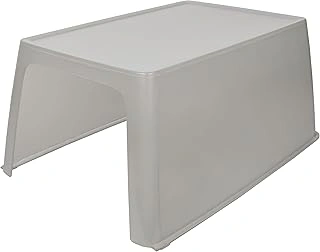
PetSafe ScoopFree Litter Box Privacy Cover
The PetSafe ScoopFree Litter Box Privacy Cover is designed for ScoopFree owners who want to reduce visual clutter and give their cat a more enclosed space. Priced at $34.99, this add-on hood fits over compatible ScoopFree models and helps contain litter scatter while making the unit less conspicuous in your home.
The cover transforms the open-pan design of the ScoopFree into a hooded setup, which some cats prefer for privacy. It can also help reduce the amount of litter kicked outside the box during burying behavior. The structure is straightforward to install and remove for tray changes, though you'll want to confirm compatibility with your specific ScoopFree model before purchasing.
One tradeoff to consider is ventilation. Adding a hood naturally restricts airflow compared to the open design, which may affect how quickly moisture evaporates and how odor disperses. If your cat is sensitive to enclosed spaces or you notice odor building up more quickly, the cover may not be the best fit. It's a solid upgrade for households prioritizing aesthetics and scatter control, but not essential if your cat is comfortable with the open layout and you don't have litter tracking issues.
The cover is rated 4.3 out of 5, indicating generally positive user experience with occasional fit or assembly concerns. For ScoopFree users looking to refine their setup, this is an affordable way to customize the box to better suit both cat preference and home décor.
- ✅ Reduces litter scatter and visual clutter
- ✅ Provides privacy for cats that prefer enclosed spaces
- ✅ Easy to install and remove for tray access
- ✅ Affordable add-on at $34.99
- ⚠️ Restricts airflow, which may affect odor control
- ⚠️ Not compatible with all ScoopFree models
- ⚠️ Some cats may not prefer the enclosed feel
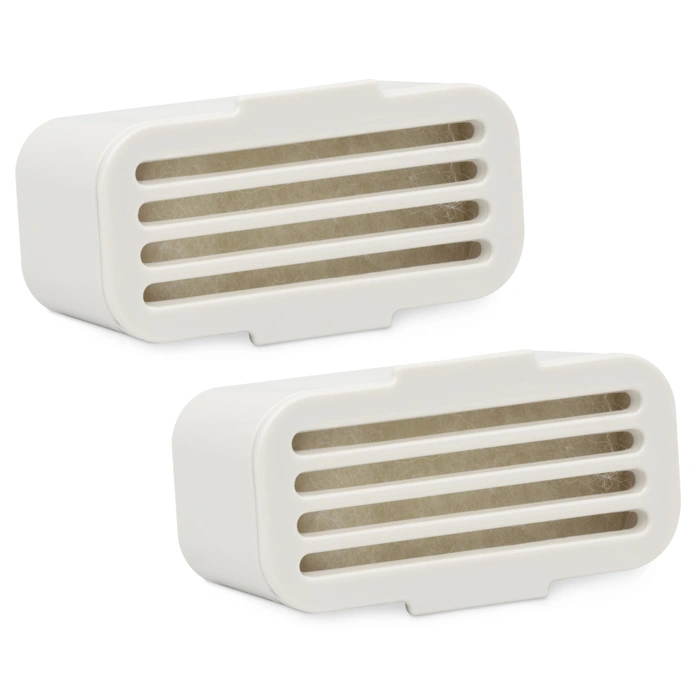
PetSafe ScoopFree SmartSpin Litter Box Deodorizers
The PetSafe ScoopFree SmartSpin Litter Box Deodorizers are designed specifically for use with ScoopFree automatic litter boxes, including the Smart model. These deodorizer cartridges attach to compatible units and work in tandem with the crystal litter to manage odor between cleaning cycles.
At $14.99, the deodorizers represent an optional ongoing expense on top of the crystal litter trays themselves. For households where odor control is a priority - such as apartments, smaller homes, or multi-cat setups - the SmartSpin system offers an additional layer of freshness that may justify the cost. The deodorizers are straightforward to install and replace, fitting into the SmartSpin mechanism without tools or complicated steps.
While the ScoopFree Smart already benefits from crystal litter's natural odor-absorbing properties, adding deodorizers can extend the time between tray changes or improve air quality in enclosed spaces. This accessory won't change the fundamental cleaning performance of the box, but it does provide a tangible benefit for users sensitive to litter box smells or those managing multiple cats in one unit.
Keep in mind that deodorizers are a recurring purchase. If you're comparing long-term costs between the Litter-Robot 4 and the PetSafe ScoopFree Smart, factoring in deodorizers alongside crystal tray replacements gives a clearer picture of your total monthly spend.
- ✅ Designed specifically for ScoopFree models
- ✅ Simple installation without tools
- ✅ Adds extra odor control for apartments or multi-cat homes
- ✅ Works alongside crystal litter's natural odor absorption
- ⚠️ Adds to ongoing monthly costs
- ⚠️ Optional accessory, not required for basic operation
- ⚠️ Benefit may be minimal in well-ventilated spaces
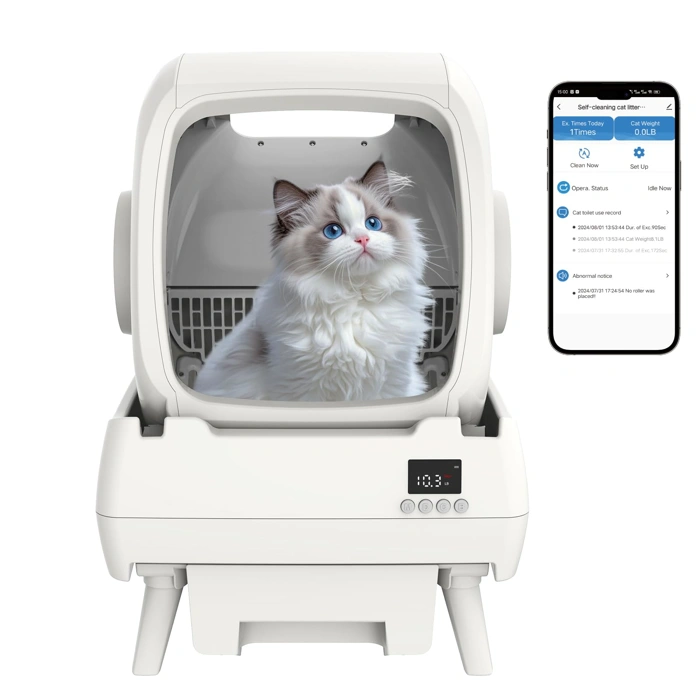
FRCFRC Automatic Self-Cleaning Cat Litter Box with App Control
The FRCFRC Automatic Self-Cleaning Cat Litter Box with App Control offers a lower-cost entry point for cat owners curious about automatic litter boxes but hesitant to commit to premium pricing. Priced at $129.99, it delivers self-cleaning functionality and smartphone app control at a fraction of the cost of flagship models like the Litter-Robot 4 or PetSafe ScoopFree Smart.
This budget-friendly option includes automatic waste removal and remote monitoring through its companion app, allowing you to track cleaning cycles and receive notifications without being in the same room. For households testing the automatic litter box category for the first time, or those managing tight budgets, the FRCFRC provides core automation features without the financial commitment of high-end units.
The trade-off for the lower price is evident in build quality, customer support infrastructure, and long-term durability compared to established brands. The unit lacks the robust construction, comprehensive warranty coverage, and proven track record of more expensive competitors. Material quality, sensor reliability, and app stability may not match the polish of premium alternatives, and troubleshooting resources are more limited.
With a 4.6/5 rating, the FRCFRC demonstrates reasonable user satisfaction within its price tier. It's best suited for single-cat households, renters, or buyers who want to experiment with automation before investing in a premium system. If the unit meets your needs, you've saved significantly; if it falls short, the lower financial risk makes it easier to upgrade later. Just set expectations appropriately - this is a value play, not a premium experience.
- ✅ Priced at $129.99, significantly lower than premium automatic litter boxes
- ✅ Includes app control and self-cleaning automation at budget price point
- ✅ Allows first-time users to test automatic features with minimal financial risk
- ✅ 4.6/5 user rating shows reasonable satisfaction in its price category
- ⚠️ Build quality and materials do not match premium competitors
- ⚠️ Customer support and warranty coverage less comprehensive than established brands
- ⚠️ Sensor reliability and app stability may be less refined
- ⚠️ Long-term durability uncertain compared to proven flagship models
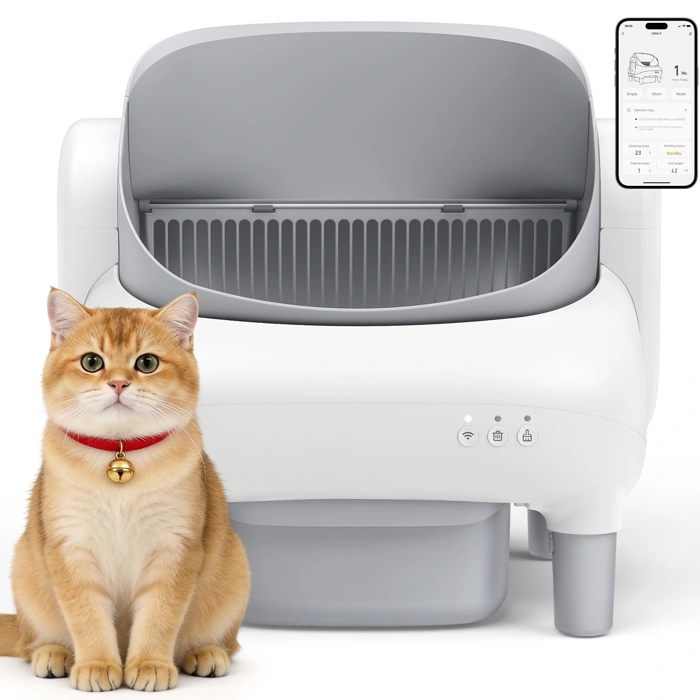
Hazrela Automatic Self-Cleaning Cat Litter Box
The Hazrela Automatic Self-Cleaning Cat Litter Box offers a middle-ground option for cat owners who want automated cleaning without the investment required by flagship brands like Litter-Robot or PetSafe ScoopFree. At $149.98, it positions itself as a functional alternative that prioritizes core cleaning mechanics over advanced connectivity or premium materials.
This unit is best suited for single-cat households where straightforward automation matters more than app control or brand recognition. The automatic cleaning cycle removes the need for daily scooping, though users should verify compatibility with their preferred litter type and understand that support resources and replacement part availability may be more limited compared to established brands.
The tradeoff is clear: you gain basic self-cleaning functionality at a more accessible price point, but without the extensive testing, warranty coverage, or accessory ecosystem that comes with premium models. For cat owners prioritizing budget-conscious automation and willing to work with a less-proven brand, Hazrela offers a pragmatic entry point into automatic litter boxes.
Consider this option if you're managing a single cat, have realistic expectations about mid-range performance, and prefer to allocate savings toward litter or other pet supplies rather than brand premium. If long-term reliability, comprehensive app features, or multi-cat capacity are priorities, the flagship models reviewed earlier in this comparison remain the safer choice.
- ✅ Budget-friendly at $149.98 compared to premium automatic litter boxes
- ✅ Automatic cleaning eliminates daily scooping
- ✅ Functional option for single-cat households
- ⚠️ Limited brand track record and support resources
- ⚠️ No advanced app connectivity or smart features
- ⚠️ Fewer verified long-term durability reports than established brands