We may earn a commission when you buy through links on this page, at no extra cost to you. How this works.
The Art of Training Your Dog: Gently Teach Good Behavior with E-Collar
Compare safety standards, correction modes, and training outcomes across leading smart collar systems.
Use the matching tool first
Start with Smart Feeder Portion Calculator if you want to narrow the fit before checking current offers.
Dog training collars have evolved from basic static correction devices into programmable tools that sync with smartphones, track behavior patterns, and offer layered correction modes. For professionals managing demanding schedules alongside a reactive dog or a recall-challenged puppy, the appeal is obvious: remote intervention when you can't reach a leash, consistent feedback during solo yard sessions, and data logs that reveal which situations trigger unwanted behavior.
The practical tradeoff sits between safety and correction intensity. Entry-level smart collars often limit output to vibration or tone, prioritizing gentler feedback but requiring more repetition and patience. Mid-range and advanced models add static stimulation with granular control, delivering faster results in high-distraction contexts but demanding careful calibration to avoid overcorrection. Material quality, contact point design, and failsafe features separate responsible tools from those that risk skin irritation or inconsistent delivery.
Manual control offers precision: you decide the exact moment to correct, matching intensity to your dog's arousal level and the specific behavior. Automated modes - triggered by bark detection, boundary crossing, or preset schedules - provide coverage when you're occupied, but they remove nuance and can misfire if sensors confuse legitimate vocalizations with problem barking.
Budget shapes capability. Collars under $100 typically sacrifice range, battery life, or app functionality, forcing you to stay close and recharge often. Spending $150 to $300 brings waterproofing, multi-dog support, and robust smartphone integration. Premium systems above $400 add GPS tracking, geofencing, and detailed analytics, blending training with location monitoring for dogs that roam or work off-leash in varied terrain.
This evaluation examines real-world fit across those dimensions: which collars balance humane design with effective correction, how interface complexity affects daily use, and where each option makes sense given your dog's temperament, your training experience, and the environments you navigate together.

The Art of Training Your Dog: Gently Teach Good Behavior with E-Collar
Before investing in hardware, understanding the methodology behind gentle e-collar training can prevent misuse and improve results. This book focuses on timing, ethical frameworks, and communication strategies that help owners recognize when and how to introduce low-level stimulation without overwhelming the dog.
The approach emphasizes reading canine body language, pairing stimulation with clear cues, and building a foundation of trust. Owners learn to calibrate intensity based on individual temperament rather than following rigid protocols. The content walks through structured lesson plans for common behaviors - recall, boundary respect, and leash manners - while addressing common mistakes such as inconsistent timing or relying on correction without reinforcement.
The tradeoff is time investment. Unlike plug-and-play smart collars with preset modes, applying the techniques in this book requires deliberate practice, observation, and self-directed learning. Owners who skip foundational understanding may inadvertently create anxiety or confusion, even with advanced equipment. The book does not replace professional guidance for reactive or fearful dogs, but it provides a framework for responsible tool use.
Rated 4.7 out of 5, the book offers accessible language and step-by-step progressions. It pairs well with modern smart collars that allow precise stimulation control, giving owners the knowledge to adjust settings thoughtfully rather than relying on manufacturer defaults. For households prioritizing humane training over convenience, this resource builds confidence before committing to collar features.
- ✅ Focuses on timing and ethical e-collar introduction
- ✅ Step-by-step lesson plans for recall, boundaries, and leash work
- ✅ Teaches how to calibrate intensity by individual temperament
- ✅ Accessible language with structured progressions
- ⚠️ Requires reading time and self-directed practice
- ⚠️ Does not replace professional help for reactive or fearful dogs
- ⚠️ No plug-and-play convenience compared to preset device modes
What Are Smart Collars and How Do They Work?
Smart collars for dog training combine wireless communication with correction delivery systems, giving handlers remote control over timing and intensity. Most models use a handheld transmitter or smartphone app to send signals to a receiver collar worn by the dog, with working ranges that vary from a few hundred feet to several miles depending on the technology.
The core correction methods include static stimulation (a brief electric pulse delivered through metal contact points), vibration (a buzzing motor against the neck), and audible tone (a beep or chirp). Static correction typically offers multiple intensity levels - often 10 to 100 settings - so handlers can start low and adjust based on the dog's response and temperament. Vibration and tone serve as non-static alternatives or progressive cues before escalating to static if needed.
Modern units often include GPS tracking modules that log location history and geofence alerts, useful for off-leash work in open areas. App connectivity enables handlers to review session data, adjust settings remotely, and monitor battery life from a smartphone. Some collars automate bark detection and deliver corrections without manual input, while remote training modes require the handler to press a button each time, ensuring intentional timing that matches the behavior being addressed.
The key operational difference lies in control: bark-control automation uses sound or vibration sensors to trigger corrections independently, which can be effective for nuisance barking but removes human judgment from each correction. Remote training modes put every stimulation decision in the handler's hands, allowing precise pairing of correction with unwanted behavior and immediate release when the dog complies. Understanding these distinctions helps match the collar's feature set to the training goal, whether that's recall reinforcement, boundary respect, or interrupting specific behaviors in real time.
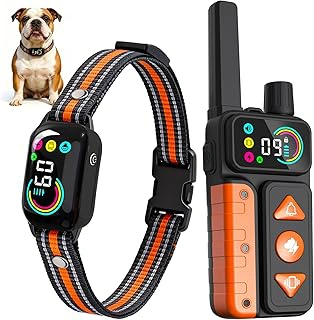
2-in-1 Dog Bark & Shock Training Collar
Priced at $49.98 with a 4.5 rating, this 2-in-1 Dog Bark & Shock Training Collar offers dual functionality for owners managing both spontaneous barking and obedience training needs in one device. The combination design allows the collar to operate in automated bark-detection mode when you're not actively training, then switch to manual correction control when you need to address specific commands or behaviors.
This approach suits households where a dog barks excessively during certain triggers - deliveries, passing dogs, separation anxiety - but also requires structured training for recall, boundary respect, or leash manners. Instead of purchasing separate devices, the dual-mode setup consolidates both functions into a single collar unit, reducing the number of accessories your dog wears and simplifying your training toolkit.
The mid-price positioning reflects a tradeoff: you gain versatility and convenience, but the refinement level typically falls short of premium single-purpose units. Bark detection sensitivity and manual correction consistency may not match the precision of higher-end systems, and the range or battery performance might be more limited. For budget-conscious buyers who need both bark management and training capability without duplicating equipment, this collar delivers practical value. If your primary need is advanced obedience work or you require hospital-grade consistency in correction delivery, a dedicated training collar will likely serve you better.
The 4.5 rating suggests solid everyday performance within its price tier. Owners looking for a cost-effective entry into tech-enabled training - without committing to premium pricing before confirming their dog's responsiveness - will find this unit a reasonable starting point.
- ✅ Dual-mode design consolidates bark control and manual training in one collar
- ✅ Mid-price point at $49.98 suitable for budget-conscious households
- ✅ 4.5 rating indicates reliable everyday performance
- ✅ Reduces need for multiple collar devices
- ⚠️ Refinement and precision may not match premium single-purpose units
- ⚠️ Manual correction consistency potentially less reliable than higher-end systems
- ⚠️ Range and battery performance likely more limited than dedicated training collars
Evaluating Safety: Materials, Correction Methods, and Ethical Considerations
Material quality and design choices directly affect how a collar interacts with a dog's skin and coat during training sessions. Look for contact points made from surgical-grade stainless steel or medical-grade silicone, which resist corrosion and reduce the risk of skin irritation during repeated contact. Adjustable strap systems with multiple sizing holes and secure buckle closures help maintain consistent positioning on the neck without over-tightening or shifting during movement.
Correction intensity should always start at the lowest detectable level and increase only as needed for response. Collars with granular adjustment - often ten or more levels - allow you to find the minimum stimulation your dog notices, rather than relying on broad low-medium-high presets. Contact point length matters for coat type: longer posts reach through thick fur, while shorter designs work better on smooth coats and reduce pressure concentration on the skin.
Fit considerations extend beyond strap length. The receiver box should sit high on the neck, just behind the ears, where the contact points make even contact without the collar rotating or sliding downward. A properly fitted collar can be rotated around the neck with light resistance, but should not move more than an inch vertically when the dog is standing still.
Ethical concerns center on misuse rather than the tools themselves. Correction methods become problematic when intensity exceeds what is necessary for communication, when applied without clear timing linked to behavior, or when used as a substitute for foundational training. Responsible use means pairing any correction with positive reinforcement, keeping sessions short, and recognizing when a dog's stress signals - such as excessive panting, avoidance, or shutdown behavior - indicate the need to stop and reassess your approach.
Situational and skill-dependent factors shape whether a smart collar is appropriate. Handlers new to e-collar training benefit from working with a trainer who can demonstrate proper timing and intensity calibration. Dogs with fear-based behavior issues or high anxiety may not be good candidates for correction-based tools. The goal is always clear communication, not compliance through discomfort.
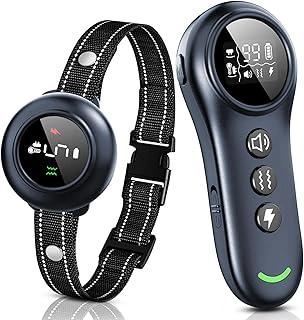
2-in-1 Dog Shock & Bark Training Collar
Priced at $59.99, the 2-in-1 Dog Shock & Bark Training Collar sits multiple above the mid-tier collar reviewed earlier, raising an important question: does the marginal price premium deliver measurable improvements in range, battery life, or build materials? The dual-mode design addresses both leash training and nuisance barking in a single unit, which may appeal to owners managing multiple behavior challenges without purchasing separate tools.
The 4.4-star rating reflects generally positive user experience, though without detailed spec sheets or verified range data, it becomes difficult to pinpoint exactly where this model outperforms lower-cost alternatives. If the previous collar offered similar correction modes and battery performance at multiple, the multiple gap narrows the value proposition considerably. Buyers should compare stated transmission range, waterproof rating, and battery cycle counts side by side to identify tangible differences rather than assume the higher price can help superior electronics.
The dual-mode functionality consolidates two training tools into one receiver, reducing the number of devices your dog wears and simplifying setup for households addressing both on-leash reactivity and excessive vocalization. This convenience carries real value if both training needs exist simultaneously. However, if bark control is not a current priority, paying extra for unused features dilutes cost efficiency. Evaluate whether your training plan will actually utilize both modes within the next six months, or whether a single-purpose collar at a lower price point serves your immediate goals more directly.
Build quality and material durability remain unverified without hands-on inspection or long-term user feedback on strap integrity and receiver housing. The lack of brand transparency and sparse specification details make it harder to assess whether internal components justify the incremental cost over budget models. Check recent customer reviews for mentions of strap fraying, button responsiveness, and waterproof seal performance to gauge real-world reliability. If multiple reviews flag premature hardware failure, the slight rating advantage may not offset durability concerns that undermine the product's long-term value.
Ultimately, this collar makes sense for owners who need verified dual-mode functionality and can confirm through direct comparison that range, battery, or material specs exceed those of the multiple alternative. Without that verification, the price premium becomes harder to justify on rating alone.
- ✅ Dual-mode design consolidates bark control and training correction in one receiver
- ✅ 4.4-star rating indicates generally positive user satisfaction
- ✅ May reduce the need for multiple devices if both training needs apply
- ⚠️ $10 premium over mid-tier models requires side-by-side spec comparison to justify
- ⚠️ Sparse technical details make it difficult to verify performance improvements
- ⚠️ Dual-mode functionality adds cost even if bark control is not needed
Measuring Efficacy: Key Features for Effective Training
- Adjustable correction levels (minimum 8+ intensity settings)
- Immediate response time under 0.5 seconds
- Range sufficient for typical training environments (minimum 300 yards)
- Waterproof or water-resistant rating for outdoor use
- Rechargeable battery with 40+ hour capacity
- Separate vibration and tone options for progressive training
How to Responsibly Introduce a Smart Collar to Your Dog
Introducing a smart collar requires careful pacing to avoid creating anxiety or negative associations with the device. The first step is a desensitization period where the dog wears the collar powered off for several short sessions, allowing them to become comfortable with the weight and feel before any stimulation occurs. Pair these sessions with positive experiences like treats, play, or mealtime so the collar becomes linked to activities the dog already enjoys.
Once the dog is relaxed wearing the inactive collar, begin testing at the absolute lowest stimulation level the device offers. Watch for subtle stress signals - ear position changes, lip licking, yawning, or avoidance behavior - that indicate the intensity is too high or the dog is not ready. The goal during early sessions is simply to help the dog notice the sensation in a calm environment, not to correct behavior. If the dog shows distress, return to the desensitization phase and consult a trainer familiar with the specific collar model.
Positive association building continues throughout the introduction process. Use the collar only when you can deliver clear, immediate feedback tied to a specific behavior, and always follow correct responses with verbal praise or a reward. Inconsistent timing confuses the learning process and can make the collar seem unpredictable to the dog. Keep initial training sessions brief - five to ten minutes - to prevent mental fatigue and maintain focus.
Gradual intensity escalation should happen only after the dog reliably responds to the lowest level in a distraction-free setting. Increase one level at a time and test across different environments before moving higher. Many dogs never require intensity beyond the lower third of a collar's range, and using more stimulation than necessary can erode trust and increase stress. Responsible use depends on the handler's ability to read the dog's body language, maintain consistency, and recognize when the collar is helping versus when it is creating new problems. This is a skill-dependent tool, not a universal solution, and situational awareness matters more than the device's technical capabilities.
Final Verdict: Are Smart Collars a Worthy Investment for You and Your Pet?
Smart collars make sense when you need scalable feedback for consistent boundary work or distance training beyond leash range. They shine for field handlers, owners with acreage, or dogs who respond poorly to verbal interruption alone. The investment pays off if you already have solid timing skills and plan to use the collar as one piece of a structured program, not a standalone fix.
If your dog struggles with basic attention, impulse control at close range, or anxiety-driven behavior, foundation work with positive reinforcement and shorter sessions usually delivers faster results. Smart collars add complexity without solving engagement gaps, and the learning curve for correct stim levels or vibration timing can set back progress if misapplied early.
Budget matters. Entry-level units with fewer stim levels and shorter range work fine for yard recall and perimeter training. Mid-tier models justify the price when you need waterproofing, multiple dog support, or GPS tracking across larger properties. Premium systems with app-based logging and custom vibration patterns suit competitive trainers or working-dog handlers who rely on data to refine technique.
Evaluate your dog's temperament before adding hardware. Sensitive dogs may shut down under vibration or tone alone, while high-drive breeds often need only sporadic reminders once a boundary is learned. If you're uncertain about correction timing or struggle to read stress signals, invest in a few sessions with a qualified trainer before purchasing any remote tool.
Smart collars do not replace education. They amplify decisions you already know how to make and offer consistency across distance. When those conditions align with your training goals and skill level, the technology becomes a practical extension of your program. When they don't, simpler tools and clearer reinforcement schedules will close the gap faster and more safely.
Before committing, compare all three options side-by-side. Check current pricing, shipping timelines, and updated user feedback to confirm the feature set and build quality match your expectations and training environment.