We may earn a commission when you buy through links on this page, at no extra cost to you. How this works.
Wortade Automatic Interactive Rechargeable Cat Laser Toy with Suction Cup
Compare automated laser toys and robotic spheres to find which tech keeps your cat focused longer.
Use the matching tool first
Start with Smart Feeder Portion Calculator if you want to narrow the fit before checking current offers.
Choosing between app-controlled laser toys and robotic rolling spheres comes down to one question: does your cat stay interested longer when chasing light patterns they can never catch, or when batting a physical object that rolls away and reacts to touch?
Laser toys project moving dots and shapes across walls and floors, triggering a cat's chase instinct without delivering the satisfaction of capture. Robotic spheres offer a tangible target that wobbles, spins, and responds to swipes, giving cats both the thrill of pursuit and the reward of physical contact. Each approach produces measurably different engagement patterns.
This comparison focuses on sustained attention span, repetitive-play tolerance, and which format fits cats left home during eight-hour work blocks. Laser toys excel at high-speed directional runs and climbing attempts. Rolling spheres encourage pouncing, batting, and repeated repositioning as the toy changes direction. Understanding these mechanics makes it easier to predict which will keep a specific cat occupied without human intervention.
We evaluate app scheduling flexibility, obstacle navigation, noise levels, and whether the toy encourages problem-solving behavior or pure cardio chase. The goal is reliable stimulation that holds attention long enough to reduce boredom behaviors like scratching furniture or vocalizing for attention while you're in back-to-back meetings.
Quick Reference: Choosing Between Laser and Robotic Toys
- Choose lasers if your cat is a high-energy chaser who responds to rapid, unpredictable movement
- Choose spheres if your cat prefers batting and physical interaction with tangible objects
- Prioritize rechargeable power for both toy types to avoid constant battery replacement
- Look for suction cup or weighted mounting on lasers to prevent tipping during play
- Verify sphere noise level if your home office is adjacent to play areas
- Confirm laser is Class II or lower and includes automatic shutoff for eye safety
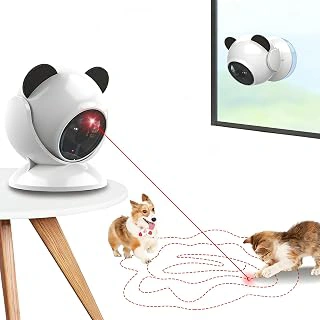
Wortade Automatic Interactive Rechargeable Cat Laser Toy with Suction Cup
The Wortade Automatic Interactive Rechargeable Cat Laser Toy offers a straightforward solution for cat owners who want scheduled play without managing an app. Priced at $32.99 with a 5.0/5 rating, this laser toy uses a suction cup mount to attach to floors or smooth walls, keeping it stable while projecting automatic trajectory patterns across your room.
Rechargeable power reduces the need for constant battery replacements, and the built-in timer functionality lets you set play sessions that run on their own schedule. The automatic trajectory mode cycles through patterns without requiring manual control, making it particularly useful for working professionals who leave home during the day and want their cats to have predictable activity windows.
The suction cup mount provides flexibility in positioning - you can place it low for ground-level chase sessions or higher to create vertical movement that encourages jumping. The device runs its programmed sequences independently, so you set it once and let it handle the rest.
Three meaningful limitations shape how this toy fits into a rotation. First, it has no app control, so you cannot adjust patterns remotely or respond to your cat's real-time interest from another room. Second, while the automatic trajectories follow preset paths, they lack the unpredictability that some cats find compelling after repeated exposure. Third, like all laser toys, it offers chase activity without a physical capture conclusion, which can leave some cats unsatisfied if used as the sole play option.
This toy works best for households that value simplicity and routine over interactive customization. If your cat responds well to laser chase sessions and you want a device that runs reliably without smartphone management, the Wortade delivers consistent automated play at a mid-range price point. Pair it with toys that provide tactile feedback - such as robotic rolling spheres or plush prey items - to give your cat both the chase stimulus and the satisfaction of physical interaction.
- ✅ Rechargeable power removes battery maintenance
- ✅ Suction cup mount offers flexible positioning on floors or walls
- ✅ Timer functionality enables scheduled play sessions without manual start
- ✅ Automatic trajectory patterns run independently
- ✅ Mid-range $32.99 price for reliable automated play
- ⚠️ No app control limits remote adjustment or real-time pattern changes
- ⚠️ Preset trajectories may become predictable with repeated exposure
- ⚠️ Laser-only design provides no physical capture conclusion
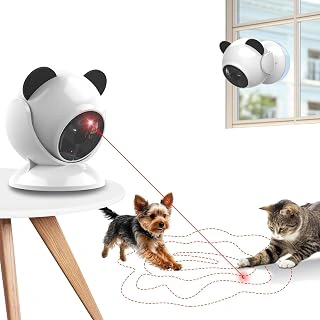
Saolife Automatic Laser Cat Toy with Random Trajectory, Suction Cup Design, Quiet
The Saolife automatic laser cat toy offers a practical balance of core features at $22.99, earning a 4.3 out of 5 rating from cat owners who value simplicity and quiet operation. Its random trajectory algorithm keeps the laser dot unpredictable across floors and walls, and the suction cup mount holds the unit steady on smooth surfaces - tile, hardwood, or glass - so it won't shift mid-session.
The motor runs quietly enough that skittish cats won't bolt at startup, and the automatic shutoff helps reduce the chance of overplay without your intervention. You activate it manually or rely on the basic timer; there's no scheduling function or app integration, which keeps the interface straightforward but limits customization. For households that want a plug-and-play laser option without complex setup or premium pricing, this toy delivers consistent random movement and stable mounting in a compact package.
Tradeoffs center on feature depth. You won't find multi-room sync, pattern customization, or remote start - functions that higher-priced models add. The suction cup works best on perfectly smooth, clean surfaces; textured floors or dusty glass reduce grip. Cats that respond well to simple laser chase will stay engaged during the timed cycles, but if your cat craves variety or interactive sounds, the Saolife may feel repetitive after a few weeks.
Best fit: budget-conscious owners seeking reliable random laser movement, quiet motor performance, and a secure mount for controlled play sessions. The straightforward operation and low noise make it a solid entry point for testing whether your cat enjoys automated laser toys before investing in app-enabled alternatives.
- ✅ Random trajectory algorithm keeps laser movement unpredictable
- ✅ Suction cup mount provides stable placement on smooth surfaces
- ✅ Quiet motor operation suitable for noise-sensitive cats
- ✅ Automatic shutoff prevents overplay
- ✅ Budget-friendly at $22.99
- ⚠️ No scheduling function or app integration
- ⚠️ Suction cup requires smooth, clean surfaces for secure grip
- ⚠️ Simpler feature set lacks pattern customization or multi-room sync
- ⚠️ Manual activation or basic timer only - no remote start
How App-Controlled Laser Toys Work: Design and Interaction Model
App-controlled laser toys project a moving red or green dot across floors, walls, and furniture, triggering a cat's instinct to chase fast-moving prey. Most models use either randomized algorithms or user-directed paths via smartphone app, letting you control the laser remotely when you're away or simply lounging on the sofa. Units typically attach to surfaces with suction cups or sit on weighted bases, and rechargeable batteries power the laser diode and motor for anywhere from 90 minutes to several hours per charge.
The core interaction is visual pursuit: the cat tracks, stalks, and lunges at the dot, but never physically captures anything. This chase-only model works well for many cats because the movement itself satisfies the hunting sequence, and the lack of moving parts means fewer mechanical failures and quieter operation. Timers let you schedule sessions so the toy activates automatically during the day, which helps burn energy in multi-cat or indoor-only households.
The main trade-off is the absence of a tactile reward. Some cats lose interest after a few minutes when they realize they can't catch the target, leading to frustration or disengagement. Others remain captivated for ten or fifteen minutes at a stretch, especially when the pattern includes pauses and direction changes that mimic real prey behavior. If your cat tends to need a physical payoff - grabbing, biting, or batting something solid - a laser alone may not hold attention as long as a toy that rolls or tumbles within reach.
Because the device stays stationary, it works in any room layout and requires no floor space for the toy itself to roam. That makes laser units a good fit for smaller apartments or homes with furniture arrangements that would obstruct a rolling toy. On the downside, continuous laser use without variation can become predictable, so rotating play styles or combining the laser with occasional manual wand sessions helps keep the stimulus fresh and prevents habituation.
How Robotic Rolling Spheres Work: Design and Interaction Model
Robotic rolling spheres use internal motors and gyroscopic stabilization to move unpredictably across flat surfaces, simulating prey that darts and changes direction. Most models include accelerometers and obstacle-detection sensors that reverse or reroute the sphere when it encounters walls or furniture legs. The outer shell is typically made from polycarbonate or ABS plastic, designed to withstand batting and biting without cracking.
These toys operate in either automatic mode - running pre-programmed patterns for 10 to 15 minutes before pausing - or app-controlled mode, where you steer the sphere through a smartphone interface. Battery life varies: rechargeable models usually deliver 60 to 90 minutes of active play per charge, while those using replaceable AAA batteries may last several weeks under intermittent use. Noise levels range from a quiet hum on carpet to a noticeable rolling clatter on hardwood or tile, which can either attract or startle sound-sensitive cats.
The interaction model centers on physical contact. Cats can bat the sphere, pounce on it, or chase it under furniture, where the toy's obstacle sensors often trigger a reversal. This tactile feedback satisfies cats that prefer to "capture" their prey, and the sphere's persistence - it keeps moving even after being swatted - reinforces the hunting loop. Object permanence plays a role: when the sphere rolls behind a couch or into another room, many cats will follow and wait for it to reappear.
Engagement patterns tend to be cyclical. A cat may chase intensely for two to five minutes, rest while the sphere pauses or recharges, then re-engage when motion resumes. Surface sensitivity is a trade-off: spheres perform best on hard floors and low-pile rugs, but thick carpet or uneven tile can slow movement or drain the battery faster. Homes with multiple floor types may see inconsistent play sessions, and the need for regular recharging or battery swaps adds a maintenance step that laser toys avoid.
Engagement Duration: Which Toy Holds Attention Longer?
High-energy cats often chase app-controlled laser toys for five to ten minutes before losing interest, while robotic rolling spheres can hold attention for fifteen to twenty-five minutes when the cat enjoys physical batting and pouncing. The difference comes down to feedback: lasers provide visual stimulation and fast movement, but the lack of a physical target to catch leaves many cats frustrated after a few sprints. Spheres offer tactile interaction - your cat can swat, trap, and feel the object respond - which satisfies the hunting sequence more completely.
Individual personality plays a larger role than toy type. Cats with strong prey drive and high stamina may repeat short laser sessions throughout the day, while cats who prefer methodical stalking and capture often engage longer with a sphere they can corner and bat. Kittens and young adults typically show more enthusiasm for lasers during the first week, then shift focus as novelty fades. Adult cats who already enjoy rolling balls or crinkle toys tend to stay engaged with robotic spheres from the start.
Rotation matters for both formats. Leaving any automated toy available constantly reduces novelty within days. Alternating between a laser toy and a sphere every few days, or limiting each session to ten minutes, helps preserve curiosity and prevents habituation. Some cats never warm to lasers because the inability to catch anything feels unrewarding; others ignore spheres because they prefer airborne or unpredictable motion. Observing your cat's play style during the first three sessions will show which format sustains interest and which becomes this product noise.
Safety and Design: Build Quality, Materials, and Home Aesthetics
Safety should anchor any decision about automated cat toys, starting with laser classification. Class II lasers - the standard for consumer pet products - emit no more than 1 milliwatt of power and include automatic shutoff timers, typically between 10 and 15 minutes, to prevent overexposure. App-controlled laser toys that meet this specification reduce the risk of accidental eye exposure during extended play sessions. Look for models that mention Class II compliance and shutoff intervals in the product documentation, and avoid units that allow continuous operation without pause.
Robotic rolling spheres carry different safety profiles. Shell material matters: polycarbonate and ABS plastic offer impact resistance and prevent cracking when batted across hardwood or tile, while softer silicone covers can muffle noise but may attract teeth and claws. Battery compartment security is critical; toy-grade screw closures keep lithium cells out of reach, whereas snap-fit panels can dislodge under persistent pawing. Check for certifications such as ASTM F963 or EN71, which signal third-party testing for mechanical hazards and material toxicity.
Noise levels affect both cat engagement and household peace. Rolling spheres generate low hums and occasional bumps - typically 40 to 50 decibels - that some cats find stimulating and others ignore after the novelty fades. Laser projectors run nearly silent but may emit faint motor whirrs during pattern changes. If your home has open-plan layouts or light sleepers, quieter operation becomes a tiebreaker.
Flooring compatibility influences durability and movement. Spheres perform best on hard surfaces where wheels or internal gyroscopes maintain momentum; thick carpet can stall motors or drain batteries faster. Lasers project equally well on any surface but show brightest contrast on neutral, matte finishes - dark rugs or glossy tile can reduce dot visibility and shorten chase interest.
Design aesthetics have improved across both categories. Many laser units now use compact, low-profile housings in white, gray, or brushed metal finishes that blend with modern furniture when idle. Spheres vary more widely: some feature transparent shells with visible LED cores, while others adopt minimalist matte exteriors. Color options remain limited, but neutral palettes help these devices fade into living spaces rather than dominate side tables or floor corners.
Visibility when not in use depends on size and storage. Laser projectors typically measure 4 to 6 inches across and sit on shelves or mounts; spheres range from 2.5 to 4 inches in diameter and roll under furniture if left uncharged. If you prefer toys that disappear between sessions, smaller spheres or wall-mounted laser units offer the cleanest look.
Smart Features and App Integration: Control, Scheduling, and Connectivity
App integration separates convenience toys from genuinely smart play systems, though marketing often promises more than the hardware delivers. Most laser toys advertise "app control" but offer only basic on/off commands or preset pattern selection through a proprietary phone interface. True scheduling - where you set specific weekday routines while at work - remains rare outside premium models priced above $80. Many budget units labeled as "smart" rely instead on physical timers or simple remote controls with no connectivity at all.
Robotic rolling spheres typically offer richer app experiences when they include smartphone control. You can adjust speed settings, steer the sphere manually during video calls to check on your cat, or program obstacle-avoidance sensitivity through the interface. Higher-end spheres integrate with voice assistants, letting you trigger a play session hands-free or link activation to routines like "leaving for work." The trade-off: these features drain batteries faster, and connection drops mid-session can leave the toy stuck under furniture until you return home.
Scheduling proves most useful for cats who demand play at predictable times, reducing door-scratching or countertop raids when you're away. A laser toy with a reliable seven-day calendar and random pattern generation can simulate your presence better than a sphere that simply rolls in circles every few hours. However, standalone timer plugs paired with non-smart toys often accomplish the same goal at one-third the cost, provided the toy defaults to an engaging mode when power restores.
Connectivity stability matters more than feature lists. Toys requiring constant Bluetooth pairing frustrate owners who find the device "offline" each evening, while models using local timers work regardless of your phone's location. If you travel frequently or want grandparents to activate the toy remotely, look for cloud-connected devices with guest-access modes and backup manual controls when the internet fails.
Our Verdict: Matching Toy Type to Cat Personality and Your Schedule
High-energy cats who sprint across the room at the first flicker of light typically stay engaged longer with app-controlled laser toys, especially when randomized movement patterns tap into their chase instinct. These cats respond to rapid directional changes and sustained pursuit sessions, making laser toys a natural fit when you need 15 - 20 minutes of intense activity before bedtime or work. If your cat loses interest the moment the laser stops - or shows signs of frustration without a tangible reward - pairing laser sessions with a treat puzzle or small toy drop at the end can help close the predatory loop.
Robotic rolling spheres suit cats who prefer batting, trapping, and physical contact with their prey. Cats that stalk slowly, pounce with precision, and carry toys around the house often engage more consistently with spheres because the toy responds to their touch. This interaction creates a feedback loop: bat the sphere, watch it react, chase again. For cats who ignore lasers or seem confused when the dot disappears, a rolling sphere offers the tactile satisfaction that keeps play sessions going.
Working professionals benefit from scheduling both toy types in rotation rather than relying on one exclusively. Running a laser sequence during morning coffee and a sphere session in the evening prevents habituation and spreads activity across the day. Neither toy replaces the enrichment of puzzle feeders, vertical climbing space, or short interactive wand sessions when you're home, but both reduce guilt when your schedule limits hands-on play. Set realistic expectations: automated toys extend engagement and burn energy, but they work best as part of a broader routine that includes variety and occasional human participation.
Choosing between the two often comes down to observing how your cat reacts to movement versus contact, then matching the toy's strength to that preference while rotating formats to maintain novelty over time.
Related Considerations: Toy Rotation and Enrichment Strategy
Even the most sophisticated automated toy will lose its appeal if your cat encounters it every single day without variation. Cats habituate quickly to predictable stimuli, which means that laser pattern or sphere route that captivated your pet last week may barely earn a glance this week.
Rotation is the simplest antidote. Store each automated toy after a few days of use and swap in a different stimulus - whether that's a second robotic sphere, a wand toy you control manually, or a puzzle feeder that rewards problem-solving with treats. This approach keeps novelty high and prevents the boredom that leads cats to ignore even expensive tech entirely.
Layering enrichment methods amplifies the benefit. Pair your app-controlled laser or rolling sphere with vertical climbing furniture near windows, hiding spots at different heights, and scheduled sessions where you drag a feather wand or toss a crinkle ball. Automated toys excel at filling the mid-day lull when you're away, but they work best as one thread in a broader tapestry of activity.
Working professionals often worry that relying on automated play signals neglect. The reality is more nuanced: a tired, under-stimulated cat is far more likely to develop destructive habits or stress behaviors than one who enjoys a mix of solo exploration, tech-driven chase games, and brief bursts of direct interaction with you. Ten focused minutes of wand play in the evening, combined with an automated session during your commute, delivers better results than an hour of distracted half-engagement.
Puzzle feeders that dispense kibble or freeze-dried treats add a cognitive dimension that neither lasers nor spheres provide, rewarding patience and dexterity rather than speed. Rotating between physical, mental, and predatory-play modes ensures each type of enrichment stays fresh and that no single toy becomes wallpaper in your cat's environment.