We may earn a commission when you buy through links on this page, at no extra cost to you. How this works.
Off-leash hiking gives your dog freedom to explore, but remote trails introduce a real problem: most pet trackers rely on cellular networks that disappear miles from town. When your dog bolts after wildlife or loses the trail, you need a GPS solution that works independently of cell towers.
This guide compares three GPS pet trackers built for backcountry use. We evaluated each on four practical criteria: tracking range in areas without cell service, battery life during multi-day trips, waterproof ratings for stream crossings and rain, and price-to-performance tradeoffs including subscription costs.
The core decision comes down to how you plan to hike. Radio-frequency trackers offer multi-mile range without any cell signal or subscription, but require you to carry a handheld device. Satellite-enabled trackers send location data anywhere on earth but carry monthly fees and shorter battery spans. Hybrid models attempt both modes, adding cost and complexity.
We focused on three models that represent each approach clearly: a dedicated RF tracker with the longest battery life, a satellite GPS with global coverage, and a dual-mode option for flexibility. Each excels in specific conditions, and the right choice depends on your typical trail distance from trailheads, trip length, and whether you want to monitor your dog's location from home or only in the field.
Why Standard GPS Trackers Fail in Remote Areas
Most consumer GPS pet trackers rely on cellular networks to report your dog's location. In towns and suburbs, this works well - your phone pings the tracker, the tracker uses LTE or 3G to send back coordinates, and you see a map dot in seconds. But the moment you enter true backcountry, that architecture falls apart.
Cellular towers cluster around roads and population centers. Once you're more than a few miles from a trailhead - especially in national forests, alpine zones, or desert canyons - cell coverage drops to zero. A cellular tracker may still record GPS coordinates locally, but it has no way to transmit them to your phone until you both return to coverage. If your dog bolts over a ridgeline or into a drainage, you're left guessing.
Satellite-based GPS trackers solve this by communicating directly with overhead satellites, bypassing cell towers entirely. This means consistent two-way communication even dozens of miles from the nearest road. However, satellite systems introduce their own tradeoffs: higher subscription costs, bulkier hardware, and slower refresh rates compared to cellular devices.
Terrain adds another layer of difficulty. Dense forest canopy, narrow slot canyons, and steep valley walls can all block line-of-sight to satellites or cell towers. A tracker that works flawlessly on an open ridgeline may struggle under thick Douglas fir or in a creek bed. Elevation changes matter, too - if your dog drops 500 feet into a ravine, even a strong signal can be obstructed by the terrain itself.
Water crossings present both electronic and practical challenges. A tracker rated IPX7 can survive brief submersion, but extended swimming or river fording can drain batteries faster and stress seals. If you regularly hike near lakes, rivers, or coastal zones, waterproof rating and buoyancy become non-negotiable.
Understanding these limitations helps you match the right technology to your hiking style. If your adventures stay within a few miles of trailheads with decent cell service, a cellular tracker may suffice. But for multi-day trips, remote peaks, or true wilderness exploration, only satellite communication and ruggedized hardware will keep you connected to your dog.
Head-to-Head Comparison: Range, Battery Life, and Durability
Choosing the right GPS tracker depends on your specific hiking environment and how your dog explores. The three trackers we've reviewed offer distinct trade-offs in range capability, battery endurance, and rugged construction.
Range and Network Dependency: The most critical difference lies in how each tracker maintains contact. Cellular-based models rely on cell tower coverage, which means they work well on popular trails near populated areas but may lose signal in remote backcountry. Satellite-enabled trackers bypass this limitation entirely, maintaining coverage across wilderness areas with no cell service. Radio-frequency models create a direct connection between collar and handheld device, with range depending on terrain - expect shorter distances in dense forest or steep valleys compared to open meadows.
Battery Performance: Real-world battery life varies significantly based on update frequency and tracking mode. Most trackers offer adjustable ping intervals: checking location every 2-3 seconds drains batteries in hours, while 60-second updates can extend runtime to several days. Consider your typical hike duration and whether you'll have charging access between outings. Models with replaceable batteries offer field-swap convenience, while rechargeable units require planning around charge cycles.
Waterproof and Durability Standards: IPX7 or IP67 ratings indicate submersion resistance for temporary dunks in streams or rain exposure. Higher ratings like IP68 suggest better protection during sustained water contact. Check the depth and duration limits in product specifications. Reinforced housings and rubberized seals matter when your dog crashes through brush, rolls in mud, or shakes off after swimming.
Weight and Comfort: Tracker weight matters more for smaller dogs. A 2-ounce unit is negligible on a 60-pound retriever but noticeable on a 25-pound terrier. Bulky devices can shift during running or irritate if the collar attachment isn't secure. Match tracker size to your dog's build and activity level.
Price vs. Subscription Models: Upfront cost is only part of the equation. Cellular and satellite trackers typically require monthly or annual service plans for network access. Compare total first-year cost (device plus subscription) against your hiking frequency. If you hike weekly in remote areas, a higher initial investment with reliable satellite coverage often proves more dependable than a budget cellular option that drops signal.
Revisit the individual product reviews above to weigh these factors against your priorities. If you hike frequently beyond cell service, prioritize satellite or long-range radio. For occasional trail use near towns, cellular models with lower subscription costs may suffice. If battery swaps mid-hike aren't practical, focus on models with multi-day runtime at your preferred update interval.
How to Set Up and Use Your GPS Tracker for Maximum Safety
Even the best GPS tracker won't keep your dog safe if it's not set up correctly or the battery dies halfway through your hike. Before you head out, walk through a few simple prep steps to make sure the device is ready for the trail.
Start with a full charge the night before. Most trackers display battery percentage in their app - double-check it before you leave home. If your hike will last longer than the tracker's rated battery life, bring a portable power bank or plan shorter routes. Cold weather can also drain batteries faster, so budget extra capacity in winter.
Fit the collar or harness attachment snugly but comfortably. You should be able to slide two fingers under the strap. A loose fit risks losing the tracker in brush or water; too tight can cause chafing on long days. Check the attachment point - make sure the tracker module is centered on the back of the neck or shoulders where it won't catch on branches or rub against your dog's skin.
Test the tracker's signal before you get deep into the backcountry. Walk a few hundred feet away from your dog at the trailhead and confirm that the app updates location smoothly. If you're using a satellite model, verify it acquires a fix within a minute or two. If you're relying on cellular or radio, note where signal drops so you know the limits of live tracking.
Set up geofencing or safe-zone alerts if your tracker supports them. Draw a boundary around your campsite or the trail corridor, and the app will notify you if your dog wanders beyond it. This feature is especially useful during rest breaks or when you're setting up camp and your dog is exploring nearby.
Keep your phone in a secure, waterproof pocket or pack. The tracker is only as useful as your ability to check it. Glance at the app periodically during the hike, especially if your dog is ranging ahead or if you're in dense cover where visual contact is hard to maintain.
After each hike, clean the tracker and check for wear. Mud, sand, and moisture can degrade seals and connectors over time. Let the device dry completely before charging, and inspect the collar attachment for fraying or loose hardware. Regular maintenance keeps the tracker reliable season after season.
Final Verdict: Choosing the Right Tracker for Your Hiking Style
Choosing the right GPS tracker for off-leash hiking depends on where you hike, how long you stay out, and what matters most to your peace of mind.
If you're heading into serious backcountry terrain with no cell coverage, the Aorkuler tracker is the most reliable option. Its radio-frequency technology works independently of cellular networks, and the range and battery specifications support multi-day trips in remote environments. It's built for hikers who prioritize consistent signal performance over cost.
For shorter day hikes near civilization or trails with intermittent cell service, budget-friendly cellular GPS trackers can be practical. They offer basic location tracking at a lower upfront cost, but depend on network availability and typically require monthly subscriptions. These work well for casual hikers who stay within range of towns or populated areas.
The Myiwb reflective LED collar is designed for visibility and safety during dawn, dusk, or night hikes. It doesn't provide GPS tracking, but it helps you spot your dog quickly on the trail. This option makes sense if you hike during low-light hours and want immediate visual confirmation of your pet's location rather than digital tracking.
Consider your typical hiking conditions: the remoteness of your trails, the length of your outings, and whether you hike in daylight or low-light conditions. Compare battery life against your trip duration, and think about whether you need waterproof protection for stream crossings or rainy weather.
It's also worth thinking about the gear that complements your tracker. A well-fitted harness distributes tracking device weight more comfortably than a collar alone, especially on uneven terrain. A hands-free leash gives you flexibility on moderate trails, and a basic pet first-aid kit is practical for any remote hike.
Review the side-by-side specs for all three products, match them to your specific trail conditions and hiking frequency, and choose the tracker that fits your routine and environment.
Key Features for a Backcountry GPS Pet Tracker: What We Looked For
- Range capability independent of cell towers or Wi-Fi networks
- Waterproof and impact-resistant housing rated for trail conditions
- Battery life sufficient for full-day hikes (8+ hours active use)
- Clear real-time location updates with minimal lag or dropout
- Lightweight design that doesn't restrict movement or cause chafing
- No monthly subscription fees or transparent pricing model
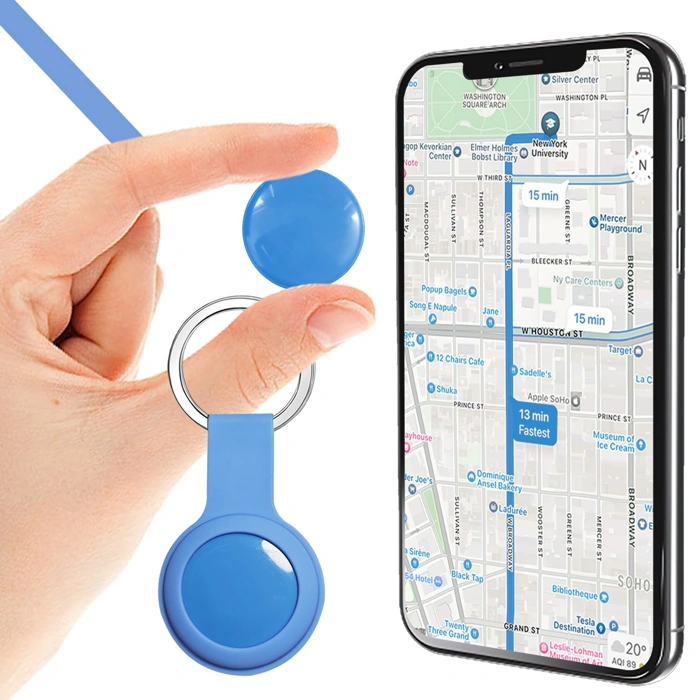
Waterproof GPS Tracker for Vehicles, Kids & Pets
At $36.99, this waterproof GPS tracker positions itself as a budget-friendly option for casual tracking needs across vehicles, kids, and pets. The 4.4/5 rating reflects broad appeal, but the device is better suited for short, local hikes than extended backcountry use.
The waterproof construction offers basic protection against rain and splashes, making it viable for day hikes in variable weather. However, the product listing does not specify an IP rating or submersion depth, so durability in creek crossings or prolonged wet conditions remains uncertain.
As a multi-purpose tracker, this device relies on cellular networks for location updates. In remote areas with weak or no cell coverage, tracking accuracy and real-time updates will degrade or stop entirely. This makes it less reliable than satellite-based trackers for off-leash hiking in true wilderness zones.
Battery performance details are not provided in the verified product information. Users should confirm runtime specifications before relying on this tracker for full-day hikes, as frequent location pings can drain power quickly.
The compact form factor works well for attaching to collars without adding significant weight, and the price point makes it accessible for owners who hike occasionally in areas with cell service. For regular backcountry adventurers, however, the cellular dependency is a critical limitation.
This tracker delivers value for owners who hike established trails near populated areas and want basic location monitoring without the recurring subscription costs typical of premium satellite trackers. It's a practical entry point, but not a substitute for dedicated wilderness GPS devices.
- ✅ Budget-friendly at $36.99
- ✅ Waterproof design suitable for wet weather
- ✅ Compact and lightweight for collar attachment
- ✅ Multi-purpose use across vehicles, kids, and pets
- ✅ 4.4/5 user rating shows solid everyday performance
- ⚠️ Cellular-dependent; unreliable in remote areas without cell coverage
- ⚠️ No specified IP rating or submersion depth
- ⚠️ Battery life details not disclosed
- ⚠️ Not designed for extended backcountry use
- ⚠️ Real-time tracking degrades or fails in wilderness zones
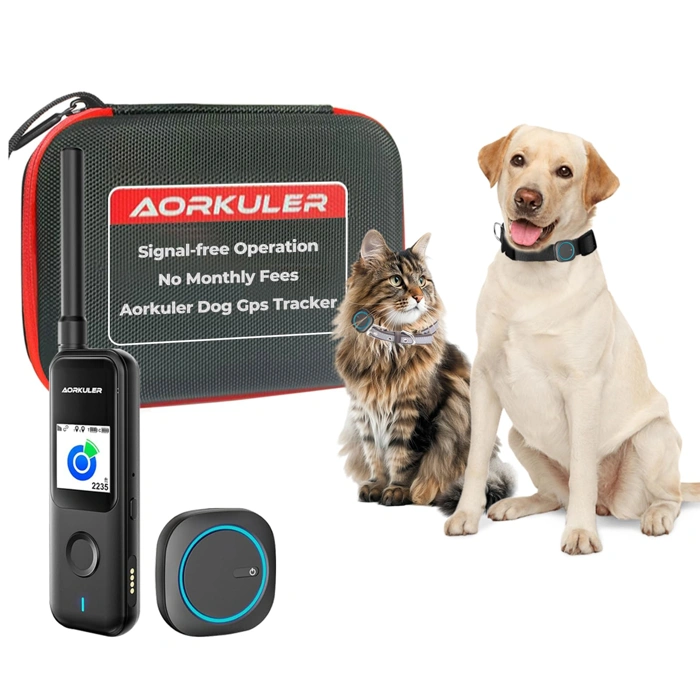
Aorkuler Outdoor GPS Dog Tracker for No-Signal Areas
The Aorkuler Outdoor GPS Dog Tracker is built specifically for hikers who venture into areas where cellular coverage disappears. At $249.99, it sits at the premium end of the market, but the design choices reflect that positioning: this is a tracker meant to work when phone-based options fail.
Unlike trackers that rely on cell towers or Bluetooth proximity, this device uses radio frequency communication to maintain contact with your dog in true no-signal environments. That architectural difference matters when you're miles from the nearest town and your dog picks up a scent trail over the ridge.
The unit pairs a collar-mounted tracker with a handheld receiver, giving you directional tracking data without requiring any network connection. You're not dependent on monthly subscriptions, satellite uplinks, or hoping for a data signal - the two devices talk directly to each other.
Build quality leans toward rugged outdoor use. The tracker is designed to handle the brush, water crossings, and rough terrain that come with off-leash hiking. With a 4.8/5 rating, early adopters report reliable performance in backcountry conditions where cheaper alternatives lose connection.
Battery longevity is a practical consideration on multi-day trips. The tracker is engineered for extended use between charges, reducing the need to pack extra battery banks or cut hikes short to preserve power.
The tradeoff is obvious: you're paying significantly more than cellular-based trackers, and you're carrying a dedicated handheld unit rather than using your phone. For casual neighborhood walks or areas with reliable cell coverage, that's overkill. But for remote hiking where connectivity is uncertain and your dog's safety depends on reliable tracking, the Aorkuler delivers the independence and range that budget options can't match.
This tracker makes sense if you regularly hike in wilderness areas, explore national forests, or adventure in terrain where your phone shows "No Service" for hours at a time. It's a tool for serious outdoor use, not a convenience gadget for the dog park.
- ✅ Works in true no-signal environments without cellular or satellite dependency
- ✅ Radio frequency system provides directional tracking via handheld receiver
- ✅ Rugged construction built for backcountry conditions
- ✅ No monthly subscription fees required
- ✅ Extended battery life for multi-day trips
- ⚠️ Premium price point at $249.99
- ⚠️ Requires carrying separate handheld receiver unit
- ⚠️ Overkill for urban or suburban hiking with cell coverage
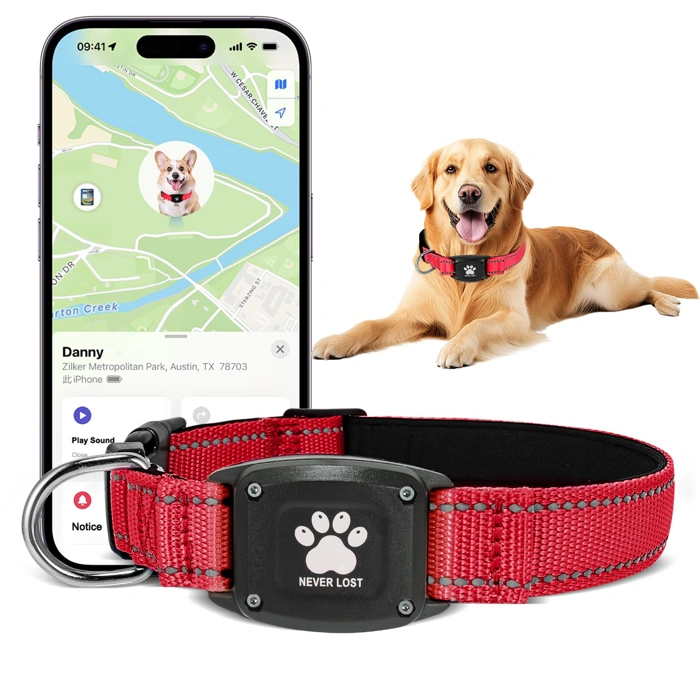
Myiwb GPS Dog Collar Tracker 2-in-1 with Reflective Waterproof, iOS, No Monthly Fees
The Myiwb GPS Dog Collar Tracker is a 2-in-1 device that combines a reflective collar with a GPS tracker, designed for dog owners who want location monitoring without recurring subscription fees. Priced at $33.99, it represents a budget-friendly entry point for casual hikers and neighborhood use.
This tracker is marketed as waterproof and compatible with iOS devices, making it suitable for light rain and everyday outdoor activities. The reflective strips integrated into the collar design add visibility during early morning or evening walks when ambient light is low.
The no-monthly-fee model is the primary value proposition here. Unlike cellular-based trackers that require ongoing subscriptions, this device operates without recurring costs, which appeals to owners seeking a one-time purchase. However, this approach typically means the tracker relies on Bluetooth connectivity rather than cellular or satellite networks, which directly impacts effective range.
For off-leash hiking in remote areas, range becomes the critical limitation. Bluetooth-based trackers generally work within a few hundred feet under ideal conditions, and that range diminishes significantly with terrain, vegetation, and elevation changes common on trails. If your dog moves beyond Bluetooth range, the tracker will lose real-time connection until you're back within proximity.
This makes the Myiwb tracker best suited for controlled environments: suburban trails, dog parks, campgrounds with defined boundaries, or situations where your dog stays relatively close. It's less appropriate for true backcountry hiking where dogs may range across ravines, dense forest, or beyond line-of-sight distances.
The reflective feature adds a safety layer for low-light conditions, and the waterproof construction provides durability against wet weather and water crossings. For casual hikers who stick to marked trails and keep dogs within recall distance, the combination of affordability and zero subscription costs makes this a practical option.
If your hiking plans involve remote terrain with no cell service but require extended range tracking, you'll need to consider satellite-based devices with subscription plans. The Myiwb offers convenience and value within its operational limits, but understanding those limits is essential before committing to it for backcountry use.
- ✅ No monthly subscription fees required
- ✅ Reflective collar design improves visibility in low light
- ✅ Waterproof construction for wet conditions
- ✅ Budget-friendly at $33.99
- ✅ iOS compatible
- ⚠️ Limited Bluetooth range not suitable for true backcountry hiking
- ⚠️ Real-time tracking lost when dog moves beyond proximity range
- ⚠️ Lacks cellular or satellite connectivity for remote areas
- ⚠️ Best for controlled environments rather than extensive off-leash terrain