We may earn a commission when you buy through links on this page, at no extra cost to you. How this works.
You leave for a ten-hour workday. Your dog is safe in the yard - or is he? The gate latch might be loose. A noise could spook him. A stranger might leave it open. Pet GPS trackers with geofencing aim to solve this exact anxiety: draw a virtual boundary, receive an instant alert when your pet crosses it, and regain control even when you're miles away.
The value equation is not simple. Upfront hardware costs sit between $35 and $150. Monthly subscriptions run $5 to $15. Coverage depends on cellular signal. False alerts can trigger daily. Battery life rarely exceeds a week. Yet for the right owner - someone with a flight-risk breed, an unfenced property, or chronic worry - the technology can deliver measurable relief.
This guide lays out the mechanics, benefits, costs, and limitations so you can decide whether geofencing is a tool worth adding to your pet-care arsenal or an expensive placebo.
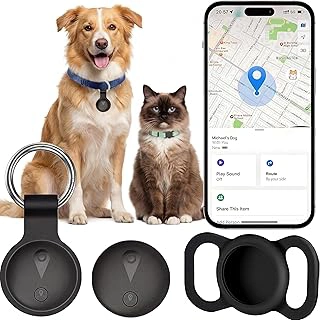
Smart GPS Dog Collar with Find My for Real-Time Tracking
This collar integrates with Apple's Find My network, letting you track location through the same app you use for AirTags and lost iPhones. The $39.99 price includes no recurring subscription, a rare exception in the GPS tracker market. Setup takes minutes: pair the collar, assign it to your pet, and start monitoring.
Real-time tracking depends on nearby Apple devices reporting your pet's location back to the Find My network. In densely populated suburbs, coverage is excellent. In rural areas with few iPhones passing by, updates may lag by hours. Geofencing works through the Find My app, though alert customization is less granular than dedicated pet tracker platforms.
Imagine your Golden Retriever slips out during a neighborhood barbecue. If a dozen guests have iPhones in their pockets, the collar pings almost instantly. If he wanders into an empty park at dawn, you may wait until a jogger passes by. This tracker shines for urban and suburban owners already invested in the Apple ecosystem who want basic location monitoring without monthly fees.
- ✅ No monthly subscription fee
- ✅ Integrates seamlessly with Apple Find My app
- ✅ Simple setup and familiar interface for iPhone users
- ⚠️ Relies on nearby Apple devices for updates
- ⚠️ Coverage can be sparse in rural or low-traffic areas
- ⚠️ Limited customization compared to dedicated pet GPS platforms
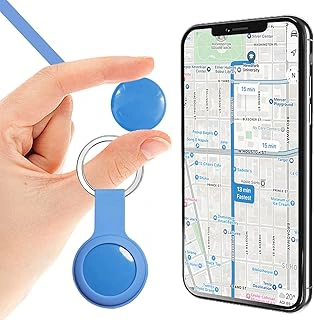
Waterproof GPS Tracker for Vehicles, Kids & Pets
Designed for multi-use tracking, this device works equally well clipped to a collar, tucked in a backpack, or mounted in a vehicle. The $36.99 upfront cost is low, but cellular-based real-time tracking requires a separate SIM card and data plan, adding recurring monthly fees that vary by carrier and region.
Waterproof construction and a compact form factor make it suitable for active pets who swim, dig, or play in wet conditions. The companion app supports geofencing, location history, and speed alerts. Battery life depends on update frequency; continuous tracking drains the unit in one to three days, while interval mode stretches it to a week or more.
Picture a scenario where you use the same tracker for your Labrador during weekday yard time and your teenager's car on weekends. The flexibility is appealing, but managing the SIM card, data plan, and charging schedule adds complexity. This option makes sense if you already have a data plan infrastructure or need a single tracker to cover multiple use cases, but it's less plug-and-play than purpose-built pet systems.
- ✅ Versatile multi-use design for pets, vehicles, and family members
- ✅ Waterproof construction handles wet and rugged conditions
- ✅ Customizable update intervals to balance battery life and tracking frequency
- ⚠️ Requires separate SIM card and data plan, adding monthly costs
- ⚠️ Battery life shortens significantly with continuous real-time tracking
- ⚠️ Setup complexity higher than dedicated pet trackers
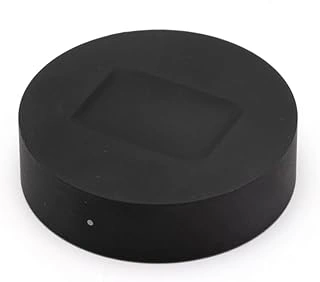
Fi Series 3 Charging Base for GPS Dog Tracker and Activity Monitor
This $39.00 charging base is a replacement or spare accessory for the Fi Series 3 collar, one of the most popular subscription-based GPS trackers among high-income pet owners. The base itself doesn't include the collar or tracker module; it's solely the dock that replenishes battery between tracking sessions.
Fi collars use LTE-M cellular connectivity and offer geofencing, escape alerts, activity tracking, and sleep monitoring through a premium app experience. Monthly subscription costs typically run $99 annually or higher, but many owners praise the reliability, battery life of up to three months in standard mode, and responsive customer support.
Imagine you already own a Fi collar and want a second charging base for your office or a vacation home, ensuring you never forget to charge before travel. The standalone base is a low-stakes addition to an existing system. However, if you're evaluating whether to enter the Fi ecosystem for the first time, factor in the full collar price plus subscription before committing. This accessory signals strong brand loyalty and reflects the ongoing costs of premium GPS tracking.
- ✅ Convenient spare or replacement base for Fi collar owners
- ✅ Supports the Fi ecosystem's long battery life and reliable tracking
- ✅ Compact and easy to position in multiple locations
- ⚠️ Accessory only; does not include the tracker collar itself
- ⚠️ Requires existing Fi collar and active subscription to be useful
- ⚠️ Adds to the total cost of ownership for Fi users
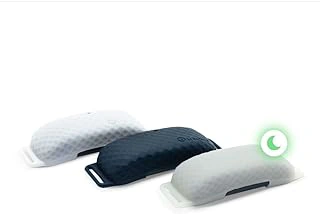
tractive GPS CAT 4 Collar Attachment x3, Midnight Blue, Glow-in-The-Dark
Priced at $17.00 for a three-pack, these collar attachments are designed to secure the Tractive GPS CAT 4 tracker to your cat's breakaway collar. The midnight blue silicone loops glow in the dark, making it easier to spot your cat during nighttime outdoor sessions. They're lightweight, flexible, and sized specifically for small necks.
Tractive trackers require a monthly subscription for GPS and geofencing features, typically starting around $5 per month. The hardware itself is sold separately. These attachments solve a practical problem: standard collar clips can slip or fail on lightweight breakaway collars, and the glow feature adds a layer of visibility without extra batteries.
Imagine your indoor-outdoor cat has a habit of slipping into the neighbor's garage at dusk. The glow-in-the-dark loop helps you locate her visually before the tracker even sends an alert. If you already own a Tractive CAT tracker and struggle with attachment security or nighttime visibility, this accessory pack is a low-cost, functional upgrade. For first-time buyers, it's a reminder that the subscription and main tracker unit represent the real investment, not the $17 attachment set.
- ✅ Affordable three-pack provides backup attachments
- ✅ Glow-in-the-dark feature improves nighttime visibility
- ✅ Lightweight and secure fit for small breakaway collars
- ⚠️ Requires separate Tractive GPS tracker and subscription
- ⚠️ Accessory only; no tracking functionality on its own
- ⚠️ Glow brightness fades over time with UV exposure
How Do Pet GPS Trackers and Geofencing Actually Work?
Pet GPS trackers use cellular or Bluetooth networks to report your pet's location to a smartphone app. Geofencing is a software feature that lets you define a perimeter - typically a circle or polygon - on a map. When the tracker detects movement outside that boundary, the app sends a push notification.
Most consumer trackers rely on GPS for positioning and LTE for data transmission. Accuracy ranges from five to fifty feet depending on satellite visibility and tower density. Bluetooth-only models offer tighter accuracy but shorter range, usually capping out at a few hundred feet. A tracker sitting in a garage or under dense foliage may lose signal and fail to alert you until your pet reaches open sky.
Geofences are not physical barriers. They won't stop a determined escape artist. They simply reduce detection lag from hours to seconds, giving you a head start on retrieval.
The Pros: Key Benefits of a Virtual Fence for Your Pet
Instant alerts compress response time. If your Husky jumps the fence at noon, you know before he reaches the street. You can call a neighbor, dispatch a dog walker, or leave work early - options unavailable when you discover the escape at six o'clock.
Location history reveals patterns. Repeated boundary crossings at the same spot suggest a weak gate hinge or a digging zone you hadn't noticed. Some trackers log activity levels, sleep quality, and daily distance, turning the device into a multi-purpose health monitor.
Geofencing scales to multiple zones. Set one perimeter for home, another for your parents' house, and a third for the dog park. Alerts activate only when your pet leaves the active zone, reducing noise when you travel together.
For anxious owners working long hours, the psychological benefit is real. Checking the app during a meeting and seeing your pet safely inside the boundary delivers measurable relief, even if the tracker never sends an alert.
The Cons: Costs, Subscriptions, and Limitations to Consider
Subscription fees compound quickly. A $10 monthly plan costs $120 annually, $600 over five years - often exceeding the hardware price. Some brands lock core features like geofencing behind premium tiers, pushing effective monthly costs to $15 or higher.
False positives erode trust. GPS drift, signal loss, and firmware bugs can trigger alerts when your pet never moved. After the third false alarm in a week, many owners stop responding urgently, defeating the system's core value.
Battery life demands routine charging. Most collars require a recharge every three to seven days. Miss a cycle and the tracker goes dark exactly when you need it. Forgetting to charge becomes a new source of anxiety.
Coverage gaps are common. Rural properties, dense forests, and metal structures block cellular and GPS signals. A tracker that works flawlessly in your suburban yard may fail at your mountain cabin.
Weight and bulk matter for small pets. A tracker suitable for a Labrador may be too heavy or awkward for a ten-pound cat or toy breed, limiting your options.
Who Needs a GPS Geofence Tracker the Most?
Owners of escape-prone breeds - Huskies, Beagles, Terriers - benefit most. If your dog has a history of digging under fences or jumping gates, the early alert can prevent tragedies. Properties without physical fences also make strong candidates; a geofence becomes your only boundary layer.
Frequent travelers or long-hour professionals gain peace of mind. Checking your phone mid-meeting and confirming your pet is home reduces stress and lets you focus on work. If guilt about leaving your pet alone dominates your day, a tracker can mitigate that emotional load.
Outdoor cats with large roaming territories justify the cost less clearly. Cats wander by nature, and constant boundary alerts may become noise rather than signal. However, if your cat has a medical condition requiring quick retrieval or you live near a busy road, geofencing adds a useful safety net.
Owners who hate subscriptions or live in areas with poor cellular coverage should consider alternatives: physical fencing, supervised outdoor time, or Bluetooth-only trackers with shorter range but no monthly fees.
Final Verdict: Is a GPS Tracker a Worthwhile Investment for You?
Pet GPS trackers with geofencing deliver real value when three conditions align: your pet has a measurable escape risk, you work long hours or travel often, and you live in an area with reliable cellular or Bluetooth coverage. Under those circumstances, the combination of instant alerts, location history, and reduced anxiety justifies the subscription cost and charging routine.
If your pet rarely leaves your sight, your property is fully fenced, or you're home most of the day, a tracker becomes expensive reassurance rather than essential infrastructure. The same applies if you live in a rural area with spotty coverage or if you find daily charging burdensome.
Before committing, test your property's signal strength, calculate the five-year total cost including subscriptions, and evaluate your tolerance for false alerts. Compare side-by-side at least two systems - one subscription-based, one subscription-free - to understand the tradeoffs in features, reliability, and long-term expense. The right tracker becomes invisible in daily life, delivering silent confidence. The wrong one becomes another device to manage, charge, and second-guess.