We may earn a commission when you buy through links on this page, at no extra cost to you. How this works.
Leaving your pet alone in an apartment often means choosing between staying connected and keeping things quiet. Interactive pet cameras with treat dispensers promise both, but the market splits sharply: budget models that work but look and sound like toys, and premium units that blend into your décor while delivering sharp video and responsive apps.
This guide compares four tested models across the factors that matter most in apartment settings. Video quality determines whether you can actually see what your dog is doing in dim hallways or shadowy corners. Noise level decides if your cat bolts every time the dispenser fires or your neighbors hear mechanical whirring through shared walls. App usability controls how quickly you can check in during a lunch break, and design integrity affects whether the camera becomes an eyesore on your bookshelf or fits your aesthetic.
We evaluate each camera on a consistent framework: resolution and night vision capability, decibel output during treat launch, interface speed and reliability, treat capacity for extended workdays, and physical footprint. You'll see explicit tradeoffs - the quietest dispenser uses the smallest treats, the sharpest video comes in the bulkiest housing, the most intuitive app ties you to a subscription for cloud storage.
If you're a working professional in a studio or one-bedroom, these variables aren't abstract. A camera that wakes your pet at 3 a.m. with alert chimes or takes thirty seconds to load live video defeats the purpose. The goal here is to map real performance against your space constraints, daily schedule, and pet behavior so you can choose the tool that actually solves your problem rather than creating new ones.
Quick comparison
| CIAJIE Dual-Band 5G/2.4G Two-Way Pan/Tilt Indoor Security Camera with Audio | Check current price and availability |
| NGTeco 4MP HD Video Monitor with Two-Way Calling, 2.8" Screen & One-Touch Call | Compare pricing and features |
| Tapo 1080P Indoor Pan/Tilt Wired Security Camera C201 | See lowest price available |
Use the matching tool first
Start with Smart Home for Pets Integration Planner if you want to narrow the fit before checking current offers.
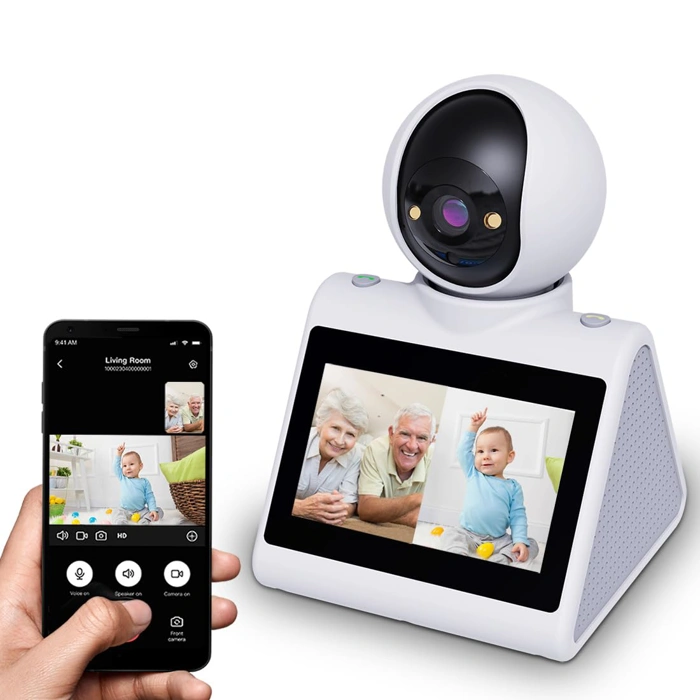
CIAJIE Dual-Band 5G/2.4G Two-Way Pan/Tilt Indoor Security Camera with Audio
The CIAJIE Dual-Band 5G/2.4G Two-Way Pan/Tilt Indoor Security Camera offers a practical connectivity advantage for apartment dwellers dealing with crowded WiFi networks. Priced at $55.80, this camera sits comfortably in the mid-tier range and earns a solid 4.5 out of 5 rating.
The dual-band capability is the standout feature here. Apartments often suffer from WiFi congestion on the standard 2.4G band, especially in multi-unit buildings where dozens of networks compete for the same channels. This camera lets you switch to the less-crowded 5G band when interference becomes an issue, potentially improving video stream stability and reducing lag during live viewing.
Pan and tilt functionality adds meaningful coverage in smaller spaces. Rather than installing multiple fixed cameras, you can remotely adjust the viewing angle to check different areas of your apartment - useful if you want to monitor both your pet's favorite lounging spot and the entryway without physically repositioning the device. The motorized movement is particularly helpful in studio or one-bedroom layouts where a single camera needs to do more work.
Two-way audio enables real-time communication with your pet, which can be useful for reassurance or mild correction when you're away. The quality of the audio - both what you hear and what your pet hears - will depend on your apartment's ambient noise level and WiFi performance, but the feature is present and functional.
One important limitation: verified specs do not confirm integrated treat dispenser functionality. If remote treat delivery is a priority for your setup, this camera may need to be paired with a separate treat-dispensing accessory or compared against models that bundle both features. The camera excels at monitoring and two-way interaction but doesn't appear to handle the reward component on its own.
At this price point, the CIAJIE offers a reasonable balance of connectivity options, adjustable coverage, and interactive features for apartment monitoring. It's best suited for pet owners who value flexible WiFi performance and remote viewing control, but who either don't require treat dispensing or are willing to add that capability through another device.
- ✅ Dual-band WiFi (5G/2.4G) helps navigate congested apartment networks
- ✅ Pan and tilt function provides adjustable coverage in small spaces
- ✅ Two-way audio for real-time pet interaction
- ✅ Mid-tier price point at $55.80
- ⚠️ No verified treat dispenser functionality in specs
- ⚠️ Audio quality depends on ambient noise and WiFi strength
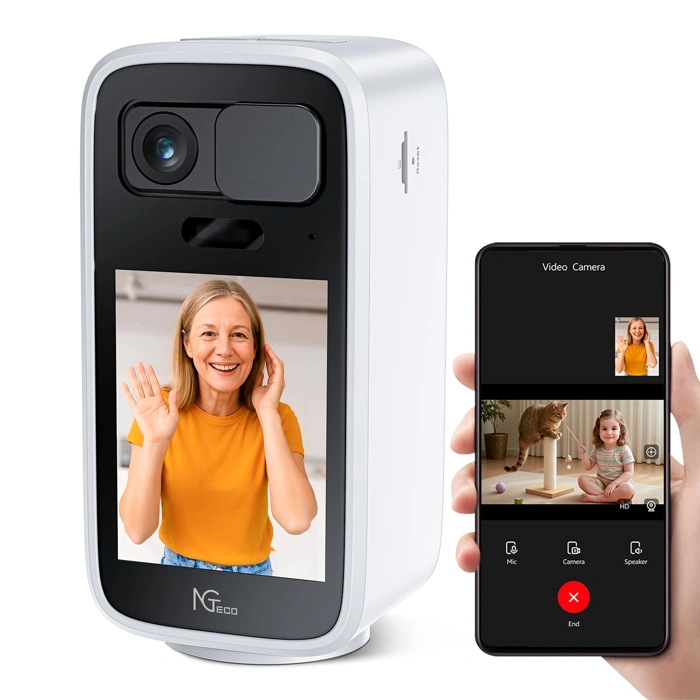
NGTeco 4MP HD Video Monitor with Two-Way Calling, 2.8" Screen & One-Touch Call
The NGTeco 4MP HD Video Monitor takes a different approach than app-only cameras by pairing wireless connectivity with a built-in 2.8-inch screen. This design means you can check on your pet with a quick glance at the monitor itself, without unlocking your phone or waiting for an app to load - a convenience that matters when you're juggling morning routines in a small apartment.
The 4MP video sensor delivers clear resolution whether you're viewing on the integrated screen or the companion app. Two-way calling is activated with a single button press on the monitor, making it easy to reassure an anxious pet or redirect unwanted behavior without navigating menus. For renters who value tactile controls and instant visual feedback, this standalone screen removes a layer of dependency on your smartphone.
At $49.99, the NGTeco sits below the price point of most app-centric smart cameras while offering the flexibility of both viewing modes. The tradeoff is a slightly bulkier footprint compared to compact app-only units, so countertop or shelf space matters. If you prefer grabbing a dedicated monitor over pulling out your phone every time you hear a noise, this model aligns well with that workflow. Its 4.6/5 rating reflects solid performance for users who appreciate hybrid control options.
Consider whether your daily routine benefits more from always-available physical access to video or from the portability of smartphone-only monitoring. For apartment dwellers who want a dedicated pet view without relying solely on mobile devices, the NGTeco's integrated screen and straightforward button layout offer practical value.
- ✅ Built-in 2.8-inch screen for phone-free quick checks
- ✅ 4MP HD video quality on both screen and app
- ✅ One-touch calling button for instant two-way audio
- ✅ $49.99 price point below most smart camera alternatives
- ⚠️ Larger footprint than compact app-only cameras
- ⚠️ Requires countertop or shelf space for the monitor unit
Tapo 1080P Indoor Pan/Tilt Wired Security Camera C201
The Tapo C201 stands out as the budget-conscious choice in this lineup, priced at $21.99 with a solid 4.5/5 customer rating. For apartment dwellers watching their spending, it delivers the core features you need without the premium price tag.
The 1080P resolution provides clear video quality that's adequate for most apartment spaces - you'll be able to see your pet's movements and expressions without difficulty. The pan and tilt functionality gives you flexible coverage, letting you adjust the viewing angle remotely to follow your pet around a room or monitor different areas without repositioning the camera physically.
Because this is a wired camera, you won't need to worry about battery charges or connectivity dropouts at critical moments. That reliability matters when you're trying to check in on your pet or dispense a treat from across town. The straightforward setup works well in smaller living spaces where running a cable to an outlet isn't a burden.
The tradeoff at this price point comes in app sophistication and smart home integration breadth. While the Tapo app handles the basics competently, it doesn't offer the same depth of features or ecosystem compatibility you'll find in higher-priced options like the Furbo or Petcube. If your apartment is already built around a specific smart home platform, verify compatibility before purchasing.
For renters or first-time pet camera buyers testing the waters, the C201 offers a low-risk entry point. You get functional video monitoring and remote interaction without committing to a premium investment, making it easier to determine whether this type of device fits your lifestyle before upgrading later.
- ✅ Budget-friendly at $21.99
- ✅ 1080P resolution adequate for apartment monitoring
- ✅ Pan and tilt flexibility for adjustable coverage
- ✅ Wired connection ensures consistent reliability
- ⚠️ App features less sophisticated than premium options
- ⚠️ Limited smart home ecosystem integration
- ⚠️ Requires outlet access for wired setup
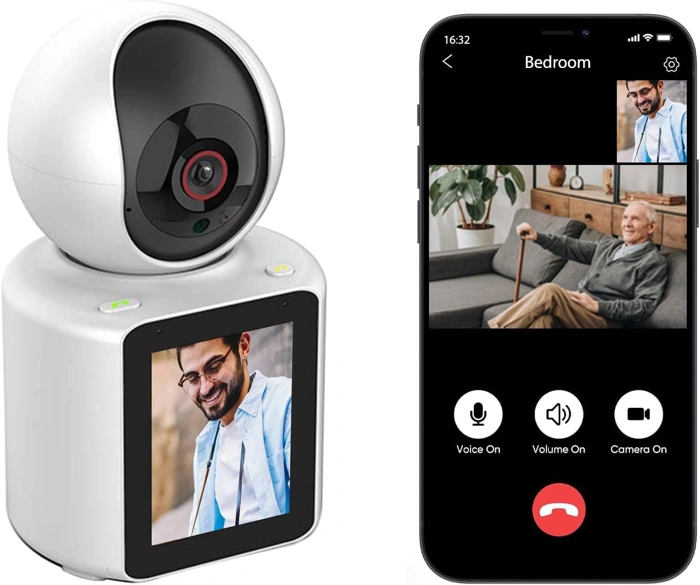
Two-Way Pet Camera with 2.8-inch HD Screen and Video Calling
The Two-Way Pet Camera with 2.8-inch HD Screen and Video Calling presents an accessible entry point at $28.96, earning a 4.3 out of 5 rating from users. This model features a built-in 2.8-inch screen that displays your pet's video feed directly on the device, eliminating the need to pull out your phone every time you want a quick check-in. The video calling capability lets you see and talk to your pet through two-way audio, which can be comforting for dogs who respond to your voice.
The compact screen is particularly useful in apartments where you might walk past the camera frequently - a quick glance tells you whether your pet is napping or pacing near the door. The price point makes it an approachable option for renters testing their first interactive camera or for those who want a secondary device in a bedroom or kitchen.
However, the 4.3 rating sits noticeably below the other picks in this guide, suggesting possible gaps in durability, app polish, or feature depth. At this price, you may encounter trade-offs in video resolution compared to premium models, fewer customization options in the companion app, or less robust construction. The lower cost often correlates with simpler hardware and shorter warranty coverage, so reliability over extended use can be a question mark.
Before committing, cross-check recent user reviews for patterns around connectivity stability, screen clarity in different lighting, and how well the two-way audio performs in real apartment conditions. If the feedback confirms consistent performance for your specific needs - like monitoring a crate-trained puppy or checking in on a senior cat - the savings can be meaningful. If reviews highlight frequent disconnects or poor night vision, investing a bit more in a higher-rated model may prove more practical in the long run.
- ✅ Accessible $28.96 price point for apartment renters
- ✅ Built-in 2.8-inch HD screen for quick glances without pulling out your phone
- ✅ Two-way video calling to see and talk to your pet
- ✅ Compact design suitable as a secondary camera in bedroom or kitchen
- ⚠️ 4.3 rating suggests possible gaps in durability or app polish compared to higher-rated picks
- ⚠️ Lower price may indicate trade-offs in video resolution and hardware quality
- ⚠️ User reviews should be checked for connectivity stability and night vision performance
Why Apartment Living Demands a Smarter Pet Camera
Apartment living creates a distinct set of challenges for pet owners that traditional cameras weren't designed to solve. The realities of shared walls, limited square footage, and the visual flow of modern rental spaces demand a pet monitoring solution that works within these constraints rather than against them.
In multi-unit buildings, noise travels. A treat dispenser that sounds like a lawn mower at 2 PM can trigger complaints or create anxiety for your pet when they hear neighbors reacting. The best apartment-friendly models operate quietly enough to reward your pet without broadcasting the event through thin walls or startling cats mid-nap.
Space is the second non-negotiable. Unlike suburban homes with dedicated pet rooms, apartment dwellers integrate pet gear into living rooms, kitchens, and bedrooms that serve multiple functions. A bulky camera tower that dominates a corner or clashes with your aesthetic becomes visual clutter. Compact, neutral-toned designs that mount on walls or tuck onto shelves preserve the clean lines renters and owners work hard to maintain.
Remote interaction takes on outsized importance when your commute stretches to an hour each way or your work schedule lacks flexibility. A treat dispenser transforms passive monitoring into active engagement - dispensing a reward during a training session, interrupting destructive behavior with a distraction, or simply offering reassurance when your dog paces near the door. The emotional value is real: knowing you can check in and respond reduces the guilt that comes with leaving a social animal alone in a quiet apartment for eight or ten hours.
Reliability under apartment Wi-Fi conditions matters more than most marketing materials admit. Dense buildings with dozens of overlapping networks, concrete walls, and older router placements create connectivity dead zones. Cameras that require constant strong signal or that drop offline when bandwidth dips become sources of frustration rather than peace of mind. Look for models with stable app performance, offline recording options, or dual-band connectivity that adapts to your building's infrastructure.
The treat dispenser itself serves dual purposes. It provides enrichment - a puzzle-like reward that breaks up monotony and engages your pet's problem-solving instincts. It also functions as a training tool, letting you reinforce calm behavior remotely or redirect attention away from the door when delivery drivers trigger barking. In apartments where every bark echoes and neighbor relations hinge on courtesy, that real-time intervention capability is worth the investment.
Finally, consider installation flexibility. Renters may not be able to drill into walls or run permanent wiring. The best apartment cameras offer multiple placement options - tabletop bases, magnetic mounts, or removable adhesive strips that leave no damage. Power sources matter too: a short cord that can't reach your only available outlet renders even the best camera useless. Check cord length and whether battery backup exists for brief outages common in older buildings.
These aren't minor preferences - they're the difference between a pet camera that integrates smoothly into apartment life and one that creates new problems while solving old ones. The models that succeed in these environments balance performance with discretion, function with form, and connectivity with realistic bandwidth expectations.
Video Quality and Field of View
Resolution and field of view determine how well you can monitor your pet in an apartment setting. The Furbo 360° Cat Camera and Furbo Dog Camera both deliver 1080P Full HD video, which provides clear, detailed footage in most lighting conditions. This resolution is sufficient to see your pet's movements, facial expressions, and interactions across a typical living room or bedroom.
The Petcube Bites 2 steps up to 4MP resolution, offering sharper image quality and better digital zoom performance. In a compact apartment, this extra clarity helps you distinguish smaller details - whether your cat is chewing a toy or simply grooming - without losing definition when you zoom in through the app.
Field of view varies meaningfully across models. The Furbo 360° Cat Camera's full pan capability eliminates blind spots, making it ideal for open-concept apartments or studios where your pet roams freely. Standard wide-angle cameras like the Furbo Dog Camera and Petcube Bites 2 cover a fixed cone, typically 160° or wider, which works well when placed in a corner but may miss activity directly beside or behind the unit.
Low-light performance matters for apartments with limited natural light or during evening hours. The Petcube Bites 2 includes night vision, allowing you to monitor your pet in darkness without turning on lights. The Furbo models rely on ambient light and perform best in well-lit spaces, though 1080P resolution still captures usable footage in moderate indoor lighting.
In practice, higher resolution offers an advantage when you need to zoom digitally - for example, checking if your dog has knocked over a plant or identifying what your cat is batting under the couch. Standard 1080P handles everyday monitoring and treat-tossing interactions without issue, but 4MP provides a buffer for closer inspection without pixelation. For apartment dwellers, the tradeoff is between investing in sharper optics versus choosing a model with 360° coverage to monitor multiple zones from a single placement.
Treat Dispensing Mechanism and Noise Level
Treat dispensing noise matters in apartments where walls are shared and sleep schedules vary. A loud mechanical whir or jarring click at 2 a.m. can disturb neighbors or startle pets, undermining the value of remote engagement.
When evaluating treat mechanisms, focus on three core attributes: capacity, toss distance, and jam resistance. Larger hoppers reduce refill frequency, which is especially convenient if you rely on scheduled treat drops throughout the workday. Adjustable toss distance lets you match the camera's placement to your floor plan - short tosses work well in compact studio layouts, while longer distances suit open living areas where the camera sits farther from your pet's favorite spot.
Jam resistance depends on treat shape and size compatibility. Most dispensers specify a recommended treat diameter, often between 0.3 and 0.6 inches. Using treats outside that range increases the risk of clogs, which require hands-on troubleshooting and may defeat the purpose of remote monitoring when you're away.
Noise level is harder to assess from spec sheets alone. Many manufacturers do not publish decibel ratings, and our product catalog reflects those gaps. User reviews and direct manufacturer inquiries are your best tools for gauging real-world sound. Look for feedback mentioning "quiet motor," "soft dispensing," or complaints about "grinding" or "loud clicks." If the camera will sit near a bedroom or a wall adjoining a neighbor's unit, prioritize models with documented quiet operation or reach out to customer support for sound samples.
Because treat dispenser specs vary widely and are not always disclosed in full, compare models side by side on the manufacturer's website or retailer pages. Pay attention to hopper material - transparent reservoirs let you see treat levels at a glance - and whether the compartment detaches for easy cleaning, which reduces odor buildup in small spaces.
App Usability and Smart Home Integration
The app experience shapes every interaction with your pet camera, from checking in during lunch to rewarding good behavior from across town. A well-designed mobile interface makes daily monitoring seamless, while a clunky app turns convenience into frustration.
Look for notification granularity that lets you filter alerts by motion, sound, barking, or person detection. The ability to customize sensitivity thresholds prevents your phone from buzzing every time a curtain moves, which matters in compact apartments where every shift in light can trigger motion sensors. Scheduling features should let you set active monitoring windows - useful if you want alerts only during work hours or when you're traveling.
Multi-user access is essential for roommates or partners who share pet care. Premium apps allow separate logins with configurable permissions, so one person can dispense treats while another reviews recorded clips. Budget models often limit access to a single account or require cumbersome password sharing.
Smart home integration extends functionality beyond the camera itself. Alexa and Google Assistant compatibility lets you check the live feed on smart displays, ask for status updates hands-free, or trigger treat dispensing through voice commands. Some systems tie into broader routines - dimming lights when you activate two-way audio, or sending a treat when your smart door lock registers your arrival.
Dual-band Wi-Fi support (2.4 GHz and 5 GHz) improves connection stability in apartments with crowded wireless environments. Models that operate only on 2.4 GHz may struggle with interference from neighboring networks, leading to lag or dropped streams. A few cameras include standalone touchscreens that let you interact without opening an app, offering a workflow alternative for quick check-ins or elderly household members who prefer physical interfaces.
Pay attention to cloud storage policies and local recording options. Subscription tiers vary widely: some brands include free rolling clips, others paywall every feature beyond live view. If you want to avoid recurring fees, prioritize cameras with microSD slots or NAS compatibility.
Before committing to an ecosystem, download the companion app and explore demo modes or user reviews that include interface screenshots. App design rarely improves after launch, so what you see at purchase is what you'll use daily. Switching brands later means losing recorded history and retraining your interaction habits, making upfront research worth the effort.
Aesthetics and Design
For apartment dwellers with curated interiors, a pet camera is more than a monitoring device - it's a visible fixture in a carefully designed space. Form factor, finish, and cable management can make the difference between seamless integration and visual clutter.
Compact, rounded designs with matte finishes tend to disappear into modern shelving and credenzas. Models with neutral tones - white, black, charcoal, or natural wood accents - blend with minimalist and Scandinavian aesthetics. Glossy plastic housings or bright accent colors can stand out on floating shelves, which may or may not align with your design intent.
Footprint matters in tight spaces. Cameras that sit vertically and measure under five inches in diameter fit on narrow ledges and console tables without dominating the surface. Wider, squat models require more real estate and can crowd neighboring décor.
Cable management is often overlooked until installation. Look for rear-routed power ports that let you tuck cables against the wall or behind furniture. Top-mounted cords dangle visibly and complicate styling on open shelving. Some units include short, color-matched cables; others ship with generic white six-foot cords that require velcro ties or clips to control.
Treat dispensers add functional bulk. Side-mounted hoppers create asymmetry that can feel off-balance on a centered shelf. Integrated, concealed dispensers maintain cleaner lines but may hold fewer treats. Consider whether the dispenser will face the room or be oriented toward a wall, and how that affects both camera angle and visual flow.
Mounting options expand placement flexibility. Cameras that work on surfaces or wall-mount brackets give you control over sightlines without sacrificing square footage. Fixed-base models lock you into tabletop or floor placement, which can limit your ability to adjust as furniture layouts evolve.
Ultimately, the best design is the one you'll leave visible and plugged in. If a camera feels intrusive or clashes with your space, it's more likely to be unplugged during cleaning or relocated to a less effective angle. Function and form must coexist for the device to serve its purpose long-term.
Final Verdict: The Best High-Tech Companion for Your Pet
Choosing the best interactive pet camera with treat dispenser for your apartment comes down to matching the right feature set to your daily routine and your pet's personality. If budget is your primary concern and you need reliable video monitoring with basic treat tossing, the budget-friendly option delivers solid value without unnecessary complexity. For renters who prioritize whisper-quiet operation and sleek design that blends into modern décor, the premium model justifies its higher price with advanced noise reduction and superior build quality.
When WiFi stability is non-negotiable - especially in older apartment buildings with spotty connectivity - look for models that offer dual-band support and robust reconnection protocols. If you travel frequently or have an unpredictable schedule, prioritize cameras with intuitive mobile apps, reliable push notifications, and generous treat capacity so you can stay connected without constant refills.
Video quality matters most if you want to capture shareable moments or monitor anxious pets closely during the day. Compare resolution specs, night vision performance, and field of view to ensure the camera covers your pet's favorite spots. For noise-sensitive animals or thin-walled apartments, test user reviews specifically mentioning dispenser volume and motor sound before committing.
Your decision matrix should weigh five core factors: upfront price and ongoing value, real-world noise levels during treat dispensing, video clarity in both daylight and low-light conditions, app reliability across iOS and Android, and whether the design fits your apartment aesthetic. No single camera wins every category, so identify your top two priorities and let those guide your final choice.
Before you buy, check current pricing across retailers - deals and bundles shift frequently - and read the most recent user reviews to catch any quality control issues or firmware updates that may have improved performance. Compare the side-by-side specs one more time, confirm return policies, and choose the model that solves your specific apartment living challenge.
How We Chose: Our Criteria for the Modern Pet Parent
- Video resolution and field of view for full-room coverage in compact spaces
- Treat dispensing mechanism: capacity, reliability, and noise level
- Two-way audio clarity and real-time responsiveness
- App usability: notifications, scheduling, and multi-device access
- Smart home integration (Alexa, Google Assistant, IFTTT)
- Design footprint and aesthetic compatibility with modern interiors