We may earn a commission when you buy through links on this page, at no extra cost to you. How this works.
When your dog slips under a fence or bolts through an open gate, the tracker around their neck becomes the only link between panic and reunion. The question isn't whether to use GPS tracking - it's which radio technology will still work when your dog reaches the places they actually run to.
LTE trackers piggyback on the same cellular networks your phone uses. They deliver real-time location updates, battery life measured in days, and monthly subscriptions that rival a streaming service. The catch: coverage ends where cell towers stop. If your dog dashes into a state forest, crosses into open rangeland, or wanders past the edge of suburban sprawl, an LTE collar goes silent until it reconnects.
Satellite systems communicate directly with orbiting spacecraft, bypassing ground infrastructure entirely. They work in wilderness areas, offshore, and across international borders. But that global reach comes with shorter battery life - often eight to forty hours between charges - higher hardware costs, and subscription fees that can triple what LTE plans charge.
The right choice hinges on honest answers to three questions: Where does your dog go when they escape? How long do they typically stay missing? And what does the coverage map show for the routes between your home and the nearest veterinary clinic, hiking trailhead, or rural road? A dog who bolts two blocks into a neighborhood needs different technology than one who disappears into canyon country or follows game trails into national forest.
This guide walks through coverage realities, battery tradeoffs, and cost structures for both technologies. The goal is to match the tracker to the terrain your dog will actually traverse, so the device still has signal - and power - when you need it most.
Use the matching tool first
Start with Smart Feeder Portion Calculator if you want to narrow the fit before checking current offers.
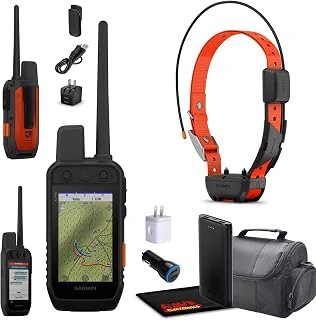
Garmin Alpha 300i Handheld Advanced Tracking & Training System with Alpha TT25 Dog Collar
The Garmin Alpha 300i with Alpha TT25 collar is a professional-grade satellite tracking and training system designed for owners who work dogs in true backcountry or on large rural properties where cellular coverage does not exist. At $1,223.98, this is an investment in can help anywhere capability, combining GPS tracking, two-way inReach satellite communication, and integrated training collar functions in a single handheld controller.
The handheld unit displays your dog's location on preloaded topographic maps, tracks up to multiple dogs simultaneously, and lets you send training corrections or tones remotely. The inReach satellite network provides messaging and SOS features independent of cell towers, making this system reliable in forests, canyons, mountains, and open rangeland where LTE trackers lose signal entirely. The Alpha TT25 collar attaches to your dog and communicates directly with the handheld, so you maintain contact even miles from any road.
This setup demands more from the owner than a smartphone app. You carry the handheld in the field, charge both devices regularly, and navigate subscription tiers for satellite messaging on top of the upfront hardware cost. Battery life on the collar varies with update frequency and terrain, and the training collar features require careful calibration to match your dog's temperament and training history. The system assumes you understand GPS coordinates, waypoints, and field communication protocols.
If you guide hunts, manage working dogs on remote acreage, or hike deep wilderness with escape-prone dogs, the Alpha 300i delivers coverage that cellular systems cannot match. For suburban or urban owners, the cost and complexity outweigh the benefit - LTE trackers will serve you better at a fraction of the price. This is the tool for users who genuinely operate off-grid and need satellite redundancy when a lost dog means hours of search time in backcountry with no cell service. Verify which inReach subscription tier supports your expected range and message volume before committing to the ecosystem.
- ✅ Satellite tracking and inReach messaging work anywhere, independent of cell coverage
- ✅ Handheld controller with topographic maps and training collar integration
- ✅ Tracks up to 20 dogs simultaneously for professional or multi-dog operations
- ⚠️ $1,223.98 upfront cost plus ongoing satellite subscription fees
- ⚠️ Requires carrying handheld unit in the field and managing two devices
- ⚠️ Training collar features demand careful setup and experience to use safely
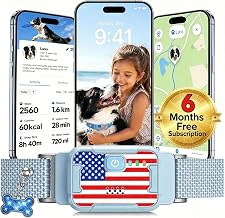
Smart Dog GPS Tracker with Virtual Fence, Health & Behavior Monitoring
For dogs that wander within suburban or urban areas, this LTE-based GPS tracker delivers reliable location monitoring at $129, positioned well below satellite systems that can run twice the price. The 4.9 rating reflects user confidence in its core tracking and geofence capabilities, making it a practical option for owners who live and travel where cellular networks reach.
The virtual fence feature sends alerts when your dog crosses a boundary you define in the companion app, useful for yards without physical fencing or off-leash areas where you want early warning of a bolt. Health and behavior monitoring add context beyond location - activity levels, rest patterns, and movement trends help you spot changes that may signal stress or illness before they escalate.
Battery endurance depends directly on how often the tracker pings the network. Continuous high-frequency updates drain power faster than interval checks, so plan on charging every few days if you use aggressive polling. The device works only where LTE coverage exists; rural gaps, dense forests, and mountainous backcountry will leave you without updates until your dog returns to signal range.
Subscription fees are not included in the $129 hardware cost. Monthly plans typically cover data transmission and app access, so factor ongoing costs into your budget. For executive owners who need dependable tracking in populated areas and want health insights alongside location, this tracker balances feature set and entry price without the battery compromise or expense of satellite systems.
Check current subscription terms and coverage maps for your region before committing. The value proposition holds if your dog's escape routes fall within consistent cellular reach and you prefer lower upfront cost over backcountry capability.
- ✅ $129 entry cost, lower than satellite alternatives
- ✅ 4.9 rating indicates strong user satisfaction
- ✅ Virtual fence alerts when dog crosses defined boundaries
- ✅ Health and behavior monitoring provide activity and rest pattern insights
- ✅ Practical choice for suburban and urban cellular coverage areas
- ⚠️ Requires LTE coverage; no tracking in rural gaps or backcountry
- ⚠️ Subscription fees are ongoing and not included in hardware price
- ⚠️ Battery drains faster with high-frequency location polling
- ⚠️ Dependent on cellular network availability
How GPS Collars Actually Locate Your Pet
Every GPS collar calculates your pet's position the same way: by receiving signals from the constellation of positioning satellites orbiting overhead. Those signals arrive at the collar, which measures the time delay from multiple satellites to triangulate latitude, longitude, and sometimes altitude. The real split between LTE and satellite trackers is not how they find your dog - it's how they send that location back to your phone.
LTE collars transmit position data over the same cellular networks your smartphone uses. The collar connects to the nearest cell tower, uploads the coordinates through the carrier's data network, and the tracking service pushes the update to your app. If you have a cell signal in the area, the collar usually does too. When you lose bars, the collar loses its ability to report home, though it continues recording a GPS this product trail in local memory until coverage returns.
Satellite trackers skip the cell tower entirely. After the collar calculates its GPS position, it beams that data directly to a communication satellite in low or geostationary orbit. That satellite relays the information to a ground station, which forwards it to the app. Because the uplink relies on line-of-sight to a satellite rather than proximity to a tower, coverage extends into national forests, mountain ranges, deserts, and offshore zones where no cell infrastructure exists. The tradeoff is higher power draw: transmitting to a satellite hundreds of miles overhead demands more energy than a nearby cellular antenna, so battery life shrinks and subscription fees climb to cover satellite airtime.
Understanding this distinction clarifies why no single technology dominates every scenario. LTE excels in suburban neighborhoods, city parks, and rural towns where towers blanket the landscape. Satellite systems shine when your escape artist bolts into true backcountry or you live beyond the reach of reliable cell service.
LTE-Based Trackers: Performance Within the Cellular Footprint
LTE-based trackers lean on existing cellular infrastructure, which offers a practical advantage if your dog stays within range of mobile networks. These collars typically refresh location every few seconds when your pet is moving, providing near-real-time updates that make interception easier during an active escape. The hardware is lighter because the radio doesn't need the power budget of a satellite transceiver, and many units run three to five days between charges under typical use.
Subscription fees run lower than satellite plans - often $8 to $15 per month - because the network operator handles most infrastructure costs. Carriers like AT&T, Verizon, and T-Mobile maintain thousands of towers across populated regions, so coverage density in cities and suburbs is strong enough that you'll see continuous tracks on sidewalks, parks, and residential streets.
The trade-off becomes obvious the moment cell service drops. Hiking trails that climb into canyons, rural properties beyond the last tower, and national forests often lack any LTE signal. When the collar can't reach a tower, it stops reporting position entirely - not slower updates, but zero data until the dog wanders back into coverage. Some devices cache the last known fix, but that stale pin won't help you track an animal moving through a signal gap.
Carrier dependency also introduces variability. A tracker locked to a single network may show blank spots where a competing carrier offers service. Multi-carrier devices mitigate this by roaming across providers, yet even those systems can't conjure signal in areas where no operator has built towers. Suburban dead zones - box stores with metal roofs, underground parking, dense foliage near water - can create brief outages that feel disorienting when you're trying to locate a fast-moving dog.
For owners whose routines stay within metro areas, exurbs with visible cell towers, or well-covered recreational trails, LTE trackers deliver responsive updates at a price that fits monthly budgets. If your escape artist's territory includes true backcountry or you travel to remote cabins, the cellular footprint becomes the limiting factor you must plan around.
Satellite-Based Trackers: True Off-Grid Coverage at Premium Cost
Satellite-based GPS trackers eliminate the fundamental limitation of cellular systems: they function anywhere on Earth with a clear view of the sky. For dogs living in genuine backcountry zones - mountain ranches, wilderness cabins, or remote homesteads miles from the nearest cell tower - satellite tracking is not optional; it is the only technology that delivers consistent location updates when an escape artist disappears into terrain where phones and LTE collars go silent.
The hardware investment starts higher. Satellite collars typically cost two to four times the price of LTE units, and the devices themselves are heavier - often adding three to six ounces compared to cellular equivalents - because they require more powerful antennas and batteries to communicate with orbiting satellites. Subscription fees follow the same premium curve, running $30 to $100 per month depending on update frequency and data plans. Battery life contracts sharply under satellite mode: where an LTE collar might run seven to ten days, satellite units often require recharging every two to four days when actively transmitting location data.
Update intervals lag behind cellular systems. Satellite trackers refresh position every two to fifteen minutes rather than every few seconds, a tradeoff driven by the power cost of reaching orbit and the bandwidth constraints of satellite networks. This slower cadence means you follow a this product trail rather than watching live movement, acceptable when covering miles of open country but frustrating if your dog doubles back or changes direction quickly. The collar also needs unobstructed sky; dense forest canopy, deep canyon walls, and heavy storm clouds can delay or block transmission until the device regains satellite line-of-sight.
The value calculation is straightforward: if your property lies outside reliable cellular coverage - confirmed by testing your phone in airplane mode with LTE disabled - satellite tracking is worth every dollar and ounce. The hardware and subscription premiums buy peace of mind that no infrastructure gap will leave you searching blind. For dogs in areas where cell service exists even intermittently, the cost and bulk of satellite systems usually outweigh their advantages, but for true off-grid environments, they remain the only dependable solution.
Scenario: Urban and Suburban Pets—Why LTE Delivers Better Value
Dogs that slip fences in neighborhoods, dash through parks, or wander suburban greenways rarely venture beyond cellular coverage. LTE trackers excel in these environments, delivering position updates every few seconds instead of the ten-to-fifteen-minute intervals typical of satellite systems. When a Husky bolts through a gap or a Beagle catches a scent trail, near-real-time updates let you intercept quickly rather than guessing where your dog was a quarter hour ago.
Battery performance favors LTE in populated settings. Most cellular collars run three to five days between charges under normal use, while satellite units often require nightly recharging because they burn power searching for overhead passes. If your dog escapes during the workday, an LTE tracker with a half-drained battery still functions; a satellite collar that died overnight leaves you blind.
Subscription costs reflect the infrastructure difference. LTE plans typically range from eight to fifteen dollars per month, leveraging the same towers your phone uses. Satellite services bill twenty-five to fifty dollars monthly because they lease bandwidth from dedicated constellations. Over a year, that price gap funds a second tracker or covers emergency vet visits.
Even suburban edges retain usable LTE signal more often than owners expect. Greenways that follow creeks, wooded buffer zones behind shopping centers, and neighborhood parks usually fall within a few hundred yards of a tower. True dead zones appear in rural valleys, mountain hollows, and desert stretches - places where overnight hikes or off-grid cabins define the routine. If your escape artist's territory includes sidewalks, parking lots, and maintained trails, cellular coverage will handle the scenario.
LTE becomes the rational default when backcountry trips are occasional rather than weekly. A dog that roams the yard, visits the dog park, and joins weekend errands benefits from faster updates, longer runtime, and lower monthly cost. Save satellite investment for the minority of households that genuinely operate beyond the cellular frontier.
Scenario: Rural Properties and Backcountry Hiking—When Satellite Becomes Necessary
If your dog spends time beyond reliable cell coverage - whether on a multi-acre homestead, remote hiking trails, or coastal areas where towers are sparse - satellite tracking shifts from luxury to necessity. LTE trackers excel in suburbs and towns but go silent the moment your dog crosses into a cellular dead zone, which can mean miles of anxious searching with no location data at all.
Satellite systems maintain a connection anywhere with a clear view of the sky. That makes them the safer choice for owners who hike backcountry trails, hunt in national forests, or live on large rural properties where the nearest tower is ten or twenty miles away. The premium you pay - typically double the hardware cost and higher monthly fees - becomes justifiable insurance when the alternative is losing your dog's location completely during the exact moment you need it most.
For dogs that roam suburban neighborhoods, parks with good cell service, or even lightly wooded trails near population centers, satellite is overkill. The extra expense buys capability you won't use. But if your routine includes true wilderness, offshore islands, or properties where your phone itself loses signal, satellite coverage is not negotiable. Check your carrier's coverage map at the specific trailheads, hunting zones, or property this product where your dog will roam, and choose satellite if those areas show gaps or weak signal.
Satellite trackers do drain batteries faster due to the power required to reach orbiting satellites, so plan for more frequent charging or carry backup power on multi-day trips. The tradeoff is clear: shorter battery life in exchange for location data that works everywhere your dog can physically reach.
What the Subscription Models Actually Cover—and What They Don't
GPS tracking subscriptions split into two cost structures that behave very differently. LTE-based services typically bundle unlimited position updates, geofence alerts, and activity summaries into a single monthly tier ranging from $9 to $15. The subscription keeps the collar connected to the cellular network, so pausing or canceling means you lose all live location data immediately.
Satellite plans price by update frequency and feature access. Entry tiers may offer one position ping every ten minutes for around $12 per month, while premium plans provide five-minute updates, two-way messaging, and SOS routing for $30 or more. Some satellite services charge per message or limit the number of check-ins, so a dog that escapes frequently can push you into a higher tier or incur overage fees.
Both technologies require you to buy the hardware collar separately - expect $50 to $100 for LTE devices and $200 to $400 for satellite units. The hardware purchase does not include any tracking time; service starts only when you activate a paid plan. A few LTE providers offer annual prepay discounts that drop the effective monthly rate by 15 to 20 percent, but satellite subscriptions rarely discount beyond the first year.
Virtual fence features, where the collar alerts you when your dog crosses a boundary you draw on the map, usually come standard with LTE plans. Satellite services may charge extra or reserve geofencing for top-tier subscriptions because each boundary check consumes a position update. If you rely on automatic escape alerts rather than manual map checks, confirm that your chosen plan includes unlimited geofence notifications before you commit.
Pausing service to save money during months your dog stays home will disable all tracking, including historical routes and activity logs. Most providers delete or archive location history after 30 to 90 days of inactivity, so reactivating later means starting fresh. For escape-prone dogs, continuous subscription is the only way to maintain reliable coverage and instant alerts.
Practical Decision Framework: Matching Technology to Terrain and Budget
The smartest way to pick a tracking system is to start with an honest map of where your dog actually goes. Think about the last three escapes: suburban streets, farm trails, wooded ridges behind the neighborhood, or true backcountry miles from the nearest road. Open the coverage map for your cellular carrier and trace those paths. If every likely route falls inside solid LTE or 4G coverage, you gain nothing by paying for satellite capability and sacrificing days of battery life.
LTE trackers deliver faster updates, longer runtime between charges, and lower monthly fees when coverage exists. Satellite systems shine in terrain where no cell tower reaches - mountain trailheads, remote hunting land, or backcountry ranches. The decision hinges on whether coverage gaps align with real escape risk.
Budget clarity matters. LTE subscriptions typically cost half what satellite plans charge, and the collars themselves run $50 to $100 less up front. If your dog bolts into covered areas, the satellite premium buys you nothing. If a single escape could mean miles of off-grid searching, the extra cost becomes cheap insurance.
Hybrid households face the toughest choice. A suburban home with weekend cabin trips or seasonal hunting outings means your dog moves between environments. You can choose based on the highest-risk scenario - if the cabin sits in a coverage hole and escapes there mean serious danger, satellite wins even if you overpay during the suburban week. Alternatively, some owners keep both collar types and swap before trips, though that adds complexity and doubles subscription costs.
Check coverage maps first, then budget, then battery tolerance. The technology that matches your actual terrain and realistic usage will outperform the one that covers hypothetical extremes you never encounter.
Coverage, Cost, and Battery: The Real-World Tradeoff Table
- LTE coverage: Matches your mobile carrier's footprint - check coverage maps for your specific hiking trails, parks, and camp sites before buying.
- Satellite coverage: Global, including oceans and wilderness, but requires unobstructed sky view - tree canopy, slot canyons, and storms can delay updates.
- Monthly subscription: LTE typically $10 - 15/month; satellite $20 - 50/month depending on update frequency and data plan tier.
- Battery life: LTE collars often last 7 - 14 days; satellite systems 3 - 7 days under similar usage due to higher transmission power requirements.
- Collar weight and size: LTE units generally 20 - 40% lighter than satellite equivalents, matters for small or young dogs wearing hardware all day.
- Update frequency: LTE can refresh every few seconds in coverage; satellite usually 5 - 15 minute intervals to conserve battery and bandwidth.
Questions to Ask Before You Commit to Either Technology
- Where has your dog gone in past escapes - and does your phone have reliable signal in those exact locations?
- Do you regularly hike, hunt, or travel to areas where you lose cell service?
- What's your realistic budget for both upfront hardware and 24-month subscription cost?
- How much does collar weight matter for your dog's size and comfort during all-day wear?
- Do you need real-time tracking (seconds) or is 5 - 10 minute updates acceptable for your use case?
- Will anyone else in your household need access to tracking data via shared app login?