We may earn a commission when you buy through links on this page, at no extra cost to you. How this works.
Choosing a pet GPS tracker means weighing two distinct trade-offs: subscription-based devices deliver real-time location updates over cellular networks anywhere your carrier has coverage, but they require monthly or annual fees that accumulate over your pet's lifetime. No-subscription trackers eliminate recurring costs by relying on Bluetooth, crowd-sourced networks, or WiFi handoff, yet they work only within limited ranges or depend on other users nearby to relay your pet's position. This decision matters most when a lost pet crosses busy roads, wanders into unfamiliar neighborhoods, or moves faster than you can search on foot.
Subscription trackers connect directly to cellular towers, so you see your pet's location update every few seconds in the companion app, regardless of distance. That immediacy comes at a price: many services charge between ten and twenty dollars per month, adding hundreds of dollars over three to five years. Non-subscription devices ask you to pay once up front, but their effective range rarely exceeds a few hundred feet unless other users run the same app in your area. If your dog slips out during a hike or your cat darts through an open garage, the network type determines whether you receive an instant alert with a map pin or discover the escape an hour later when you notice the pet is missing.
This guide examines four core factors - cellular connectivity versus local-only networks, upfront cost versus total lifetime spend, alert speed and accuracy, and contract flexibility - so you can match the tracker architecture to your pet's roaming habits, your neighborhood density, and your budget horizon.
Pros of Subscription-Based Pet GPS Trackers
- Real-time location updates via cellular network, no range limit within coverage area
- Live alerts and push notifications when your pet leaves a designated safe zone
- Historical tracking data and activity logs stored in the cloud
- Firmware updates and feature additions rolled out automatically
- Customer support and warranty service often bundled with subscription
- Multi-pet management and family sharing through a single app account
Cons of Subscription-Based Pet GPS Trackers
- Monthly or annual fees accumulate: $5 - 15/month can exceed hardware cost over two years
- Service may degrade or terminate if provider changes terms or shuts down
- Cellular coverage gaps in rural areas, national parks, or inside dense buildings
- Battery life often shorter due to constant cellular transmission
- Locked to one provider's ecosystem; switching brands may mean new hardware and new subscription
- Recurring billing can be forgotten and auto-renew unexpectedly
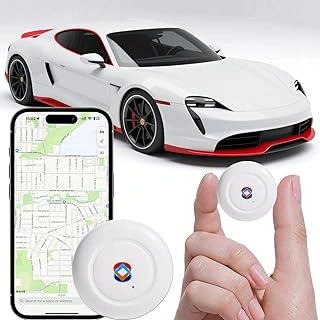
GPS Tracker for Vehicles, Cars, Pets, Kids & Valuables – No SIM Card, No Subscription – Real-Time Global Tracking Device – Compatible with iOS & Android
For owners who want location tracking without monthly bills, this GPS tracker offers a straightforward alternative at $36.99 with no SIM card and no subscription fee. The device is compatible with both iOS and Android, and its 4.6/5 rating reflects broad appeal among budget-conscious users who track pets, vehicles, and valuables.
Because this tracker requires no SIM or cellular plan, it relies on Bluetooth, WiFi handoff, or a community-based network to report location. That means real-time tracking depends on the device staying within Bluetooth range of your phone or passing near other users who share the network. For pets who roam beyond your immediate area - especially in rural zones or low-traffic neighborhoods - you may not receive instant updates the way you would with a cellular GPS tracker that uses its own signal.
The upfront cost is comparable to the hardware price of many subscription models, but you avoid the recurring multiplely fee. This makes the tracker a practical choice for occasional use: a pet who stays close to home, a senior dog with limited mobility, or a backup device you keep in a travel crate. It also suits owners who prefer to own the hardware outright and accept the trade-off in coverage range.
Setup is straightforward - pair the tracker with your phone, attach it to a collar or harness, and monitor location through the companion app. The lack of a SIM slot means no activation process and no carrier compatibility concerns, though it also means no independent cellular connection when your pet is out of Bluetooth or community range.
If your priority is eliminating recurring costs and your pet's routine keeps them within a predictable radius, this no-subscription tracker delivers solid value and convenience. For pets who wander farther or spend time in less-populated areas, a cellular GPS tracker with real-time alerts and unlimited range may justify the monthly fee.
- ✅ No monthly subscription or SIM card required
- ✅ $36.99 one-time cost with no recurring fees
- ✅ Compatible with iOS and Android devices
- ✅ 4.6/5 rating from a broad user base
- ⚠️ Relies on Bluetooth, WiFi, or community network - not independent cellular GPS
- ⚠️ Real-time tracking limited by range and nearby device density
- ⚠️ May not update location quickly in rural or low-traffic areas
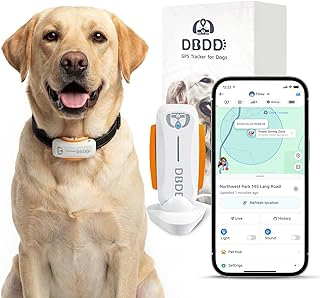
DBDD Smart GPS Dog Collar Tracker with Virtual Fence, Live Tracking & Vital Signs Monitoring
The DBDD Smart GPS Dog Collar Tracker combines location tracking with virtual geofencing and vital signs monitoring, offering a layered feature set for owners who want both security and health insights. Priced at $43.99, this subscription-based collar is designed specifically for dogs and provides live tracking through a cellular connection, making it a mid-range option for those seeking more than basic location updates.
Virtual fence capability lets you draw custom boundaries on a map and receive alerts when your dog crosses them, useful for yard escapes or off-leash adventures. The live tracking feed updates continuously, and the vital signs monitoring adds a wellness layer by tracking activity and rest patterns. These features distinguish it from simpler GPS tags and may justify the recurring subscription cost if you prioritize health data alongside location.
The collar's 4.2 rating reflects a trade-off: the added complexity means a steeper learning curve during setup and occasional connectivity hiccups reported by users. Pairing the app, calibrating the virtual fence, and interpreting health metrics require more time than plug-and-play trackers. The collar itself needs to fit securely to capture accurate vital signs, so dogs with thick or unusually shaped necks may see less consistent readings.
This tracker suits health-conscious owners who want integrated wellness monitoring and customizable alerts in one device, rather than juggling separate tools. If your priority is straightforward GPS location without extra data streams or subscription complexity, simpler models may be a better fit. For those willing to invest time in setup and ongoing fees, the DBDD delivers a comprehensive view of both where your dog is and how they're doing.
- ✅ Virtual fence with custom boundary alerts
- ✅ Live tracking with continuous location updates
- ✅ Vital signs monitoring for activity and rest patterns
- ✅ Mid-range price at $43.99
- ⚠️ Steeper learning curve for setup and app pairing
- ⚠️ 4.2 rating reflects occasional connectivity issues
- ⚠️ Requires secure fit for accurate health readings
- ⚠️ Added complexity versus simpler GPS-only trackers
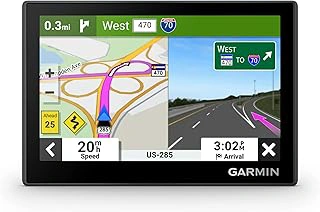
Garmin Drive 53 GPS Navigator with High-Resolution Touchscreen and Driver Alerts
The Garmin Drive 53 GPS Navigator is a vehicle-mounted navigation device with a high-resolution touchscreen and driver alerts - not a pet GPS tracker. Priced at $129.96, it is included here to provide context for readers researching Garmin tracking devices, as the brand also manufactures subscription-based pet GPS collars that are not in this catalog. Understanding Garmin's product range and build quality can help when evaluating whether to invest in a Garmin pet tracker with recurring fees.
This navigator features a touchscreen interface and driver alerts designed for car navigation. It does not track pets, lacks a wearable collar form factor, and is not waterproof or ruggedized for animal use. The $129.96 price point is higher than many standalone pet trackers, and this device requires no subscription because it uses preloaded maps rather than real-time cellular data. That fundamental difference highlights a key tradeoff in pet GPS technology: subscription-free devices like Bluetooth or radio-frequency trackers offer limited range, while cellular-based pet trackers with monthly fees deliver nationwide coverage and real-time location updates.
Garmin's pet-specific GPS collars (such as models in their Alpha, Astro, and TT series) typically require a subscription for cellular connectivity or operate on proprietary radio networks with handheld receivers. Those systems are built for durability, water resistance, and long battery life under outdoor conditions - features absent from this vehicle navigator. If you are drawn to Garmin's reputation for GPS accuracy and robust hardware, research their dedicated pet tracker lineup separately and compare subscription costs, coverage maps, and collar size against your dog's or cat's needs.
This product earns a 4.3/5 rating on Amazon, reflecting reliability for vehicle navigation but offering no insight into pet tracking performance. Use this entry as a brand reference point: Garmin builds dependable GPS technology, but match the device type to your use case and budget for ongoing subscription fees when choosing a cellular pet tracker.
- ✅ High-resolution touchscreen interface
- ✅ Driver alerts for vehicle navigation
- ✅ Garmin brand known for GPS accuracy
- ⚠️ Not a pet tracker - vehicle navigator only
- ⚠️ No wearable collar form factor or waterproofing
- ⚠️ $129.96 price higher than many pet trackers
Who This Is For
Subscription-based pet GPS trackers suit working professionals who travel frequently and cannot monitor their pets in person, as well as multi-pet households where managing several animals increases the risk of one slipping away unnoticed. Owners of escape-prone breeds - such as Huskies, Beagles, and hunting dogs with strong prey drives - benefit from real-time cellular tracking that follows a pet across neighborhoods, parks, or unfamiliar terrain without range limits. If your daily routine includes long commutes, business trips, or handing off pet care to walkers and sitters, the recurring fee buys continuous location updates and immediate escape alerts that help you respond before a small problem becomes a search operation.
These trackers make less sense for owners whose pets stay indoors most of the day, remain within a small fenced yard, or rarely leave the owner's side during supervised outdoor time. If you need occasional backup - such as during a weekend camping trip or a single vacation each year - a one-time Bluetooth tag or a prepaid GPS unit without monthly billing may cover your need without the ongoing expense. Evaluate whether the peace of mind from 24/7 cellular coverage justifies the subscription cost in your specific situation: a dog that bolts through open doors or digs under fences creates a different risk profile than a senior cat who naps on the same cushion all afternoon. When the potential cost of a lost pet - both emotional and financial - outweighs twelve months of subscription fees, real-time tracking becomes a practical safety net rather than an unnecessary luxury.
What Matters Most: Coverage, Cost Structure, and Feature Depth
Subscription-based pet GPS trackers rely on three core elements that shape both their capabilities and their cost. Understanding how these pieces fit together makes it easier to weigh whether a monthly plan suits your household.
Cellular networks deliver the unlimited range that separates subscription trackers from Bluetooth-only devices. Because they use the same towers your phone does, you receive real-time location updates whether your pet is two blocks away or twenty miles from home. This constant connection also powers instant alerts when your dog crosses a boundary you've drawn on the map, letting you respond before a quick escape turns into a multi-hour search.
The cost structure splits into two parts: an upfront device price - often between $30 and $100 - and a recurring monthly fee that typically ranges from $5 to $15. Some providers offer annual prepay discounts or multi-pet bundles, while others lock you into tiered plans where advanced features sit behind higher-price tiers. One-time-purchase alternatives avoid the subscription entirely but trade cellular reach for short-range Bluetooth, meaning they work only when you're nearby.
Feature depth grows with subscription plans because the monthly fee funds both network access and software development. Geofencing lets you mark safe zones and receive notifications the moment your pet leaves the yard. Activity monitoring tracks steps, rest periods, and active time, useful for managing weight or energy levels. Multi-pet management allows a single app to monitor several collars under one account, spreading the subscription cost across your household. Some platforms add location history, so you can review where your pet spent the afternoon, and a few include community features that alert nearby users if your pet goes missing.
Trackers without subscriptions may offer basic location sharing or rely on crowd-sourced Bluetooth networks, but they can't deliver the same live map experience or instant boundary alerts. The framework that matters most is simple: subscription models trade recurring expense for continuous coverage and richer tools, while no-subscription devices trade those features for a single purchase price and shorter effective range.
How to Choose Well: Subscription vs. No-Subscription Models
Choosing between subscription and no-subscription pet GPS trackers starts with calculating the two-year total cost: a $25 device with $10 monthly fees reaches $265, while a $90 no-subscription tracker stays at $90. If your pet rarely escapes and you live in a walkable neighborhood, a Bluetooth or WiFi tracker that alerts you within 200 - 400 feet may cover your needs without recurring charges. Subscription models use cellular networks to deliver real-time location updates anywhere with coverage, making them the better fit for dogs prone to bolting, rural properties with weak WiFi, or families who travel frequently.
Assess your local cellular signal strength before committing: a tracker that relies on LTE will miss updates in coverage gaps, and some carriers perform better than others in suburban fringe areas. Check whether the subscription service lets you pause billing during months you won't need tracking, and confirm whether the plan includes geofence alerts, location history, and activity summaries or charges extra for those features.
No-subscription alternatives - those using Bluetooth, WiFi, or crowd-sourced networks - work well for indoor cats, yard-bound pets, or situations where you need a last-seen location rather than live breadcrumbs. These devices depend on your phone staying within range or on other users' phones detecting the signal, so coverage thins quickly in less-populated areas. They eliminate monthly fees but sacrifice the instant, wide-area visibility that cellular trackers provide.
Evaluate your pet's behavior and your own risk tolerance: a hound with a strong prey drive or a nervous rescue dog justifies the subscription cost, while a senior cat who naps by the window does not. Run the math on contract length, compare the features you will actually use, and choose the model that aligns with both your budget and the realistic likelihood that you will need to track your pet beyond your property line.
Common Mistakes to Avoid
Choosing a subscription GPS tracker without calculating the full cost of ownership is one of the most common mistakes pet owners make. Add up the device price and at least 24 months of subscription fees to understand the true commitment - many trackers that seem affordable upfront become expensive over two years, especially if you need multiple devices for several pets.
Assuming cellular coverage will mirror your smartphone's performance is another frequent error. GPS trackers often use different networks or lower-priority data connections, so a location that shows full bars on your phone may leave your tracker struggling to report. Check the manufacturer's coverage map for your specific area, and test the device at home, at your regular park, and along routes you walk before relying on it during travel.
Battery life in cold weather is regularly overlooked. Lithium cells lose capacity below freezing, and a tracker rated for five days in mild conditions may drain in two days during winter hikes. If you live in a cold climate or plan snowy trips, confirm the tracker includes a low-temperature warning and carry a portable charger.
Failing to test geofence accuracy before a trip can leave you with false alerts or missed escapes. Set up a boundary around your yard and walk the perimeter with your pet to verify the tracker triggers notifications consistently and doesn't send phantom alerts when your pet is safely inside the zone.
Overlooking cancellation policies leads to surprise charges. Some subscriptions require 30-day notice or impose reactivation fees if you pause service during off-seasons. Read the terms before purchase, and set a calendar reminder if you plan to cancel before an annual renewal.
Buying a tracker too heavy or bulky for small pets is a comfort and safety issue. A device that works well on a Labrador can irritate a Chihuahua's neck or snag on brush. Match the tracker's weight to your pet's size - most manufacturers recommend the device weigh less than five percent of your pet's body weight - and choose a low-profile design if your pet moves through dense cover or tight spaces.
Final Takeaway: Match the Model to Your Risk Profile and Budget
Choosing between subscription-based and no-subscription pet GPS trackers depends on your pet's behavior, your daily routines, and how much you value real-time coverage. If you travel frequently with your pet, live near open wilderness, or have a dog with a history of escaping, a subscription tracker delivers unlimited cellular range and instant alerts that can make the difference between a quick recovery and a long search. The recurring cost buys nationwide reliability and features like live tracking, geofence notifications, and multi-day location history - tools that matter most when seconds count.
On the other hand, if your pet stays close to home, you have strong WiFi coverage in your yard, or you simply want a backup locator for occasional outings, a no-subscription model saves you money without sacrificing basic functionality. Bluetooth and local-network trackers work well within their range limits, and many pet owners find that the rare need for long-distance tracking doesn't justify paying monthly fees year after year.
Before committing to any model, calculate the total cost over two or three years, test your home and neighborhood for signal strength during any available trial period, and read the cancellation terms carefully. Choose based on your actual use patterns - how often your pet roams, where you spend time together, and what level of alert speed you truly need - rather than preparing for worst-case scenarios that may never happen. The right tracker is the one that fits your risk profile and budget, not the one with the longest feature list.