We may earn a commission when you buy through links on this page, at no extra cost to you. How this works.
Pet owners today face a more complex security decision than simply installing a flap. You need a door that grants your dog or cat freedom while blocking unwanted visitors - whether that's a raccoon at 2 a.m., a stray cat from down the street, or simply the draft and noise of an unsecured opening. Two technologies dominate the market: smart pet doors with app connectivity and sensors, and microchip-activated flaps that read your pet's existing ID chip. Each approach solves the access problem differently, and the right choice depends on how much control you want, what threats you're guarding against, and whether you value remote monitoring over simplicity.
Smart doors typically use Wi-Fi, cameras, and programmable schedules to let you lock or unlock from anywhere, review entry logs, and set curfews by pet. Microchip flaps rely on RFID technology embedded in your pet's chip or a collar tag, granting entry only to recognized animals without requiring a smartphone or power beyond batteries. Neither is universally better - smart systems offer layered control and visibility, while microchip models deliver reliable, offline operation with fewer points of failure.
This guide compares both technologies across four practical dimensions: how each restricts unauthorized entry, what level of control and customization you gain, how they integrate with your home routines, and what the total cost looks like over time. You'll see where smart connectivity adds genuine value and where a microchip flap's streamlined design may be all you need. By the end, you'll understand which architecture fits your household's security priorities and daily rhythm, without wading through exhaustive product specs or exaggerated claims about foolproof protection.
Use the matching tool first
Start with Smart Home for Pets Integration Planner if you want to narrow the fit before checking current offers.
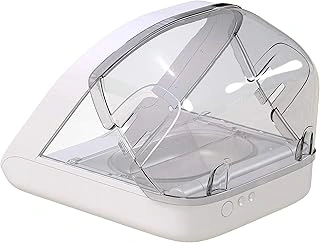
Sure Petcare SureFeed Feeder Rear Cover
Microchip-based pet systems extend beyond doors to feeders, and the Sure Petcare SureFeed Feeder Rear Cover shows how modular accessories address gaps in selective access. Priced at $50, this add-on fits SureFeed microchip feeders to block rear entry by other pets or pests trying to steal food meant for a single cat or small dog. While it has nothing to do with door security, the product is worth understanding if you're weighing the broader microchip ecosystem's approach - offline RFID hardware that you can customize piece by piece, without monthly fees or Wi-Fi dependencies.
The rear cover solves a specific problem: some clever pets learn to reach around or over the feeder's front-facing bowl. By closing that gap, the accessory reinforces the feeder's core promise - only the animal wearing the registered chip or RFID collar tag gets the meal. Rated 4.4 out of 5 and in stock, the cover reflects steady demand from owners who already trust SureFeed's chip-reading technology and want to tighten control further.
For readers comparing smart pet doors to microchip flaps, this product illustrates a key difference in philosophy. Microchip systems typically rely on modular hardware: a base unit plus optional guards, covers, or mounting brackets you buy separately as needs arise. Smart doors, by contrast, bundle features - app control, video, activity logs - into one device, then charge for cloud services. Neither approach is inherently better, but if you prefer owning every component outright and avoiding subscription overhead, the SureFeed ecosystem (feeder and flap alike) leans that direction. The trade-off is less real-time visibility and more manual configuration.
Because the rear cover targets feeding rather than entry security, it won't factor into your door decision directly. Still, if you already run a SureFeed microchip feeder or plan to add one alongside a microchip flap, the cover closes an access loophole for households with multiple pets or persistent scavengers. It's a single-purpose part at a modest price, reinforcing the offline, hardware-driven logic that defines the microchip camp.
- ✅ Blocks rear access by other pets or pests around SureFeed feeders
- ✅ Reinforces selective feeding without subscriptions or connectivity
- ✅ Modular accessory fits into the broader microchip ecosystem
- ✅ In stock and rated 4.4 out of 5
- ⚠️ Only compatible with SureFeed microchip feeders, not universal
- ⚠️ $50 adds to the total system cost
- ⚠️ Does not address pet door security or entry control
- ⚠️ Requires manual installation and offers no remote monitoring
Understanding Smart Pet Doors: Features, Connectivity, and Benefits
Smart pet doors bring home automation and remote oversight to pet access control, replacing mechanical latches with app-based permissions, real-time activity tracking, and cloud-connected security layers. Instead of relying solely on a passive RFID tag sewn into a collar, these systems authenticate your pet through proprietary collar sensors, onboard camera recognition, or manual unlock commands triggered from your smartphone. This architecture allows you to lock or unlock the door from anywhere, review timestamps of every entry and exit, and receive push alerts when your pet crosses the threshold.
Most smart doors connect to your home Wi-Fi network and sync data to a manufacturer cloud platform, enabling remote control even when you're away from home. Many models include integrated cameras that capture still images or short video clips each time the door opens, layering visual confirmation on top of electronic access logs. Some advanced units incorporate two-way audio, allowing you to hear outdoor sounds or speak through a built-in speaker. Firmware updates delivered over the internet add new features or patch security vulnerabilities, keeping the system current without hardware replacement.
Power options vary: battery-only designs prioritize installation flexibility but require regular cell swaps or recharging, while wired models eliminate that maintenance at the cost of needing an outlet or low-voltage transformer nearby. Hybrid systems combine both, using mains power during normal operation and switching to battery backup during outages. Collar sensors typically use Bluetooth or proprietary radio frequencies rather than passive RFID, offering faster read ranges and the ability to distinguish between multiple pets wearing uniquely paired tags.
The primary benefit of a smart door is granular control. You can set curfew schedules that automatically lock the flap during specific hours, restrict access to individual pets based on time of day, or disable exit permissions while allowing entry. Activity logs help you spot changes in routine that might signal health concerns, and remote locking provides peace of mind when you realize you forgot to secure the door before leaving for work. Camera integration adds a verification layer that microchip-only systems cannot match, letting you confirm that your pet - and not a stray or wild animal - triggered the unlock.
Trade-offs center on complexity and dependency. Smart doors require stable Wi-Fi coverage at the installation point, and outages or router failures can disrupt remote features or even local operation if the system relies on cloud authentication. Firmware bugs or server downtime can temporarily lock pets in or out, and the learning curve for pairing collars, configuring app permissions, and troubleshooting connectivity issues is steeper than snap-and-go microchip flaps. Price points typically start several times higher than basic RFID doors, and some manufacturers charge monthly or annual subscription fees to unlock full activity history, unlimited camera storage, or multi-user app access. Battery-powered models add ongoing costs for replacements, while wired installations may require professional help if no nearby outlet exists.
Smart pet doors deliver the deepest layer of security and monitoring available today, making them well-suited for households that value real-time oversight, remote control, and integration with broader smart-home ecosystems. The investment in hardware, setup effort, and potential subscription fees buys flexibility and transparency that simpler microchip flaps cannot provide, as long as you accept the reliance on network infrastructure and the occasional need to update firmware or replace batteries.
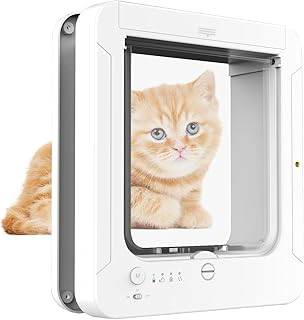
Microchip Cat Flap with 3 RFID Collar Sensor Keys
The Microchip Cat Flap with 3 RFID Collar Sensor Keys offers selective access without requiring Wi-Fi, app accounts, or cloud services. Priced at $89.99, this flap reads RFID collar tags worn by your pets and unlocks only for animals you've registered in the unit's memory. Three collar tags ship with the flap, so multi-pet households can set up multiple cats immediately without ordering extras.
Because this system runs on batteries and stores registered tag IDs locally, it remains functional during internet outages and immune to remote hacking or network vulnerabilities. You program new tags by holding them near the sensor while the flap is in setup mode, and the unit remembers each tag indefinitely. This simplicity appeals to owners who value reliability over remote monitoring - you won't receive notifications when your cat uses the door, and you can't lock or unlock it from your phone.
The flap's 4.2 out of 5 rating reflects solid everyday performance, though some buyers note that collar tags must remain securely attached; a lost tag means a pet can't enter until you replace it. Installation involves cutting an opening in a door, window, or wall, and the unit fits standard door thicknesses without motorized components or complex wiring.
Compared to smart pet doors with camera feeds, activity logs, and smartphone control, this RFID flap strips away connectivity features to focus on one task: keeping unregistered animals out while letting your pets move freely. If you don't need remote access or usage data and prefer a set-it-and-forget-it approach, this option delivers straightforward security at a lower price point than most app-enabled alternatives.
- ✅ Operates offline - no Wi-Fi, app, or subscription required
- ✅ Includes three RFID collar tags for immediate multi-pet setup
- ✅ Immune to network outages and internet-based security threats
- ✅ Battery-powered with no wiring or motorized parts
- ✅ Lower upfront cost than smart pet doors with connectivity
- ⚠️ No remote lock control or smartphone access
- ⚠️ No activity logs or notifications when pets use the door
- ⚠️ Lost or damaged collar tags must be replaced for pet to enter
- ⚠️ Manual programming required for each new tag
Understanding Microchip Pet Flaps: RFID Technology and Selective Entry
Microchip pet flaps use RFID technology to read identification from your pet's existing microchip or a collar-mounted RFID tag, unlocking only for animals registered in the system. This approach delivers selective entry without requiring a wireless network or smartphone app, operating entirely offline through battery power and local memory.
The authentication process is straightforward: when your pet approaches, the flap's scanner detects the unique RFID signature within a few centimeters, verifies it against stored codes, and releases the magnetic lock in under a second. Because the system operates independently of cloud servers or internet connectivity, there are fewer points of failure and no exposure to network-based vulnerabilities.
This simplicity translates to lower ongoing maintenance. Most units run for months on AA batteries, require no firmware updates, and skip the configuration steps associated with app-based devices. You program new pets by presenting them to the flap while holding a pairing button, and the system stores up to 32 or 40 identities depending on the model.
The tradeoff is capability. Microchip flaps cannot send activity logs, lock remotely when you leave town, or integrate with other smart home routines. You will not receive notifications when your pet exits or enters, and you cannot adjust access permissions from your phone. For households focused on reliable, local control without the complexity of networked systems, this stripped-down design removes distractions and reduces the attack surface that connected devices introduce.
Microchip flaps suit owners who value straightforward operation and immediate response over data collection or remote oversight, making them a practical fit when simplicity and offline reliability outweigh the benefits of connectivity.
Head-to-Head Security Comparison: Which Technology Keeps Intruders Out?
Security in pet door design splits into five distinct layers, and the two technologies handle each one differently.
Physical locking strength comes down to flap material and frame anchoring. Microchip flaps typically use hard plastic latches that engage when the door is closed, creating a tight seal against the frame. Smart doors often incorporate motorized aluminum or reinforced composite panels that lock into steel frames, offering greater resistance to prying. Manual override switches - common on smart models for emergency exit - introduce a secondary entry point unless protected by tamper-resistant housings.
Animal identity verification is where microchip flaps excel. The reader scans the unique 15-digit ID embedded in your pet's chip and opens only for registered animals, blocking raccoons, possums, and neighborhood cats with no network required. Smart doors use similar RFID tags or collar sensors, but some models add camera-based recognition, which can misidentify animals in low light or fail if the collar is lost.
Network attack surface separates the two approaches cleanly. Microchip flaps operate offline, eliminating risks from firmware exploits, credential stuffing, or cloud service breaches. Smart doors connect to your home Wi-Fi and a manufacturer's server, creating exposure to remote attacks if the app uses weak encryption or the vendor neglects security patches. A compromised account could unlock the door from anywhere.
Monitoring and alerting capabilities reverse the advantage. Smart doors log every entry and exit with timestamps, send push notifications when the door opens, and let you lock or unlock remotely if a storm rolls in. Microchip flaps operate silently - no log, no alert, no way to know your cat slipped out at 2 a.m. unless you check in person.
Power failure behavior determines what happens when the batteries die or the grid goes down. Most microchip flaps fail secure, staying locked until you replace the batteries, which can trap your pet outside. Smart doors vary: some fail open to prevent lockout, others fail secure and require manual override. Battery backup extends run time, but if you're away for days, either technology can leave your pet stranded or your home undefended.
The right choice hinges on whether you prioritize protection from wildlife or visibility into your pet's movements, and whether you're comfortable managing networked device security. Microchip flaps eliminate digital risk but leave you in the dark; smart doors add control and awareness but require vigilance over firmware updates and account hygiene.
Beyond Security: Comparing Convenience, Aesthetics, and Cost
Security matters, but it's only one piece of the decision. Day-to-day convenience, how the door fits into your home's look, and the full financial picture all shape which option makes sense for your household.
Smart pet doors add layers of control that appeal to owners who want to manage access remotely. Most models let you set entry and exit schedules through an app, so you can enforce a curfew or lock the door during specific hours without getting up. Activity tracking shows when your pet used the door, which helps if you're monitoring outdoor time or troubleshooting unexpected behavior. Remote locking is especially useful when you're traveling - you can secure the door from anywhere if plans change or a pet sitter needs guidance. The tradeoff is complexity: you'll interact with the app regularly, troubleshoot connectivity hiccups, and keep firmware updated.
Microchip flaps operate on a set-and-forget principle. Once you program your pet's chip, the door works automatically with no schedules, no app check-ins, and no internet dependency. This simplicity reduces the tech support burden and keeps your home network uncluttered. You lose remote control and activity logs, but many owners find that trade worthwhile when they don't need those features daily.
Aesthetics vary noticeably. Smart doors typically have a larger footprint to house motors, batteries, and electronics. Camera modules, LED indicator lights, and thicker frames make them more visible on a wall or door. Microchip flaps are compact and low-profile, often blending into the door with a simple tunnel and flap. If you prefer minimal visual disruption or have limited installation space, the microchip design is easier to integrate.
Cost differences extend beyond the initial purchase. Smart pet doors generally range from $200 to over $500, depending on camera quality, app features, and build materials. Some brands charge monthly or annual subscription fees for cloud video storage, advanced notifications, or multi-user app access. You'll also need to budget for battery replacements - rechargeable packs or disposable cells - and confirm your Wi-Fi router reaches the installation spot reliably. Microchip flaps cost between $80 and $150 upfront, require no subscription, and run on standard batteries that last several months to a year. Ongoing expenses are predictable and low.
For owners who travel frequently or want detailed visibility into their pet's routine, the smart door's remote monitoring justifies the higher cost and added complexity. For households that value simplicity, lower expense, and a door that works without network dependencies, the microchip flap delivers reliable access control with far less overhead.
Installation and Compatibility Considerations for Your Home
- Door material compatibility: wood, metal, glass, and wall-mount options for each technology
- Cut-out dimensions and structural integrity: smart doors often require larger openings and reinforcement
- Power requirements: wired AC, battery bank, or solar panel options for smart doors versus AA/C batteries for microchip flaps
- Wi-Fi coverage and signal strength in installation area (smart doors only)
- Pet size and weight limits: ensure flap opening accommodates your largest pet comfortably
- Weatherproofing and insulation: draft seals, magnetic closures, and climate zone suitability
Our Verdict: Which Is the Right Choice for the Modern Pet Owner?
The right choice comes down to how you define security and what role your pet door plays in daily life. Smart pet doors make the most sense for owners who travel regularly and want to monitor access remotely, set curfews from their phone, or integrate with existing smart home systems. If you value real-time alerts when your pet enters or leaves, need flexible scheduling for multiple pets, or want the ability to lock the door from anywhere, the connected features justify the higher upfront cost and ongoing subscription. These systems excel when you treat your pet door as part of a broader home security strategy and accept the dependence on Wi-Fi and cloud services.
Microchip flaps suit households where offline reliability and simplicity matter more than remote features. They provide strong access control by reading your pet's existing microchip, blocking strays and wildlife without requiring an internet connection, app updates, or batteries beyond the door itself. Maintenance stays minimal, there are no monthly fees, and the system keeps working during power outages or network failures. For owners whose primary concern is keeping unwanted animals out rather than tracking every movement, the microchip flap delivers effective security at a lower total cost.
Neither option is universally better. A smart door offers visibility and control but introduces complexity and potential failure points tied to connectivity. A microchip flap sacrifices remote access but gains durability and independence from digital infrastructure. Your home setup, pet routine, and tolerance for tech troubleshooting should guide the decision. If your pet has unusual sizing, verify door dimensions and weight limits carefully. If your exterior wall is thick or insulated, confirm the tunnel extension options before you buy. Compare specific models side by side, read verified owner feedback on installation and long-term performance, and match the feature set to your actual security priorities rather than aspirational ones.