We may earn a commission when you buy through links on this page, at no extra cost to you. How this works.
Selecting an automated dog door requires evaluating five interconnected dimensions before you commit to installation. Each dimension - sensor technology, installation method, power system, multi-pet compatibility, and total cost of ownership - constrains or expands your choices in the others, so the order in which you make decisions matters.
Start with installation context. Your door type, wall thickness, and whether you rent or own determine which products are physically compatible. A sliding glass door limits you to panel-insert models; a rental property may require non-permanent solutions; exterior brick or insulated walls add complexity and cost.
Next, assess sensor technology against your household. RFID collars work reliably for most dogs but require each pet to wear a tag. Microchip readers eliminate the collar but may have read-range limitations with certain chip types. App-based systems offer remote control but depend on Wi-Fi stability and raise questions about long-term software support.
Power and backup systems define reliability during outages. Hardwired AC units require professional electrical work but avoid battery changes. Battery-powered doors offer installation flexibility but demand routine maintenance. Hybrid systems with battery backup provide resilience at higher upfront cost.
For multi-pet homes, consider whether the system allows individual pet scheduling, supports mixed-size animals with a single flap, or requires separate doors. Some automated doors lock out specific pets by failing to unlock; others use size-based mechanical restriction, which may not differentiate between similarly sized animals.
Finally, calculate total cost of ownership over three to five years. Include installation labor if required, replacement batteries or power supplies, collar tags for each current and future pet, and the likelihood of needing customer support or parts. A lower purchase price often shifts cost to ongoing consumables or reduced durability.
Use this framework to narrow options before comparing specific models. The goal is not to find the most feature-rich door, but the one whose constraints align with your household's non-negotiable requirements and your willingness to manage trade-offs over time.
Pre-Purchase Compatibility Checklist
- Measure your dog's shoulder height and weight against manufacturer size charts
- Verify wall thickness or door panel dimensions at installation site
- Check available power outlet locations or plan for battery maintenance schedule
- Confirm wireless range requirements if using RFID collar activation
- Assess climate zone for insulation and weather-seal specifications
- Count total pets and determine individual vs. group access needs
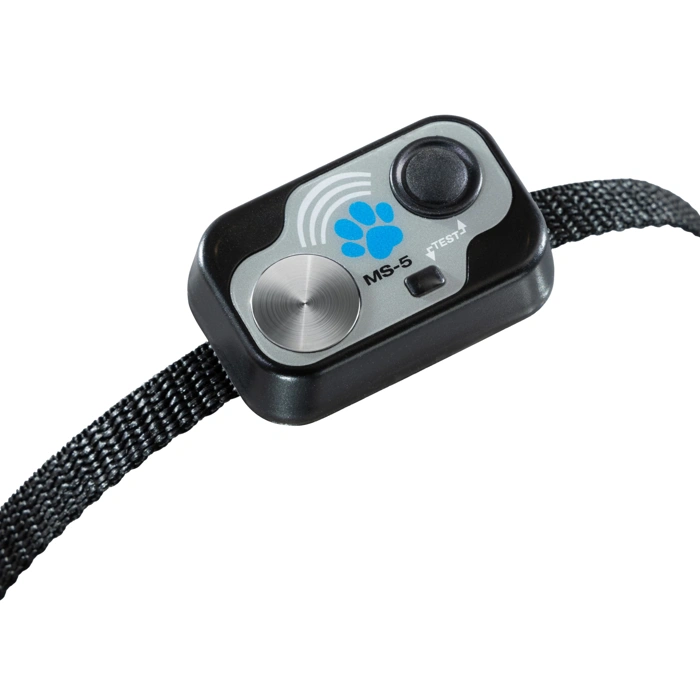
High Tech Pet MS-5 Automatic Pet Door Collar for Power Pet Doors, Water Resistant
The High Tech Pet MS-5 is a single RFID collar designed to work with Power Pet door systems. It triggers the door to open automatically when your pet approaches, then closes after they pass through. This model is water-resistant - meaning it can handle rain and splashes - but it is not rated as fully waterproof for submersion.
With a 4.5/5 rating and a price of $54.99, the MS-5 serves as a baseline collar option for single-pet households or for anyone who wants to test automated RFID entry before investing in multi-collar packs. The collar attaches to your pet's existing collar and uses a replaceable battery to transmit its signal to the compatible door unit.
Water resistance is adequate for typical outdoor activity, but if your dog swims frequently or spends extended time in wet conditions, durability may become a consideration over time. The single-collar format makes setup straightforward: pair the collar with the door unit, adjust the activation range if needed, and confirm your pet triggers the door reliably at approach distance.
This collar does not include features like activity tracking, GPS, or health monitoring - it exists solely to automate door access. If you have multiple pets, you will need to purchase additional collars separately, and each must be paired individually with the door system.
The MS-5 works best in homes where one pet needs automated access, where budget is a priority, or where you want to validate that RFID automation suits your routine before committing to a larger collar investment.
- ✅ Affordable single-collar entry point at $54.99
- ✅ Water-resistant design handles rain and outdoor activity
- ✅ Simple pairing process with Power Pet door systems
- ✅ 4.5/5 rating reflects reliable RFID triggering
- ⚠️ Not waterproof - submersion or heavy swimming may reduce longevity
- ⚠️ Single collar only; multi-pet homes must buy additional units separately
- ⚠️ No tracking or health features beyond door activation
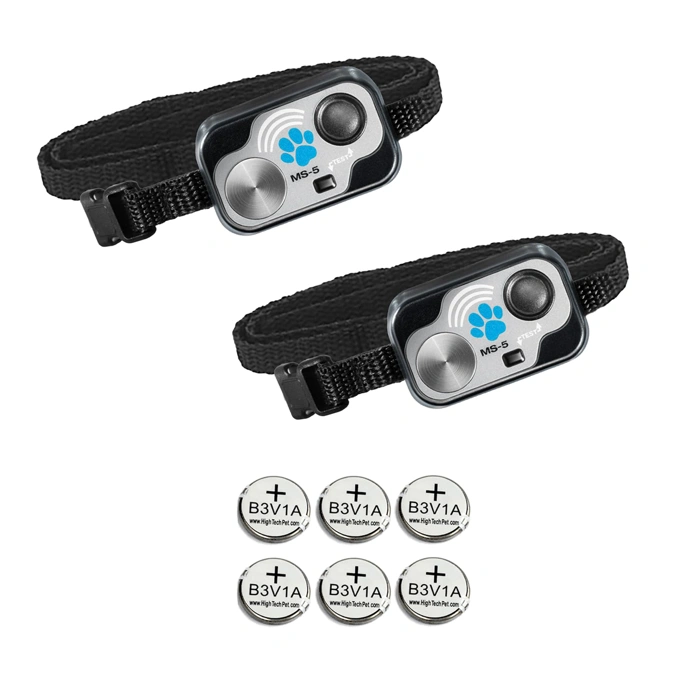
High Tech Pet MS-5 Automatic Pet Door Collar 2-Pack for Power Pet Doors, Waterproof
The High Tech Pet MS-5 Automatic Pet Door Collar 2-Pack is designed for households with two pets using Power Pet Doors. At $99.98, the two-pack provides modest savings compared to purchasing two single collars individually, making it a practical choice for multi-pet homes. This waterproof version improves on the standard MS-5 by offering better durability when pets encounter rain, puddles, or wet grass during outdoor access.
The collar works with High Tech Pet's Power Pet Door systems, allowing each pet to trigger the automatic door when wearing the collar. Because this is a 2-pack, owners of two dogs or cats can equip both animals at once, ensuring consistent access without purchasing separately. The waterproof construction helps the collar maintain function even after exposure to moisture, which is useful for pets that spend significant time outdoors or in unpredictable weather.
With a 4.3/5 rating, the collar is well-regarded for its compatibility and reliability. The 2-pack format also serves as a backup strategy - frequent travelers or pet owners who want a spare collar on hand can keep one as a replacement if the primary collar is lost, damaged, or needs cleaning. This redundancy can be especially helpful in households where uninterrupted door access is a priority.
Consider the 2-pack if you have two pets that will use the same automated door system, or if you want a cost-effective backup solution. The waterproof upgrade is worth evaluating if your pets frequently encounter wet conditions, as it extends collar lifespan compared to non-waterproof alternatives.
- ✅ Two collars for $99.98 offer modest savings over buying singles separately
- ✅ Waterproof construction protects against rain and wet outdoor conditions
- ✅ Compatible with High Tech Pet Power Pet Door systems
- ✅ Provides backup collar option for frequent travelers or multi-pet households
- ⚠️ Only compatible with specific High Tech Pet Power Pet Door models
- ⚠️ Requires pets to consistently wear collars for door access
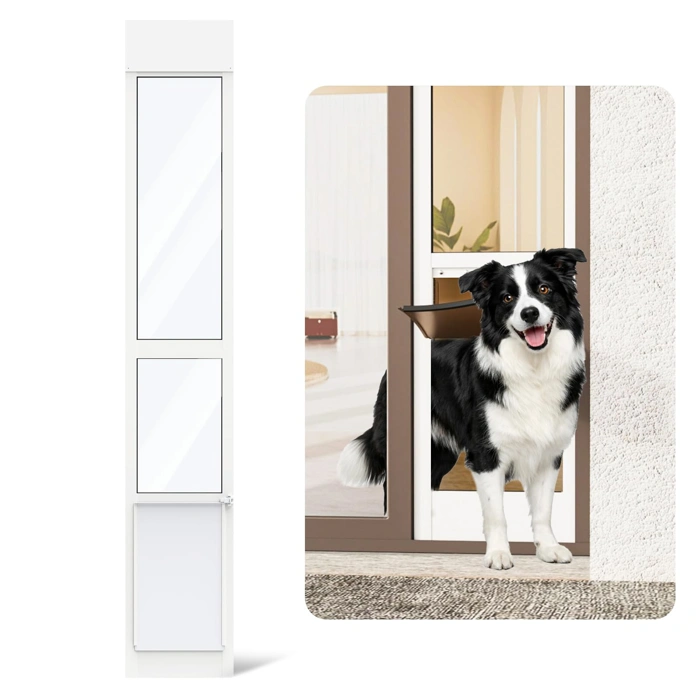
Sliding Glass Dog Door, Adjustable 75.8-80.3in H, up to 75 lbs, Large, White
This sliding glass insert provides a manual flap option for dogs up to 75 lbs, adjusting to fit door tracks measuring the listed size in height. Unlike automated models, it requires no power source, no sensors, and no collar tags - your dog simply pushes the flap to move in and out.
The design suits renters or households testing whether a pet door fits their routine before committing to an automated system. Installation involves positioning the white extruded panel in your sliding door track; no cutting or permanent modification is necessary. Because the flap operates manually, you retain full control by locking the panel when you want to restrict access, but you lose the selective entry features and scheduling available in sensor-based doors.
The 75 lb weight limit accommodates many medium to large breeds, though dogs approaching that threshold may find the flap requires firmer nudging. The height range works for standard residential sliding glass doors, but you must measure your track carefully - doors outside the listed size span will not fit. The manual mechanism means no app control, no activity logs, and no ability to permit one pet while blocking another.
This option makes sense if you want immediate access without wiring, batteries, or learning curves, and if you're comfortable managing entry manually by locking the flap when needed. It clarifies the baseline tradeoff: simplicity and zero ongoing costs versus the convenience and selectivity of automation.
- ✅ No power source, sensors, or collar tags required
- ✅ Adjustable height range fits 75.8 - 80.3 inch sliding door tracks
- ✅ No permanent modification; removable panel design
- ✅ Supports dogs up to 75 lbs
- ⚠️ Manual flap only - no selective entry or scheduling
- ⚠️ Dogs near 75 lb limit may need to push harder
- ⚠️ No app control or activity tracking
- ⚠️ Narrow height range excludes non-standard doors
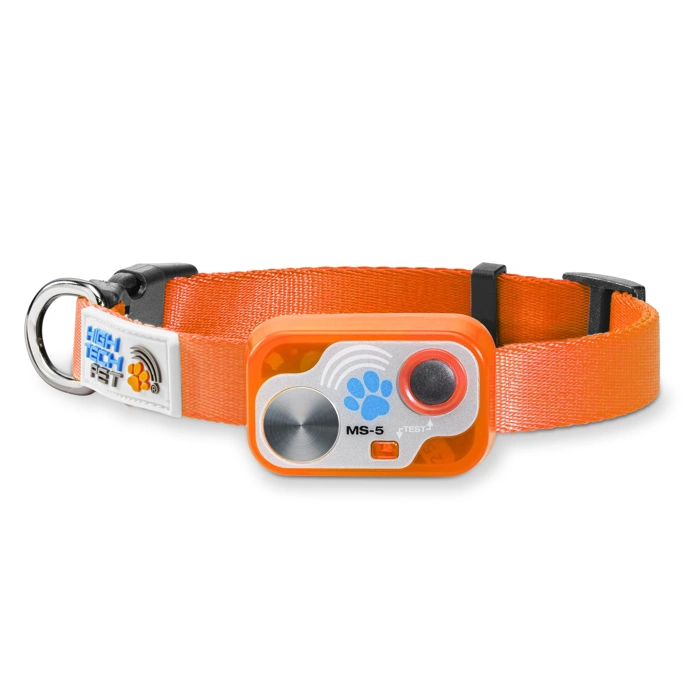
High Tech Pet MS-5 Automatic Pet Door Collar, Designer Series, Waterproof, Orange
The High Tech Pet MS-5 Automatic Pet Door Collar in Designer Series Orange is a waterproof collar attachment designed to trigger compatible MS-5 automatic pet doors. Priced at $59.99, it carries a 4.6/5 rating and represents the premium color-customized version of the standard MS-5 collar system.
This collar works with radio-frequency identification to signal the automated door when your pet approaches. The waterproof construction protects the electronics from rain, snow, and wet coats, making it suitable for year-round outdoor access. The orange color option serves two practical purposes: high visibility for monitoring your pet's location in low light, and aesthetic coordination with home décor or personal preference.
For multi-pet households, the Designer Series color range allows visual differentiation between animals at a glance. Each collar transmits a unique signal, so you can assign different access permissions or schedules per pet while instantly identifying which animal is near the door by collar color. The bright orange finish is especially useful for darker-coated dogs where a neutral collar might blend in.
At approximately $5 above the standard MS-5 collar, the Designer Series carries a modest premium for the color customization. The waterproof rating and radio components remain identical across variants. Fit and comfort depend on your pet's neck size and tolerance for wearing a collar continuously; the unit must stay in contact with the fur to function reliably.
This option makes the most sense when you value quick visual identification in a multi-pet setup, want a specific aesthetic match, or need high-contrast visibility for safety during dawn and dusk outdoor time. If color is not a priority, the standard MS-5 collar offers the same functional performance at a lower cost.
- ✅ Waterproof construction for all-weather reliability
- ✅ High-visibility orange color aids pet monitoring in low light
- ✅ Color differentiation simplifies multi-pet household management
- ✅ 4.6/5 rating reflects strong user satisfaction
- ⚠️ $5 premium over standard MS-5 collar for color customization
- ⚠️ Must be worn continuously for door activation
- ⚠️ Requires compatible High Tech Pet MS-5 automatic door system
Sensor Technology: RFID vs. Microchip vs. App-Based Systems
Automated dog doors rely on three main sensor technologies to decide when to open: RFID collar tags, microchip readers, and app-based systems. Each approach offers different tradeoffs in range, reliability, and convenience.
RFID collar tag systems are the most common. Your dog wears a lightweight tag on their collar, and the door reads it from several feet away - typically 3 to 5 feet. This longer range means the door starts opening as your pet approaches, which can feel smoother. The downside is that your dog must always wear the collar tag. If the collar comes off during play or a bath, the door won't open. Tags are also battery-powered and need periodic replacement, though most last six months to a year.
Microchip readers scan the permanent identification chip already implanted in many pets. No collar or tag is required, which eliminates the risk of lost hardware. However, read range is much shorter - usually 2 to 4 inches - so your dog must position their head very close to the sensor. Some pets adapt quickly; others find the close approach awkward. Microchip systems work best for calm, patient dogs who don't mind stopping directly at the door.
App-based systems let you unlock or lock the door remotely from your smartphone, and some models allow scheduled access or real-time notifications when your pet uses the door. This offers the most control and flexibility, especially if you want to manage access while away from home. The tradeoff is dependency on Wi-Fi or cellular connectivity. If your network drops or the app server experiences downtime, you may lose remote control. Many app-enabled doors also include RFID or microchip backup, so the door still functions locally if connectivity fails.
Consider your dog's behavior and your household routine. If your pet is active and moves quickly, RFID's longer range may feel more natural. If you prefer no wearable hardware and your dog is calm at thresholds, a microchip reader is a tidy solution. If you want the ability to lock the door remotely or monitor usage, an app-enabled model adds that layer - just confirm it includes a local fallback mode.
Installation Context: Wall-Mount, Door Insert, or Sliding Glass Panel
Installation method determines both upfront effort and long-term flexibility. Each approach carries tradeoffs in automation capability, size range, and reversibility.
Wall-mount installations involve cutting through an exterior wall, which permits the largest door sizes and full sensor and locking automation. This option works well for ground-level installations where a dedicated pet exit makes sense. The cut is permanent, so factor in repair costs if you move or decide to remove the door later. Wall-mount units typically include weather-sealed frames and structural reinforcement, making them the most robust choice for households with large or multiple dogs.
Door inserts replace a section of your existing entry door, usually the lower panel. This keeps the modification contained to a single door rather than the wall itself. Many inserts fit standard door widths and require only basic carpentry. The downside is size: door panel thickness and frame dimensions limit the maximum opening, which may exclude larger breeds. Automation options - sensors, timers, and app control - are available but depend on the specific insert model. Reversibility is moderate; you can replace the original panel, but the door itself has been altered.
Sliding glass panel adapters are the most rental-friendly option. These systems fit into the track of a sliding door, adding a panel with an integrated pet door alongside your existing glass. Installation is tool-free and fully reversible. The limitation is automation: many sliding-glass pet doors rely on manual flaps or basic magnetic locks rather than electronic sensors or smartphone control. Size is also constrained by the height and width of the adapter panel. This approach suits renters, small-to-medium dogs, and households prioritizing minimal structural change over advanced features.
Match your installation type to your living situation. Homeowners planning to stay long-term and needing full automation should consider wall-mount. Those in owned homes who want a middle path can explore door inserts. Renters and anyone requiring easy removal benefit most from sliding glass adapters, understanding that automation and size will be limited.
Power Systems and Backup: AC, Battery, and Hybrid Models
Power reliability determines whether your automated dog door continues working when you need it most. Three common configurations each balance convenience, installation complexity, and uptime differently.
Hardwired AC models plug into a standard outlet and deliver the most consistent performance. They eliminate the risk of batteries dying overnight or during a weekend away, and you never need to budget for replacements. The tradeoff is placement: your door must be within reach of an existing outlet, or you'll need to run an extension cord or hire an electrician to install a new receptacle. If your ideal door location is on an exterior wall far from power, installation cost and aesthetics may become limiting factors.
Battery-only systems offer maximum installation flexibility. You can mount the door anywhere on a wall or in a panel without worrying about proximity to outlets. Most models use four to eight D-cell batteries, which typically last three to six months depending on usage frequency and sensor activity. While the upfront installation is simpler, expect to spend $15 - $30 per year on replacement batteries, and plan to check charge levels regularly if you travel for work. A dead battery means a locked door, which becomes a problem if your dog needs access while you're away.
Hybrid models combine an AC adapter with a battery backup compartment. The door runs on wall power during normal operation, then switches automatically to battery if the outlet loses power during a storm or outage. This configuration provides the best uptime and is worth considering if you work long hours, travel frequently, or live in an area with inconsistent power. The higher initial cost - often $30 - $60 more than single-power models - pays off in reliability and peace of mind, especially in households where your dog depends on the door for regular outdoor access.
If you're away from home more than a few days each month, prioritize either hardwired AC or hybrid power. Battery-only models work well for owners who are home most evenings and can monitor charge status, but they require more active maintenance and carry a higher risk of unexpected failure.
Multi-Pet Households: Collar Management and Selective Access
In multi-pet households, selective access becomes one of the most critical features of an automated dog door. The goal is to give your dogs freedom while preventing outdoor cats, wildlife, or neighborhood animals from entering your home. Most automated doors achieve this through RFID or sensor-equipped collars that act as keys, allowing only registered pets to trigger the door.
Each collar is programmed with a unique ID tied to a specific pet. When your dog approaches, the door reads the collar signal and unlocks. This means you can grant access to your two dogs while blocking your indoor cat or any animal without a registered collar. Some systems allow you to program dozens of individual IDs, making them suitable for households with three, four, or more pets.
Size mismatches between pets require careful planning. If you have a Labrador and a Chihuahua, the door opening must accommodate your largest dog, but the sensor range and activation threshold should be sensitive enough for your smallest. Check whether the system lets you adjust sensor sensitivity or set individual unlock rules per collar. A door that only responds when the pet is directly in front of the sensor will prevent false triggers but may frustrate a hesitant small dog.
Collar comfort matters for all-day wear. Look for lightweight RFID tags or collars with rounded edges and breathable materials. Pets wearing collars 24/7 are more prone to matting, skin irritation, or catching the collar on furniture, so test fit and weight before committing. If your dog already wears a collar with ID tags, confirm whether the RFID tag can attach to the existing collar or if a dedicated collar is required.
Battery life and waterproof ratings vary widely across collar systems. Some RFID collars use coin-cell batteries that last six months to a year, while others are passive tags with no battery at all. Waterproof ratings are essential if your dogs swim, play in sprinklers, or spend time in wet conditions. A collar rated IPX7 or higher will handle submersion, while lower ratings may fail after repeated exposure to moisture.
Backup collar strategies reduce the risk of a lost or dead collar leaving your dog stranded outside. Keep spare programmed collars on hand, especially if you have multiple pets. Some owners color-code collars by pet to make visual identification easier during programming or troubleshooting. If a collar battery dies, knowing which pet is locked out and having a pre-programmed spare simplifies the fix.
Collar organization becomes more complex with three or more animals. Label each collar with the pet's name using a permanent marker or tag, and store spares in a labeled bin near the door. Document which collar ID is linked to which pet in your system's app or a physical note. This prevents confusion during reprogramming or when adding a new pet to the household.
Finally, consider how the door handles simultaneous access. If two dogs approach the door at the same time, does the system read both collars and unlock once, or does it require each pet to trigger separately? Doors with wider sensor ranges and faster read times handle multi-pet traffic more smoothly, reducing bottlenecks and frustration during high-traffic periods like morning bathroom breaks.
Common Mistakes That Lead to Returns or Regret
Even well-researched purchases can go wrong when common oversights aren't caught early. Many returns and frustrated owners trace back to a handful of preventable mistakes made before installation or during the first weeks of use.
Undersizing the flap opening is one of the most frequent errors. Measure your dog's shoulder width and height at the withers, then compare those dimensions to the manufacturer's published flap clearance - not the outer frame. A flap that looks adequate on paper may force your dog to crouch or squeeze, leading to reluctance or outright refusal to use the door.
Ignoring insulation R-value in extreme climates becomes obvious only after the first heating or cooling bill. If you live where winter temperatures regularly drop below freezing or summer heat exceeds 95°F, prioritize doors with dual-seal flaps and published thermal performance data. A budget door without insulation may cost more in energy loss than the price difference of a better-insulated model.
Assuming all RFID collars work with all doors leads to compatibility headaches. Proprietary systems often require the brand's own collar tags, and third-party collars may not trigger the sensor reliably - or at all. Confirm compatibility in writing before you buy, especially if you already own collar tags from another system.
Neglecting to test collar fit during active play means the tag may shift, flip, or fall off when your dog runs, jumps, or rolls. Attach the collar and let your dog move naturally for at least ten minutes. If the tag slides around the neck or the collar loosens, adjust the fit or add a secondary keeper loop before relying on it for door access.
Failing to account for puppy growth is costly if you install a door sized for your dog's current frame. Puppies of large or giant breeds can double their shoulder width in six months. Check breed-standard adult measurements and choose a flap size that accommodates the mature dog, even if it looks oversized today. Most dogs adjust to a larger opening far more easily than owners can reinstall a new door six months later.
Use the checklists throughout this guide to catch these errors before they become expensive problems. Measuring twice, confirming compatibility in writing, and testing fit under real conditions will save returns, reinstallation labor, and regret.
Long-Term Ownership: Maintenance, Batteries, and Collar Replacement
After installation, automated dog doors require periodic upkeep that adds to the total cost of ownership. Understanding the maintenance schedule and recurring expenses helps you budget realistically and avoid surprises.
Most RFID collar tags use coin-cell batteries that last six to twelve months, depending on activation frequency and outdoor temperature. If you have multiple pets, multiply that replacement cost by the number of collars in use. Stocking one or two spare batteries ensures you won't face a non-functional door when a battery dies unexpectedly.
Weather seals degrade over time from UV exposure, temperature swings, and repeated flap movement. Inspect seals at the start of each heating and cooling season - typically spring and fall. Cracked or compressed seals reduce energy efficiency and let drafts, moisture, or insects through. Many manufacturers sell replacement seal kits, and swapping them takes only a few minutes with basic tools.
Some motorized models specify annual lubrication of the hinge mechanism or slide rails. Check your owner's manual for the recommended lubricant type - silicone spray is common - and the service interval. Skipping lubrication can lead to increased motor noise or premature wear on moving parts.
Collar wear is another factor. Active dogs that swim, dig, or play rough may crack plastic housings or tear fabric loops. Budgeting for one replacement collar per pet every one to two years prevents downtime. Store spare collars in a dry location so they're ready when needed.
Finally, keep firmware or app software updated if your door includes smart features. Manufacturers occasionally release patches that improve sensor reliability or add compatibility with new collar models. Setting a quarterly calendar reminder to check for updates ensures your door operates at its best and remains compatible with future accessories.
Final Recommendations: Match Your Decision Priorities
Once you've evaluated sensor types, installation methods, power systems, and multi-pet compatibility, matching your specific priorities to the right product becomes straightforward.
For households with multiple pets or visiting animals, prioritize sensor reliability. RFID collar-based systems offer the most consistent identification, reducing the risk of unauthorized access or missed entries. If you share your yard with neighborhood pets or have dogs of varying sizes, this technology provides the clearest control over who can use the door.
Renters and those who move frequently should prioritize installation reversibility. Sliding glass door inserts and wall-mounted units that don't require structural modification preserve your deposit and allow you to take the door with you. Measure your existing openings carefully and confirm the insert dimensions match before ordering.
For frequent travelers or homes in areas with unreliable power, prioritize maximum uptime. AC-powered systems with battery backup or hybrid configurations keep the door operational during outages. Check the backup runtime specifications and verify that battery compartments are accessible for replacement without tools.
Regardless of your priority, two steps remain non-negotiable: measure your door opening or wall cavity at least twice, and compare at least two products side by side using feature lists, compatibility charts, and real customer feedback. Shortlist models that clearly state compatibility with your pet's weight range and collar size, then verify that replacement collars or tags are readily available from the manufacturer.
Before finalizing your purchase, revisit the compatibility checklist you assembled earlier. Confirm installation requirements match your skills and tools, verify that the sensor system works with the number of pets you have, and ensure the warranty covers both the door mechanism and electronic components. Taking these verification steps now prevents costly returns and ensures your automated door works as intended from day one.