We may earn a commission when you buy through links on this page, at no extra cost to you. How this works.
Pet parents shopping for a GPS collar face a surprisingly complex decision: tracking technology, battery endurance, subscription structure, and feature set all vary significantly between devices. Both the Whistle GO Explore and Fi Series 3 sit at the premium end of the market, promising real-time location data and escape alerts, yet they approach the problem from different angles. Whistle relies on a combination of GPS, cellular, and Wi-Fi positioning with a focus on health monitoring, while Fi emphasizes a proprietary LTE network paired with an activity algorithm that learns your dog's routines.
The choice matters because tracking method directly impacts battery life and reliability. Cellular-based systems can pinpoint a pet anywhere within carrier coverage but drain power faster during active tracking. Bluetooth-augmented options extend battery at the cost of range. Subscription tiers add another layer: monthly fees vary, and some features lock behind higher plans. For a pet parent who travels frequently or lives near open trails, these tradeoffs shift the calculus compared to someone managing daily neighborhood walks.
Real-world scenarios highlight the differences. A dog that bolts during off-leash park visits needs instant, accurate positioning - seconds matter when a pet crosses a road. A working owner who leaves a pet home for eight hours may prioritize battery longevity and escape zone alerts over minute-by-minute updates. Understanding how each collar handles these situations - along with subscription costs, hardware durability, and app usability - makes the difference between peace of mind and frustration. This comparison breaks down both devices across the dimensions that matter most, so you can match features to your pet's behavior and your daily routine.
Meet the Contenders: An Overview of Whistle GO Explore
Whistle GO Explore builds on cellular tracking technology, using AT&T's nationwide network to monitor your pet's location in real time. The device attaches to your dog's existing collar and communicates position data through GPS, WiFi, and cellular signals, delivering updates to a companion smartphone app.
Beyond location tracking, the device includes a health and activity monitoring suite. It records daily movement patterns, rest periods, scratching, licking, and general behavior trends. The app organizes this information into daily summaries and flags notable changes over time, giving active pet parents a consolidated view of wellness and whereabouts in one platform.
The service requires a subscription plan to maintain cellular connectivity and app access. Whistle markets the GO Explore to households that prioritize integrated data - families who want movement metrics and behavior insights alongside boundary alerts and escape notifications, rather than location tracking alone.
This approach suits owners who value context around their pet's routine and prefer a single device for both fitness monitoring and safety. The tradeoff is ongoing cost and reliance on cellular coverage in the areas where your pet spends time.
Meet the Contenders: An Overview of Fi Series 3
The Fi Series 3 is a GPS dog collar built around LTE-M cellular connectivity, designed to give pet parents continuous location tracking without relying on Bluetooth proximity or crowdsourced networks. Instead of pinging nearby devices, the collar communicates directly with cell towers, which means it can report your dog's location even in areas with sparse foot traffic or when your pet is far from home. This approach prioritizes real-time accuracy over community-based workarounds.
Battery life is a central selling point. Fi claims the Series 3 can last up to three months between charges under ideal conditions - when your dog stays within a designated home zone and LTE-M signal is strong. Active tracking during walks or if your dog escapes will drain the battery faster, but the extended standby mode is designed for owners who want fewer charging interruptions. The collar uses a proprietary magnetic charging cable, and the app displays estimated battery time remaining based on recent activity patterns.
Escape alerts trigger when your dog leaves a geofenced safe zone you draw in the app. The collar detects the boundary crossing and sends a push notification, then switches to live tracking mode so you can follow movement updates. There's also a lost dog mode that prioritizes location pings over battery conservation, updating position every minute until you recover your pet.
Fi requires a subscription to access GPS tracking features. Plans are billed monthly or annually, and pricing varies by commitment length. The subscription covers cellular data, cloud storage for location history, and access to activity metrics like step counts and rest time. Without an active plan, the hardware won't provide location services.
This collar fits dogs who roam larger properties, escape artists, and families who want dependable tracking without needing to be nearby. The LTE-M model works best where cellular coverage is consistent, and the long battery window appeals to users who prefer low-maintenance charging routines over daily plug-ins.
Design and Durability: Which Collar Can Handle Your Pet's Adventures?
Pet collars spend their days exposed to mud, water, scratches, and the chaos of daily adventure, so the physical build of a GPS tracker matters as much as its software features. The Whistle GO Explore and Fi Series 3 take noticeably different approaches to design, and those differences affect comfort, durability, and how well each fits into your routine.
The Whistle GO Explore uses a removable module that attaches to your dog's existing collar via a clip-on system. This keeps the tracker lightweight - typically around 0.9 ounces for the device itself - and lets you maintain your preferred collar aesthetic. The module is waterproof with an IPX7 rating, meaning it can handle submersion up to three feet for about 30 minutes. For dogs that love streams, sprinklers, or messy play, that rating provides solid everyday protection without needing to remove the device constantly.
The Fi Series 3 takes a different route with an all-in-one collar design. The GPS module is built into a proprietary collar band, which means you replace your existing collar entirely. The module itself weighs around 1.3 ounces, and the total system weight depends on the collar size you choose. Fi offers multiple band lengths and widths to fit dogs from small breeds up to large working dogs, but the integrated design means you're committed to Fi's collar aesthetic and buckle system. The Series 3 is fully waterproof and designed to stay on through swimming, baths, and heavy rain without issue.
Weight distribution matters more for smaller dogs. A module that feels barely noticeable on a Labrador can become cumbersome on a ten-pound terrier. The Whistle's clip-on approach spreads weight across your existing collar hardware, while Fi's integrated band balances the module along the neckline. If your dog is under 15 pounds, the Whistle's lighter profile and flexible attachment may feel less intrusive. For larger, more active dogs, Fi's secure integration reduces the risk of the tracker catching on branches or being knocked loose during rough play.
Durability under real-world conditions comes down to attachment security and material resilience. The Whistle's clip can occasionally shift or require repositioning if your dog is exceptionally active or pulls hard on the leash. Some users report needing to check the clip's tightness after particularly rough days. Fi's integrated collar removes that concern entirely - the tracker stays in place because it's part of the collar itself. However, if the Fi collar band wears out or breaks, you'll need to replace the entire collar rather than just swapping a strap.
Both devices are built to withstand typical outdoor exposure, but neither is advertised as crush-proof or impact-resistant beyond normal use. Dragging through gravel, chewing, or high-impact collisions can damage either unit. If your dog tends to chew collars or rolls aggressively in rough terrain, consider using a separate sturdy collar for the Whistle or supervising closely with the Fi until you're confident in your dog's wear patterns.
For households prioritizing a minimal look or wanting to preserve a favorite collar, the Whistle GO Explore's modular design offers more flexibility. For those who prefer a streamlined, single-piece solution and don't mind committing to Fi's collar ecosystem, the Series 3's integration removes the need to manage multiple pieces. Neither choice is inherently more durable, but the way each handles attachment and water exposure will determine which better matches your dog's activity level and your daily routine.
Tracking Technology and Accuracy: A Head-to-Head Comparison
Both the Whistle GO Explore and Fi Series 3 rely on cellular networks to report your pet's location, but they take different approaches that affect how quickly and reliably you'll know where your pet is in different environments.
Whistle GO Explore uses AT&T's nationwide cellular network to transmit location data every 15 seconds during a walk and as frequently as every 60 seconds when your pet is at rest. The device leverages GPS satellites for positioning and uploads that data through AT&T towers, which means tracking performance depends heavily on AT&T coverage in your area. In urban and suburban zones with strong AT&T infrastructure, location updates arrive consistently. However, rural properties, national parks, or areas with spotty AT&T service can experience delayed updates or temporary gaps in coverage. The geofence feature triggers alerts when your pet crosses a designated boundary, typically within one to two minutes under good signal conditions.
Fi Series 3 combines LTE-M cellular connectivity with Bluetooth and a proprietary network of Fi base stations to improve accuracy and reduce battery drain. When your pet is near your phone or a Fi base station at home, the collar switches to Bluetooth for more frequent position updates without burning through cellular data. During walks or escape events, Fi transitions to LTE-M, which operates on multiple carrier networks and can penetrate buildings and terrain more effectively than standard LTE. Location updates arrive every minute during normal activity and can increase to every few seconds when the collar detects unusual movement or an escape. The multi-network approach gives Fi an edge in areas where a single carrier has weak coverage, and the Bluetooth handoff means you'll often see near-real-time positioning when your pet is within about 100 feet of your phone.
Speed matters most during an escape. Whistle sends an alert as soon as your pet leaves the safe zone and continues updating location every 15 to 60 seconds, depending on movement. Fi's escape detection algorithm recognizes rapid boundary crossing and increases update frequency automatically, often pushing location pings every few seconds during the first minutes of an escape. This faster cadence can make a meaningful difference if your pet bolts toward a busy road or unfamiliar neighborhood.
Signal handoff becomes a practical concern when traveling. Whistle's reliance on AT&T means you should verify coverage along your route or at your destination before assuming uninterrupted tracking. Fi's multi-carrier LTE-M network offers more flexibility across state lines and in remote areas, though no cellular tracker works in true dead zones - deep wilderness, concrete basements, or areas with zero carrier infrastructure will interrupt updates from either device until your pet moves back into range.
Accuracy under typical conditions falls within 10 to 30 feet for both collars when GPS satellite lock is strong. Urban canyons, dense tree cover, and tall buildings can temporarily reduce precision or delay updates. Whistle and Fi both use GPS satellites for positioning, so accuracy depends more on satellite visibility than on the cellular network. The difference lies in how quickly each collar can report that position: Fi's Bluetooth mode delivers near-instant updates at home, while Whistle maintains a steady 15-second cadence during active tracking regardless of proximity to your phone.
If you live in a city with solid AT&T coverage and want a straightforward setup with predictable update intervals, Whistle GO Explore delivers consistent performance. If your pet roams across varied terrain, you travel frequently, or you want the fastest possible escape alerts with flexible network fallback, Fi Series 3's multi-network and Bluetooth hybrid architecture offers more adaptability and responsiveness in real-world tracking scenarios.
Health and Activity Monitoring Features
Both the Whistle GO Explore and Fi Series 3 track daily activity, but they approach wellness monitoring from different angles. The Whistle GO Explore includes built-in activity tracking with step counting, distance traveled, and time spent active versus resting. Its app sets daily activity goals based on your pet's breed, age, and weight, then sends notifications when your dog is unusually inactive or overly active compared to their baseline. Whistle also offers sleep quality tracking and a health timeline that logs this product changes over time, which can help spot early signs of discomfort or changes in routine worth discussing with a vet.
The Fi Series 3 focuses primarily on step counting and general activity levels. It records daily steps, compares them to breed averages, and lets you set custom activity goals. The Fi app displays weekly activity trends and ranks your dog against other pets in the community, which some owners find motivating. However, Fi does not include dedicated sleep tracking or the more granular behavior pattern alerts that Whistle provides. Its strength lies in battery efficiency and location accuracy rather than deep wellness analytics.
For pet parents managing weight, monitoring senior dogs, or tracking recovery after surgery, Whistle's richer health features and trend analysis offer more actionable data. The daily reports and historical graphs make it easier to identify subtle changes in activity or rest patterns that might otherwise go unnoticed. Fi works well for owners who want straightforward step tracking and general fitness awareness without paying for advanced health insights. Neither collar replaces veterinary care, but Whistle integrates fitness data more closely with its location tracking and provides a fuller picture of your pet's daily routine.
Subscription costs factor into the value calculation. Both collars require active subscriptions for GPS tracking and full app features, so the added health monitoring on Whistle may justify the price if wellness tracking matters to your routine. If step counting and basic activity goals meet your needs, Fi's simpler approach keeps the focus on location and battery life without extra complexity.
Battery Life and Charging: Real-World Performance
Battery performance separates practical GPS tracking from daily frustration. The Whistle GO Explore advertises up to 20 days of battery life, while the Fi Series 3 claims up to 3 months - but those numbers assume minimal tracking activity and strong cellular coverage, conditions most pet owners don't experience consistently.
The Fi Series 3 uses what the company calls a "smart power management" approach: when your dog stays within a home geofence with solid Wi-Fi connection, the collar conserves energy by reducing GPS pings and relying on the base station. Battery life drops significantly during travel, walks in areas with weak cell signal, or if you check your pet's location frequently through the app. Owners who take their dogs hiking or camping often see the battery drain to around two weeks between charges. The collar uses a proprietary wireless charging base that takes about three hours for a full charge.
The Whistle GO Explore maintains more consistent battery performance because its 20-day estimate already accounts for moderate tracking use. The tradeoff is shorter overall battery life and more frequent charging cycles. It also uses a proprietary charging cable rather than a dock, which some owners find less convenient but easier to pack for trips. Heavy users - those checking location multiple times per day or walking in areas that trigger frequent geofence alerts - typically get 10 to 14 days before needing to recharge.
Tracking frequency matters more than most marketing suggests. Each time you open the app and request a live location update, both collars activate GPS and cellular radios that drain the battery faster. If your dog spends weekdays at home and you rarely check the app, the Fi Series 3 can approach its 3-month claim. If your dog roams a large property, escapes occasionally, or you travel often, expect to charge every two to three weeks regardless of which collar you choose.
Cellular signal strength creates the biggest variable in real-world battery life. Both collars work harder to maintain connection in rural areas, dense urban environments, or inside buildings, which accelerates drain. The Fi Series 3's longer baseline gives it more cushion during high-drain periods, but the Whistle GO Explore's shorter cycle means you're already charging more frequently and less likely to be caught off-guard by a dead battery during an emergency.
Charging downtime introduces its own friction. The Fi Series 3's dock is simple - drop the collar on the base and wait - but if you forget or your dog needs to wear the collar overnight during a charge cycle, you lose tracking coverage. The Whistle GO Explore's cable attaches directly, so you can charge the collar while it's still on the dog if needed, though that's awkward and not ideal for active pets. Neither collar offers fast charging or battery swap options.
If your routine is stable and your dog stays home most days, the Fi Series 3's extended battery reduces how often you think about charging. If your schedule is unpredictable or your dog is prone to wandering, the Whistle GO Explore's shorter but more predictable cycle may fit better into a weekly charging habit. Battery anxiety becomes a real issue with either collar if you don't build charging into your routine, but the Fi Series 3's longer intervals mean a missed charge has bigger consequences when tracking matters most.
App Experience and Subscription Costs
Both the Whistle GO Explore and Fi Series 3 require active subscriptions to unlock GPS tracking and health monitoring, so the app experience and long-term costs shape daily ownership more than hardware specs alone.
The Whistle app organizes tracking, health trends, and activity logs into a single dashboard. Users can set custom safe zones, adjust notification preferences for escape alerts, and manage multiple pets under one account without additional fees per device. The interface groups health metrics - scratching frequency, licking events, drinking patterns - into a timeline view that some owners find helpful for vet visits, though interpreting the data takes a learning curve. Notifications arrive promptly when a pet leaves a designated area, and the app allows you to share location access with family members or pet sitters.
Fi's app centers on a map-based interface with a live-tracking mode that updates location every few seconds when activated. The activity dashboard displays step counts and rest periods in a simpler layout than Whistle's health module, making it faster to scan daily movement at a glance. Multi-pet households pay per collar subscription, which raises costs if you're tracking more than one animal. The app includes a lost-dog mode that switches to high-frequency pinging and sends alerts to nearby Fi users, a community feature Whistle doesn't offer. Some users report smoother onboarding and faster customer support response times with Fi, though experiences vary by region.
Subscription pricing differs significantly. Whistle GO Explore costs $9.95 per month or $99 annually for full access to GPS tracking, health monitoring, and unlimited safe zones. Fi Series 3 starts at $9 monthly or $99 yearly for the basic plan, which covers GPS and activity tracking. Adding a second collar requires a separate subscription, so a two-dog household pays $198 per year compared to Whistle's single account model. Neither collar functions as a GPS tracker without an active subscription - both revert to basic Bluetooth-only mode if the plan lapses.
Over one year, Whistle's total cost sits at approximately $199 (hardware) plus $99 (subscription), totaling $298. Fi Series 3 runs around $149 (hardware) plus $99 (subscription), totaling $248 for one pet. Extend that to three years: Whistle reaches $496, while Fi lands at $446. For multi-pet homes, Whistle's shared account advantage grows - two collars over three years cost roughly $695 with Whistle versus $744 with Fi's dual subscriptions.
App quality justifies the recurring fee if you rely on real-time alerts and historical data. Whistle's health insights add value for owners monitoring chronic conditions or this product changes, while Fi's simplicity and lost-dog network appeal to those prioritizing escape recovery speed over wellness tracking. Both platforms update regularly, but neither offers a one-time purchase option or offline GPS functionality. The subscription commitment matters as much as the collar itself, so match the app's feature set to how you'll actually use the device day to day.
Decision Matrix: Which Collar Fits Your Situation?
- Choose Whistle GO Explore if you want integrated health monitoring and are comfortable with subscription costs for combined tracking
- Choose Fi Series 3 if battery longevity and escape alert speed are your top priorities
- Consider cellular coverage in your area: verify AT&T (Whistle) or LTE-M (Fi) signal strength at home and on regular routes
- Factor in total cost of ownership: device price plus subscription fees over three years
- Evaluate collar weight and size compatibility with your pet's breed and activity level
- Test app experience during any trial period: notification clarity and geofence reliability matter daily
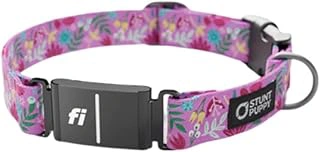
Stunt Puppy Dog Collar, Fi Series 3 and 3+ Ready, Frolic Summer
Pet parents who want a dedicated collar for their Fi Series 3 tracker rather than the stock silicone band will find the Stunt Puppy Frolic Summer collar offers a design-forward alternative. Priced at $49.00 with a 4.6/5 rating, this collar features a built-in slot for the Fi module and a vibrant pattern that fits homes where pet gear doubles as décor. The construction balances durability with a lighter profile than traditional heavy-duty collars, making it suitable for daily wear when you prioritize aesthetics alongside GPS functionality. This accessory makes the most sense if you're already committed to the Fi ecosystem and want your dog's collar to reflect a curated look, or if you find the standard band uncomfortable for longer wear periods. The tradeoff is cost: you're paying nearly as much for the collar as some standalone tracking subscriptions, so it's a fit-and-finish decision rather than a must-have for tracking performance. If your priority is simply keeping the Fi device secure and functional, the included band works fine; if you want a collar that integrates the tracker into a polished daily wear setup, the Stunt Puppy option delivers on style and Fi Series 3 compatibility.
- ✅ Designed specifically for Fi Series 3 and 3+ module integration
- ✅ Frolic Summer pattern offers a distinctive aesthetic
- ✅ Lighter profile than heavy-duty collars for daily comfort
- ✅ 4.6/5 rating reflects solid user satisfaction
- ⚠️ $49.00 price point adds significant cost to Fi ecosystem
- ⚠️ Style-focused design may not suit working or outdoor-intensive dogs
- ⚠️ Stock Fi band already provides secure module attachment
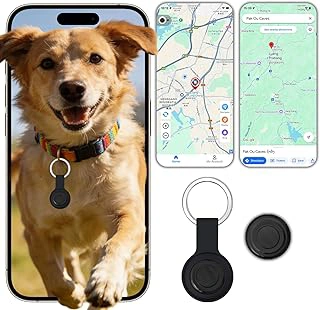
Pet GPS Tracker: A smart Collar with Real-time Location Tracking—no Monthly fees, no SIM Card Required, Real-time Tracking for Small Pets, Compatible with Android and iOS, 356-day Battery Life
Monthly subscription fees can add up quickly, and some pet owners prefer to avoid ongoing costs entirely. This GPS tracker offers a different approach: a $35.99 upfront price with no monthly fees and no SIM card requirement, plus a claimed 356-day battery life that reduces frequent charging.
The device is designed for small pets and works with both Android and iOS. Because it skips the cellular network and subscription model used by Whistle GO Explore and Fi Series 3, it operates through Bluetooth or local network technology. This means the tracking range will be significantly shorter - typically a few hundred feet rather than nationwide coverage. You'll need to be relatively close to your pet for the real-time tracking feature to work.
The tradeoff is clear: you save money upfront and avoid recurring charges, but you lose the long-range cellular tracking that makes Whistle and Fi effective for pets who wander far or get lost in unfamiliar areas. This tracker works best for pet parents who stay near their animals most of the time - around the house, in a fenced yard, or on controlled walks - and who simply want a quick way to locate a pet within a limited radius.
If your pet tends to slip out of sight indoors, wander to a neighbor's yard, or hide in familiar outdoor spaces, the lack of subscription fees and year-long battery life make this a practical choice. But if your dog roams beyond Bluetooth range or you need tracking during travel or in open areas, the cellular-based options will serve you better despite the higher cost. The 5.0/5 rating suggests solid performance within its intended range, but expect a very different experience from the premium trackers in this comparison.
- ✅ No monthly subscription fees
- ✅ No SIM card required
- ✅ $35.99 upfront cost
- ✅ 356-day battery life claim
- ✅ Compatible with Android and iOS
- ✅ Designed for small pets
- ⚠️ Limited tracking range compared to cellular GPS
- ⚠️ Requires proximity to pet for real-time tracking
- ⚠️ Fewer features than premium subscription-based trackers
Final Verdict: Which GPS Collar is the Best Investment for Your Peace of Mind?
Choosing between the Whistle GO Explore and Fi Series 3 comes down to matching hardware strengths to your daily routine and priorities. The Whistle GO Explore integrates activity, health, and location tracking in one subscription, making it the practical pick if you want wellness metrics alongside GPS - particularly valuable for multi-pet households or dogs with changing fitness needs. The Fi Series 3 prioritizes battery endurance and fast escape detection, delivering up to three months of standby and rapid alerts when your dog leaves a defined safe zone, which suits owners who need low-maintenance monitoring and quick response time.
Budget considerations extend beyond the upfront device cost. Compare the recurring subscription fees, replacement collar costs if your pet is hard on gear, and whether you need separate health tracking tools. Coverage reliability varies by cellular network and geography, so confirm both devices work consistently in the areas your pet frequents - urban parks, rural trails, or travel destinations.
Neither collar solves every scenario perfectly. The Whistle GO Explore requires more frequent charging but rewards you with layered insights into behavior and wellness trends. The Fi Series 3 sacrifices health data for longer intervals between charges and faster geofence alerts. A third option - entry-level GPS trackers without subscriptions or with lower monthly fees - may fit tighter budgets, though they typically offer less precise positioning and fewer app features.
Before committing, verify cellular signal strength in your area using coverage maps from each manufacturer, calculate the total cost over one or two years including subscription and accessory expenses, and take advantage of return windows to test real-world app performance and fit on your pet's collar. Read recent user reviews for updates on firmware stability, customer support responsiveness, and any subscription pricing changes that could shift long-term value.